The 8,000 mile view
I came to the Outreach Conference in June 2026 from Slovakia, a small Central European country where Christianity remains deeply woven into public life and national identity. After the fall of Communism in 1989, many Slovaks hoped that freedom would naturally lead to a flourishing democratic society. Instead, much of our public discourse became shaped by a new cultural conflict, in which Christianity was increasingly drawn into political battles over identity, often in opposition to liberal democracy and its values. In this context, the LGBTQ community has frequently become a symbol in wider ideological struggles rather than persons whose stories deserve to be heard. As a young Catholic theologian, I have witnessed how fear, polarization and silence can overshadow the Gospel’s call to encounter, listen and accompany. Those experiences, along with the suffering shared with me by LGBTQ Catholics, their families and even priests, led me to devote my academic research and pastoral ministry to creating spaces for dialogue within the church. It was from this context—one marked by both deep faith and deep division—that I arrived eager not for easy answers, but to learn what authentic Christian accompaniment can look like.
As I look back on Outreach 2026, I find myself filled with gratitude. Although the conference was primarily designed for the American context, I remain convinced that many of its insights are profoundly relevant to the challenges we face in Central Europe, especially in Slovakia.
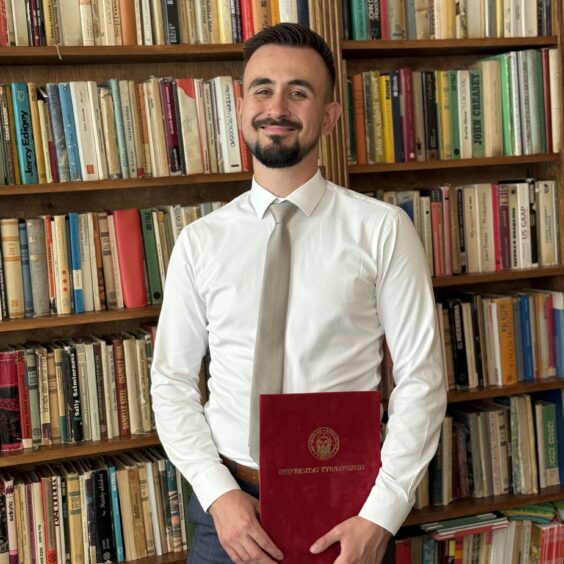
I attended the conference as a representative of my university, Trnava University in Trnava, Slovakia, which sent me both to learn and to represent our faculty in an area of theology that has become the focus of my academic research: the relationship between Catholic theology and LGBTQ people. Our faculty’s motto is “Tradition Open to Thinking,” and recently our dean has been considering a new version: “Tradition Open to Dialogue.” I believe these words genuinely express our desire to remain faithful to the Christian tradition while also being willing to engage difficult contemporary questions with openness, humility and dialogue. Within the possibilities and limitations of the Slovak context—where anything related to homosexuality tends to evoke strong emotions of fear, anger and suspicion within church circles, which only hinders open dialogue—our faculty sincerely tries to cultivate this spirit, and I experienced my participation in Outreach 2026 as a concrete expression of that commitment.
Prayer and pastoral care
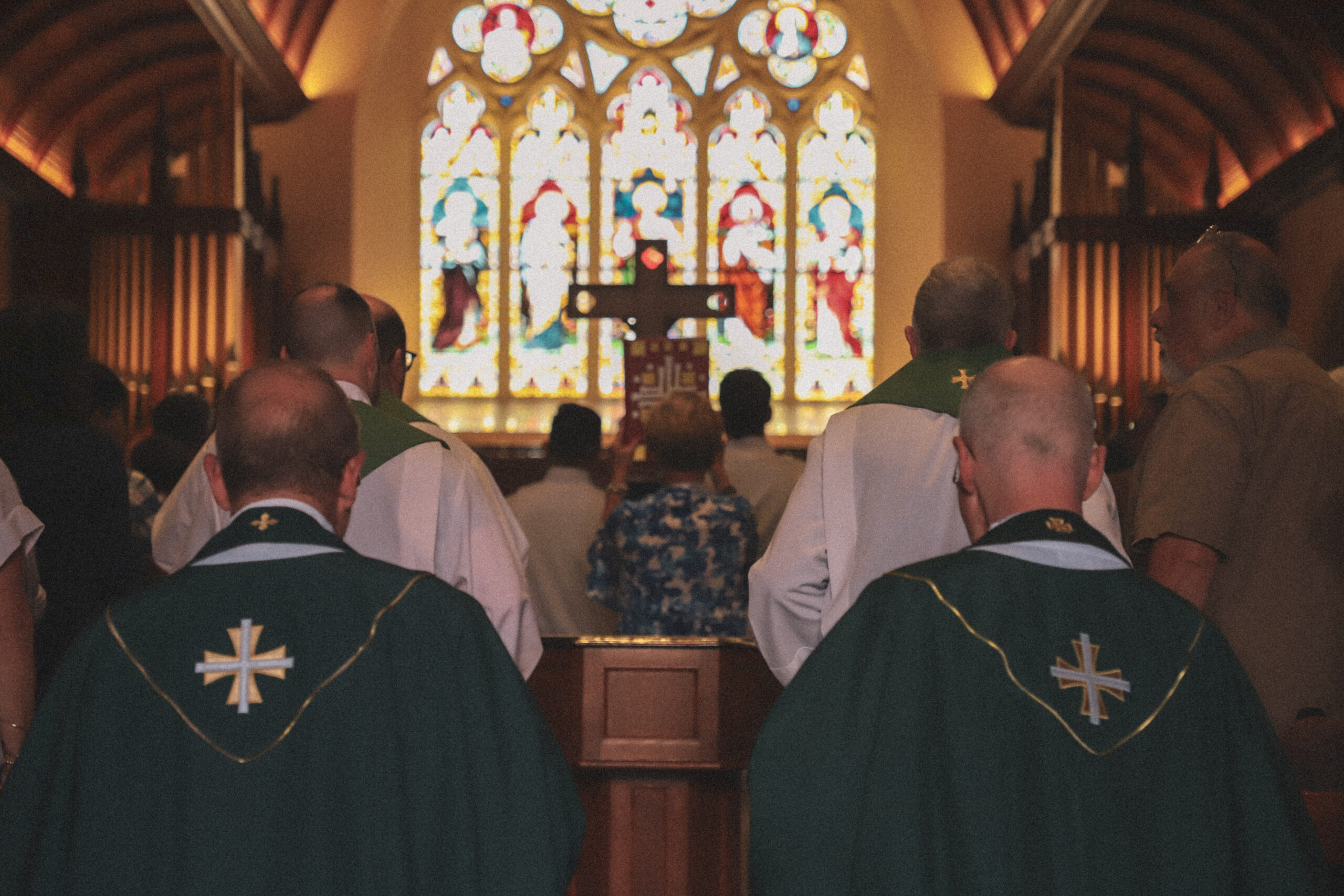
The conference began with a Mass in the Dahlgren Chapel of the Sacred Heart on the campus of Georgetown University celebrated by James Martin, S.J., which for me set the tone for everything that followed. Throughout the entire weekend, Father Martin repeatedly emphasized one essential point: We were not gathered to change the church’s teaching or to create another pressure group attempting to force doctrinal change. Rather, we had come together to celebrate one another’s human dignity, to build genuine community and to learn how to communicate with one another in peace, love, respect and compassion.
What particularly struck me was that this invitation applied to everyone, regardless of where they stood politically or ecclesially. Whether someone considered themselves conservative or progressive, the call remained the same: to treat one another with dignity, patience and sensitivity.
Coming from Slovakia, this message resonated deeply with me. Our society is highly polarized, and discussions about the LGBTQ community often become ideological battles before they ever become conversations among human beings. At the same time, I have noticed that polarization exists in both directions. Just as many people in my country hold strong prejudices against Western culture and morality, many in the more liberal parts of Europe sometimes hold equally simplistic assumptions about Christians in Eastern Europe. Because of this, I appreciated that the conference never encouraged participants to become another faction within an already divided society. Instead, it consistently invited us to become better listeners and better companions.
This invitation applied to everyone, regardless of where they stood politically or ecclesially.
The first conference panel focused on parish ministry with LGBTQ Catholics, beginning “from nothing.” The central message of the discussion was simple yet profound: Parish ministry is not about one’s self; it is about the other person. Authentic pastoral care always moves toward the other. It exists for the people being served.
I believe this carries an important lesson for the church in Slovakia. True tolerance is not allowing someone to speak while you are already preparing your rebuttal. True tolerance means giving another person the genuine opportunity to tell their story. Too often in the church we instinctively turn to biblical passages in which Jesus rebukes sinners or drives the money changers from the Temple. Yet we sometimes overlook the countless passages in which Jesus first listens, enters into conversation, protects people’s dignity and patiently accompanies them before saying anything else. It is no coincidence that God gave us two ears and only one tongue (perhaps he was trying to tell us something).
This may well be understood as one of the greatest invitations of Pope Francis’ vision of synodality: to learn once again how to listen. Real listening cannot be rushed. It requires days, months, perhaps even years. Only after truly knowing another person’s life can we begin together to discern what leads that person toward God and what does not. Without that listening, our pastoral judgments risk becoming little more than abstract theories imposed from the outside. Discernment cannot happen without the participation of the person whose life is actually being discerned.
An LGBTQ Catholic approach to accompaniment and the Bible
The second panel focused on homosexuality and the Bible. I appreciated that the discussion was neither simplistic nor ideological. Rather than offering easy answers, the speakers invited us to approach Scripture with humility, careful discernment and a willingness to listen.
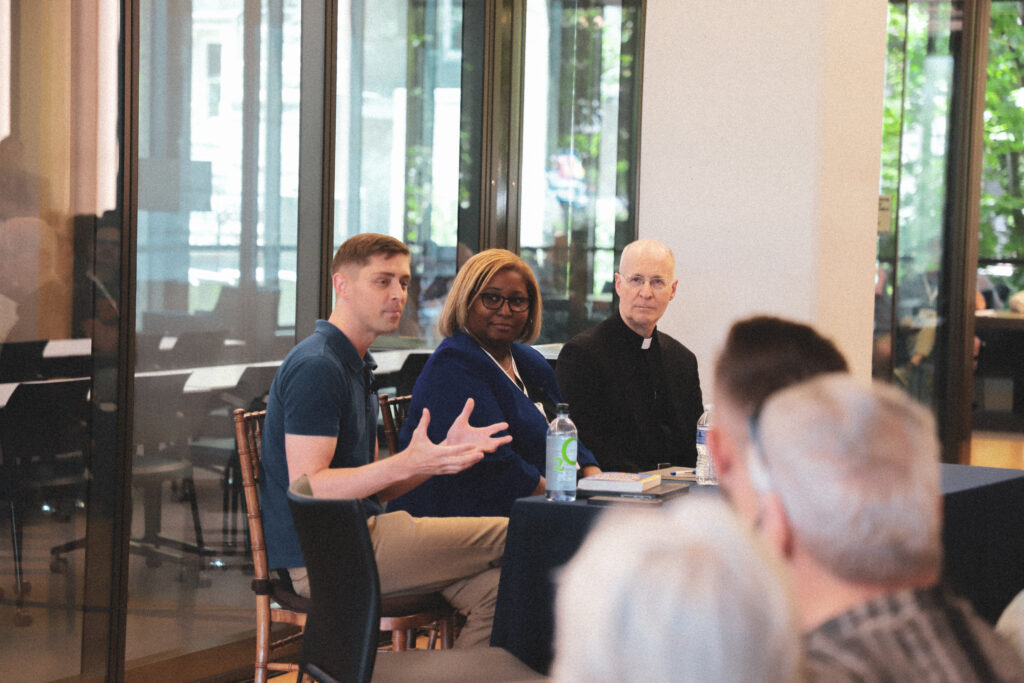
One of the ideas that stayed with me most was that the Bible should never become a weapon with which we wound another person. Scripture does not provide a ready-made answer to every contemporary question, nor was it intended to function as a catalogue of solutions for every moral issue humanity would eventually face. Instead, it teaches us how God encounters people, how he accompanies them, and how his people repeatedly learn to recognize his presence through dialogue, relationship and discernment.
Throughout salvation history we encounter people who, in various ways, step beyond the expectations of their own cultures and historical contexts. In my opinion, today’s Christians are called to show similar courage—not by rejecting the church or abandoning her teaching, but by remaining within her while becoming people of dialogue, encounter and hospitality.
I realized how much this perspective is needed in Slovakia. Too often the Bible is invoked primarily to settle arguments or to justify excluding people from the life of the church. Yet the Scriptures continually reveal a God who seeks out those on the margins, who enters into conversation with them and who restores their dignity. Perhaps Scripture should first inspire us to become more compassionate, more dialogical and more inclusive before it becomes a source of arguments about who belongs and who does not.
To what extent are we, as a church in Slovakia, a genuine community?
The third panel, “Caring for the Whole LGBTQ Person,” placed greater emphasis on personal testimony and psychological knowledge. One of the most striking observations was that being gay often involves a lifelong process of coming out, with every moment carrying the possibility of acceptance but also of fear, rejection, anxiety and isolation.
Listening to these stories reminded me of many people I know in Slovakia. Several gay Catholics have told me that I am the first—or perhaps only the second—person in their lives with whom they have ever spoken honestly about their sexuality. I find that deeply heartbreaking. This compels me to ask: To what extent are we, as a church in Slovakia, a genuine community? How is it that there are so many testimonies from Slovak gay Catholics who, after coming out, were completely excluded from their communities or families?
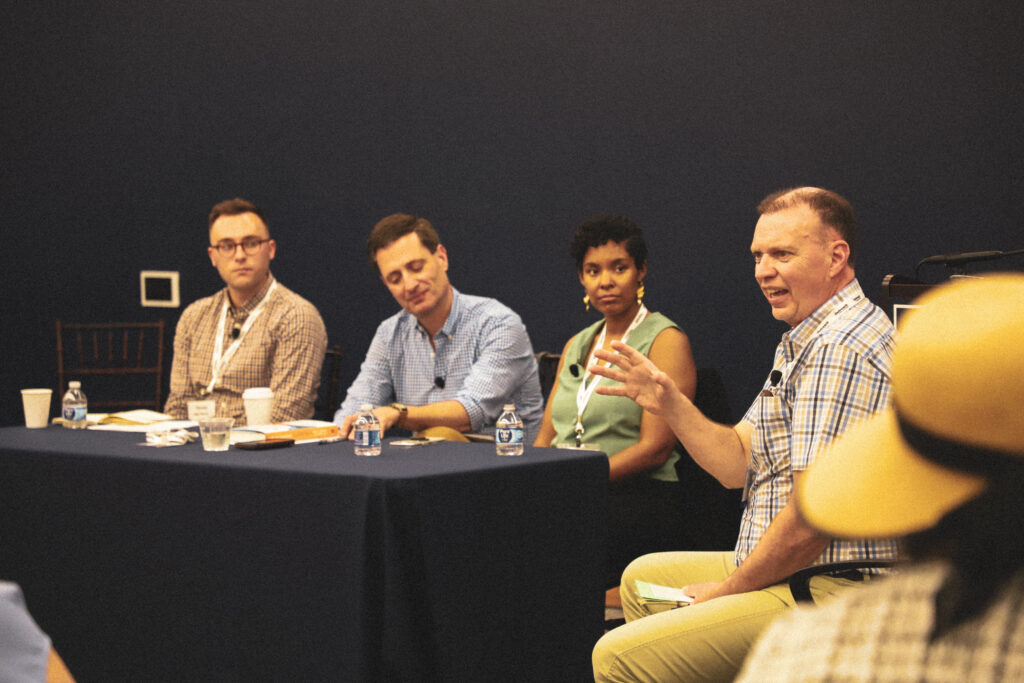
One of the psychotherapists made a point that has remained with me: Authentic human integration is impossible without authenticity itself. We often speak about helping LGBTQ people integrate their sexuality in a healthy Christian way. Yet genuine integration cannot occur if people are never allowed to speak openly about who they are. If every attempt at honesty is met with fear or condemnation, then authentic integration becomes extraordinarily difficult. Integration can only happen through the acceptance dialog. We become integrated by entering into relationships and by sharing our lives within a community. Community creates conversation and acceptance, conversation and acceptance allow authenticity and authenticity makes integration possible.
One of the most beautiful gifts the church in Slovakia could offer is simply this: to allow people to be human. Every one of us is trying, in our own imperfect way, to follow Christ as faithfully as we know how. Even when we do not fully understand one another, or even when we disagree, we can still acknowledge one another’s humanity and dignity.
Prejudices and virtues
Another unexpected gift was meeting people personally. Although I have always considered myself relatively open-minded, I realized during those conversations that I still carried many hidden prejudices—not only about the United States but also about LGBTQ Catholics themselves. In Slovakia we sometimes imagine the church in America as solely politically driven and unconcerned with tradition. My experience at Outreach 2026 challenged those assumptions.
The people I met represented a diversity of experiences, reminding me that reality is always more complicated than stereotypes. Slovakia is not unique in its struggle with these questions. The universal church is discerning them together, each country within its own historical and cultural circumstances.
Rather than feeling discouraged by this difference, I found hope. There is no need to force change or to rush ahead. What matters is proceeding patiently, lovingly and prudently, remembering that these discussions are ultimately about human lives, not about winning arguments or achieving ideological victories.
If I can simply become one trustworthy friend for LGBTQ Catholics in Slovakia, a person before whom they can speak honestly without fear, then perhaps that is already a small contribution to the church. Our task is not to defeat one another but to search together for the paths that lead us closer to God.
If I can simply become one trustworthy friend for LGBTQ Catholics in Slovakia…then perhaps that is already a small contribution to the church.
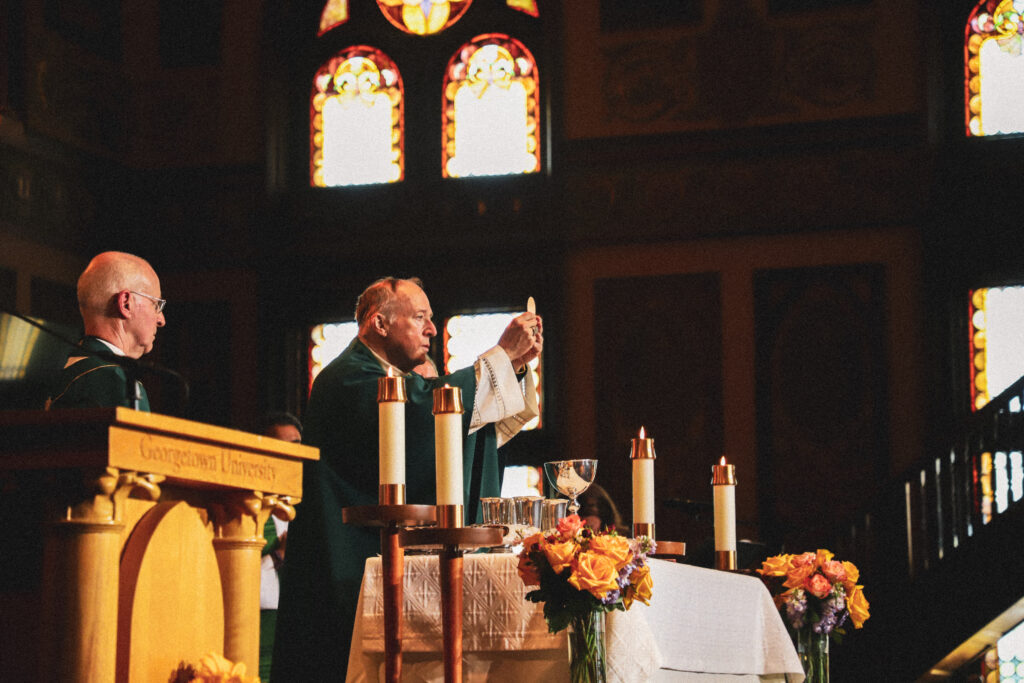
The Saturday evening Mass celebrated by Cardinal Robert McElroy also encouraged me. Seeing a cardinal celebrate the Eucharist with this community communicated that the church recognizes the need to encounter LGBTQ Catholics not as an abstract issue, but as members of the body of Christ whose dignity deserves to be acknowledged and whose voices deserve to be heard.
Many LGBTQ Catholics I met did not speak first about changing church teaching. They spoke about wanting to remain within the church they love. They love Jesus and the church. They are trying to live faithfully while carrying a profound tension in their lives, and they were looking for companions who would walk with them while they continued searching for God’s will.
That challenged assumptions I had carried from Slovakia. Too often, LGBTQ people are portrayed in our public discourse through stereotypes. They are imagined primarily as symbols in political or cultural debates rather than as ordinary believers trying to follow Christ. Yet the people I met were, above all, fellow Christians. Like me, they struggle with sin, with questions, with uncertainty, with hope. Like me, they are trying to love Jesus and to remain faithful to his church as best as they can.
Listening to them helped me understand something I had never grasped so clearly before. Sexuality is not a minor characteristic that can simply be ignored or hidden away. It is a significant dimension of human identity. If someone is forced to suppress such an essential part of themselves completely, they risk losing something deeply personal. At the same time, the church also loses something, because it is deprived of the gifts that person could otherwise bring to the community.
The journey home
On Sunday morning, James F. Keenan, S.J., spoke about prudence. In Slovakia we often speak in churches about virtues as though they were static qualities, something we either possess or do not possess. Father Keenan offered a different perspective: Prudence is fundamentally dynamic. We can see this also throughout salvation history—God is never static. He continually seeks humanity, calls people by name, enters into new relationships and patiently accompanies his people through history. If we desire to imitate God, then our moral lives cannot become frozen either.
Applied to the pastoral questions surrounding LGBTQ Catholics, this perspective seemed especially important. Dynamic virtue does not mean abandoning the church’s teaching or changing doctrine whenever new questions arise. Rather, it means refusing to stop listening simply because the questions are difficult. It means encountering real people, hearing their stories and continuing to discern patiently what faithful accompaniment requires.
Before the church can confidently claim to know what is best for LGBTQ Catholics, the church must first know what it actually means to live as an LGBTQ Catholic. Without listening, genuine discernment is impossible. This is particularly true in Slovakia, where I believe we know very little about the lived experience of gay Catholics.
Before the church can confidently claim to know what is best for LGBTQ Catholics, the church must first know what it actually means to live as an LGBTQ Catholic.
As I prepared to return home, I kept thinking about what this experience means for the church in Slovakia.
One idea that has stayed with me is the possibility of collecting the testimonies of LGBTQ Catholics from both Slovakia and the United States and offering them to our bishops. Not as arguments. Not as political statements. Simply as stories. Stories can reveal realities that abstract debates often fail to see.
For three days, I practiced what I hope our church back home will increasingly embrace: listening. As a theologian, I hope my vocation will never be limited to writing articles or participating in academic debates. Theology, if it is truly Christian, should ultimately become a way of accompanying others.
I also return home with hope. I believe that the church in Slovakia is capable of growing in this culture of listening. Growth will be gradual. Our historical, political and cultural circumstances differ significantly from those of the United States. But perhaps that is precisely why patience matters. Real pastoral development is rarely the result of pressure. More often, it grows quietly through countless personal encounters marked by humility, trust and love.
Looking back, I realize that the greatest lesson I learned at Outreach 2026 was surprisingly simple. Listening is not a preliminary step before the “real work” begins. Listening is itself an act of love. It is one of the most deeply evangelical things we can offer another human being.