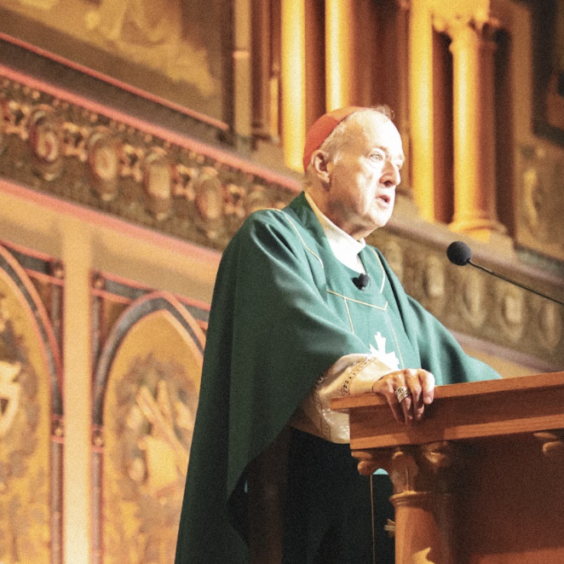
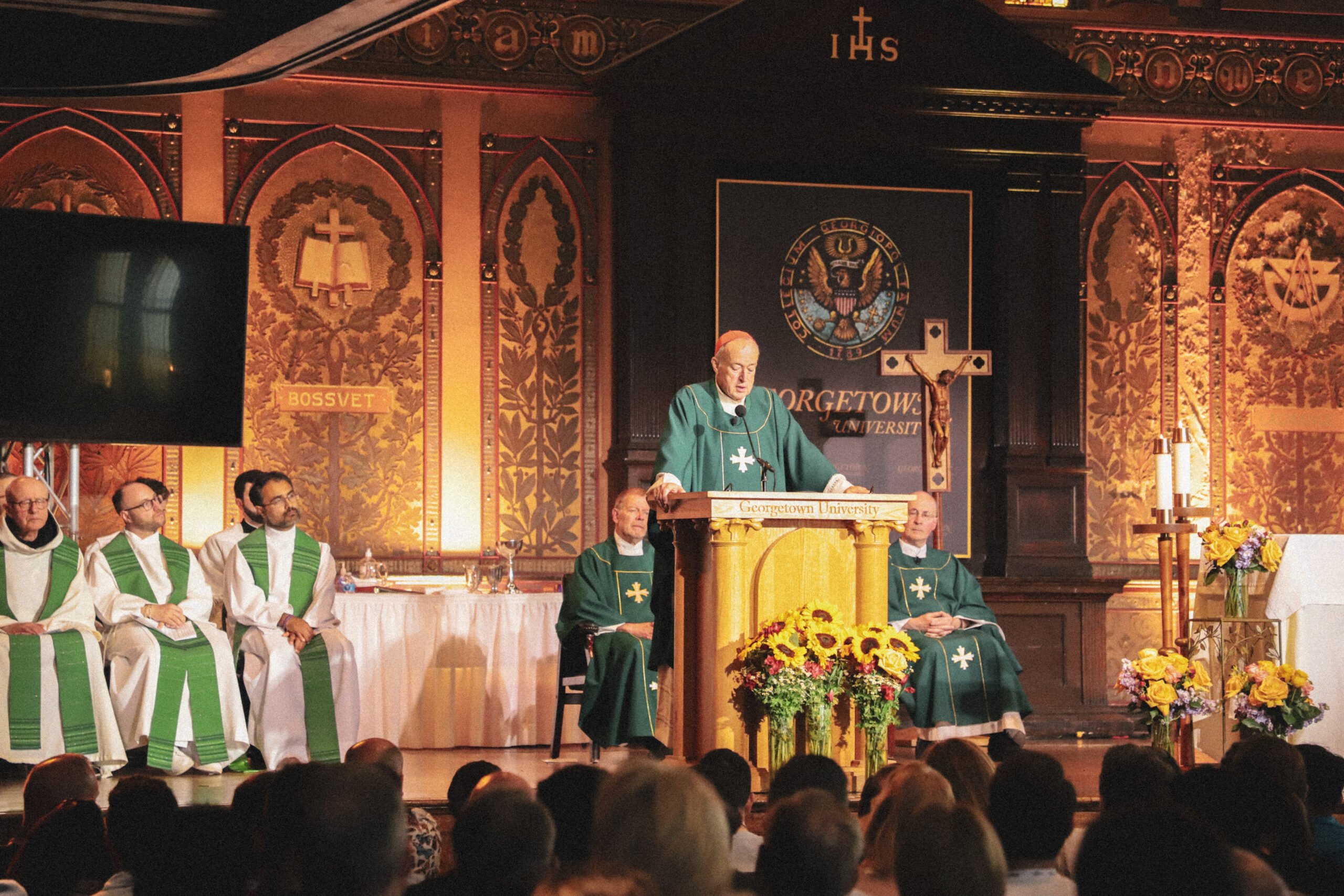
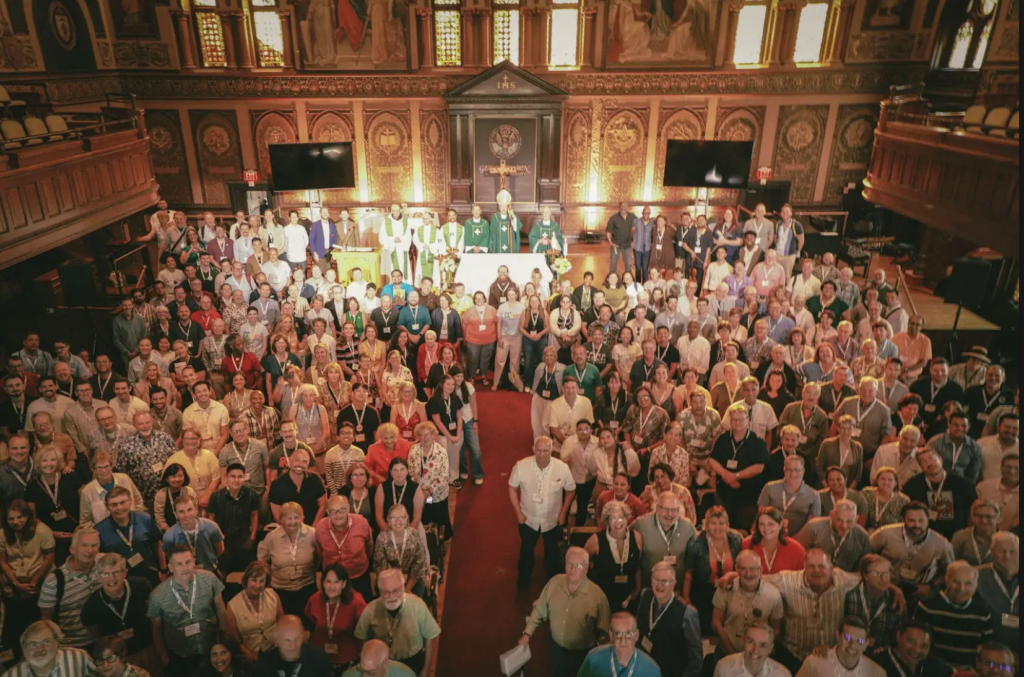
The following is the text of a homily delivered by Cardinal Robert McElroy, the archbishop of Washington, D.C., at the Outreach conference at Georgetown University on June 20, 2026. The text has been edited for style. Watch the Mass and the homily in its entirety in the video above.
Cardinal Walter Kasper, in his magnificent book on mercy, states that the greatest attribute of God in God’s relation to humanity is mercy. For it is at the moments when we approach the Lord, resplendent precisely in our humility and seeing ourselves as we truly are, that we comprehend the magnificence of Divine Grace and the utterly unmerited embrace of pure love that God bestows upon us at every moment of our existence.
Mercy is God’s first word to us. Mercy is God’s great gift to us. Mercy is the ambient culture of the church which sees both the sinfulness of the human person and the striving for redemption and holiness that constitute the seeds of grace planted in fertile soil in our hearts and souls, capable of leading us through our failures, our periods of being lost, our times of ecstasy and resilience in this earthly pilgrimage on which we are traveling.
In today’s second reading from the Letter to the Romans, Paul reflects that abundant mercy of God when he speaks of sinfulness in our lives, and true redemption (5:12-15). He forthrightly acknowledges that every woman and man is enmeshed in sin, and all of us have contributed to the breakdown in the divine plan for humanity that torments our world and tears our souls asunder.
But in the beautiful final words of the passage, Paul makes clear that the sin of humanity is dwarfed by the grace that God has given us in redemption: “The gift is not like the transgression. For if by the transgression of the one the many died, how much more did the grace of God and the gracious gift of the one man Jesus Christ overflow for the many.”
The gift is not like the transgression. It is far deeper, wider, more profound. It is precisely in light of this reality that we can comprehend the mercy of God in our lives and the life of the church. This does not mean that our sins are peripheral to our lives or our life of discipleship.
On the contrary, the mercy of God precisely in its immense goodness calls us to recognize and confront our sinfulness and recognize how it mars the beauty of our souls and the blessings of our world. Honesty and integrity are the foundations for the Christian moral life, and we live as Christians in the belief that we are called to conform our hearts to the virtues of Jesus Christ: faith, integrity, compassion, sacrifice, prayerfulness, hope, chastity, forgiveness and deepest love. This is the pathway to holiness for all of us, and it requires the rejection of sin in every dimension.
As we gather for this conference in a church which has so frequently wounded the LGBT community through judgmentalism and exclusion, we should find great hope in two important developments that have taken place during the pontificate of Pope Leo which constitute rich seeds for the unfolding of the Gospel in the years to come.
As we gather for this conference in a church which has so frequently wounded the LGBT community through judgmentalism and exclusion, we should find great hope in two important developments that have taken place during the pontificate of Pope Leo….
Interestingly, neither of these developments focus specifically on LGBT issues or persons. They focus on the call to holiness for every believer and how it can be lived out in the concrete realities of our modern world.
The first cause for hope lies in the reflection that Pope Leo gave during his inspiring trip to Africa. Speaking to reporters, the Pope said “the unity or division in the church should not revolve around sexual matters.” This simple declaration puts in context the call to chastity as a component of the Christian moral life. Too often both in magisterial statements and on the popular level, sexual sins have been condemned with an ardor that effectively places them in the eyes of many believers as the core moral obligation of Christians. This is utterly false to the Gospel of Jesus Christ.
When Pope Leo points to the comparative importance of economic justice, war and peace, immigration and racism as key elements of the Christian moral life, he is rejecting this false reductionism that concentrates moral obligations within the sexual realm.
The second development of great import for understanding our call to holiness in the contemporary world is the issuance of the report of Study Group 9 from the 2024 Synod. This Study Group had the great task of applying the pastoral theology of Pope Francis in an integrated way with Catholic teaching and practice. Study Group 9 boldly presented its conclusions in favor of a new paradigm based upon the kerygma:
The church’s mission is not a matter of abstractly proclaiming and deductively applying principles that are set out in an immutable and rigid manner, but of fostering a living encounter with the person of the risen Lord Jesus by engaging with the lived experience of faith of the people of God…in relation to the diverse situations of life and the many cultural contexts.
In its anthropology, the report is pathbreaking: “Every person is a singularity whose wholeness and uniqueness is constituted in relation to the other, to society and to culture.” This focus on singularity reflects the preciousness spoken of in today’s Gospel about the sparrow. How much greater is each of us in our singularity in the eyes of God, who understands the folds of our heart and revels in the diverse beauty of our humanity. Seen in this light, the call to holiness is a personal encounter with the Lord Jesus Christ which envelops the whole of our lives and calls us to walk together in the life of the church — unique yet formed together in Jesus Christ.
Pastoral practice … proceeds from the conviction that the concrete situations in which people find themselves are constitutive dimensions of how doctrine should be formed in the light of the kerygma.
The pastoral method of Jesus had a specific and consistent pattern. First the Lord embraced those who had come to him for help. Then, he assisted them with the issue that was weighing them down. Only then did he call them to reform. This pattern must consistently be reflected in the church’s pastoral practice and in our own pastoral outreach to those whom we encounter in our lives within the context of faith.
I believe that this is the greatest contribution that Pope Francis made to the life of the church – the call to reform our conception of pastoral theology and see it as a core element of coming to understand the call of the Gospel and the formation of Catholic teaching. Pastoral practice is not the understanding of how to apply an already formed and often reified set of principles to concrete situations. It proceeds from the conviction that the concrete situations in which people find themselves are constitutive dimensions of how doctrine should be formed in the light of the kerygma.
We gather together as the fruit of synodality is still becoming apparent. Let us pray that in the unfolding conversations in the spirit that guide us in the coming years, the whole people of God will move toward the future that God is building for our church.