This past June, while attending the annual conference of the Catholic Theological Society of America, I heard Mark Guevarra, a doctoral candidate at the Graduate Theological Union in Berkeley, Calif., say something in a panel discussion that has stayed with me. In talking about the role of the LGBTQ community in the process of synodality, he remarked that “hope and disappointment are not always opposites.” I understand this to mean that one can find hope even in otherwise disappointing or discouraging situations; that identifying reasons for hope can be life-giving, but it also doesn’t take away the need for improvement or to address the disappointing circumstances.
Like many other Catholics, I often find myself disappointed by the statements and practices of many bishops in the United States when it comes to LGBTQ issues. The number of homophobic and transphobic views, statements and policies expressed by bishops and institutionalized within their dioceses can be overwhelming and discouraging.
Additionally, in the wake of documents from the U.S. Conference of Catholic Bishops like the “Doctrinal Note on the Moral Limits to Technological Manipulation of the Human Body” in 2003, and the adoption of revisions to the U.S.C.C.B. “Ethical and Religious Directives” for Catholic Healthcare Services last November, which put overtly transphobic views into concrete policies that deny gender-affirming healthcare in Catholic hospitals, it is no wonder I and many other people feel disappointed.
Jesus told his disciples, “The truth shall set you free” (Jn 8:32) and that is precisely what I witnessed at each of these meetings.
But even as these developments were unfolding, I nevertheless found myself witnessing signs of hope. One of the most significant illustrations of this hope-amid-disappointment surfaced for me during the two-day gatherings hosted by New Ways Ministry for U.S. bishops to learn about LGBTQ issues. As New Ways Ministry executive director Francis DeBernardo recently explained, there have been three such gatherings, which have brought together bishops, theologians, physicians, activists and members of the LGBTQ community to discuss topics from both professional expertise and personal experience.
Given the widespread anti-LGBTQ sentiment expressed by some church leaders in the United States and general skepticism expressed by others, attendance at these events was by invitation only and the discussions operated under the Chatham House Rule. This meant that participants could share information learned at the meeting, but the names of the attendees and what they specifically shared is held in confidence unless the participant gives explicit permission to share their identity or comments.
Nevertheless, after the most recent meeting in March in Racine, Wis., several participants—including some bishops—have spoken out publicly about their experiences at one or more of these gatherings. Archbishop Jeffrey Grob of Milwaukee, Wis., Bishop John Stowe of Lexington, Ky., Auxiliary Bishop Michael Sapaorito of Newark, N.J., and Bishop Joseph Kopacz of Jackson, Miss., are just a few who have gone on the record about their participation. Archbishop John Wester recently wrote a compelling essay in Outreach about his involvement and what he has experienced and learned over the years.
And panelists from the LGBTQ community, including Maxwell Kuzma, a transgender man, author and podcast host, and Yunuen Trujillo, an attorney and author, have published reflections about their participation in Outreach and US Catholic, respectively.
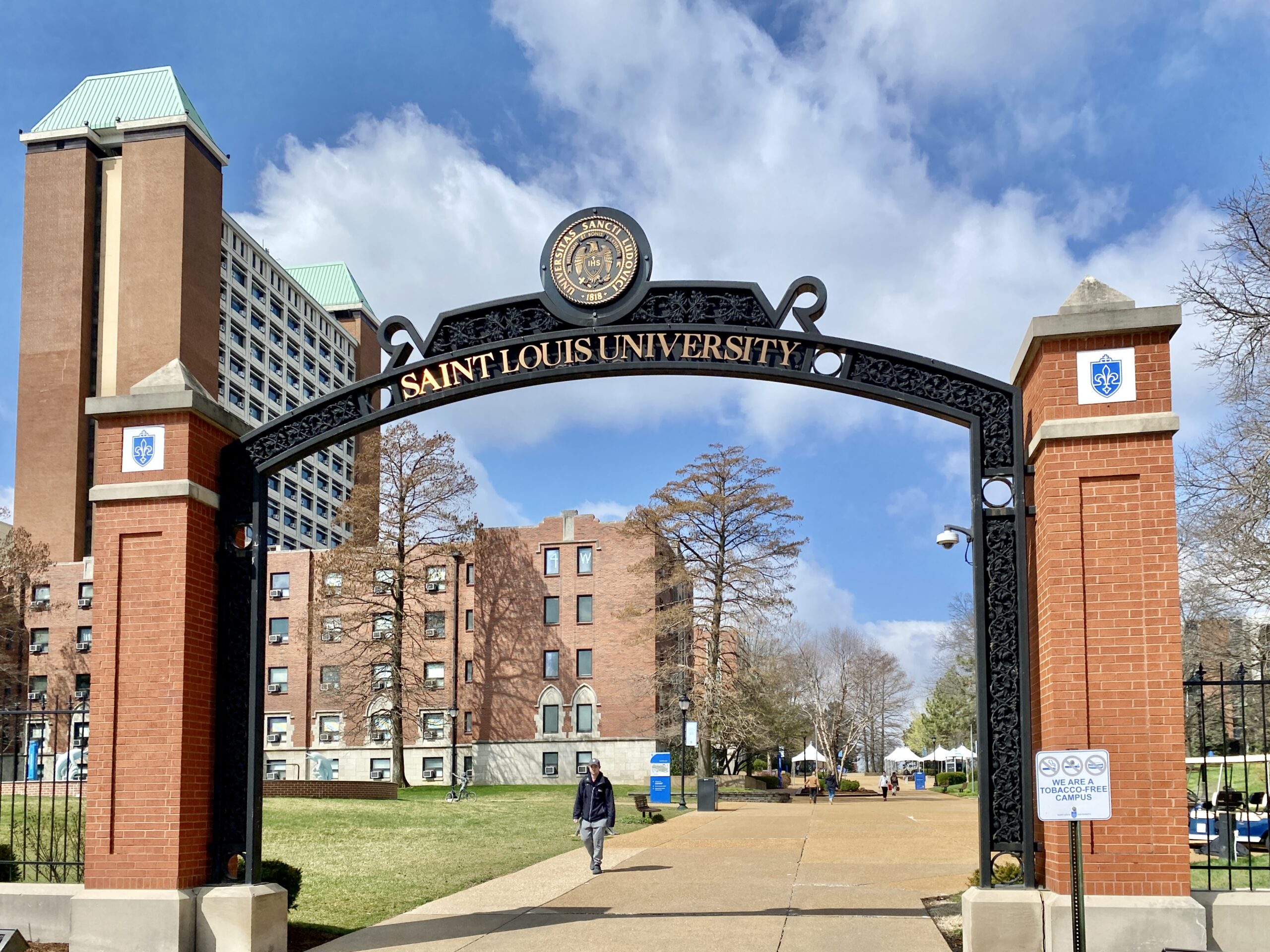
I’m writing now to share my perspective as one of the invited theologians who has participated in all three of the gatherings held at Georgetown University, St. Louis University, and the Siena Retreat Center in Racine, Wis. I write at the encouragement of my colleagues and inspired by these other reflections and because I have found a great deal of hope at these gatherings, which I can summarize in five ways.
This illustration of solidarity suggested that what mattered most was what we shared in common—our baptism—and not what separates us.
First, I witnessed the faithfulness of all the participants. What joined all of us together—whether bishop or layperson, theologian or physician, straight or queer, cisgender or trans—was a shared commitment to the Catholic faith. Not only were there panels of experts who provided important information about medicine, psychology and theology, but we also prayed together and celebrated the Eucharist together. Despite false claims to the contrary, LGBTQ issues and authentic Catholic faith are not antithetical or contradictory. What I experienced was a gathering of siblings in Christ who opened themselves to encountering one another and the Holy Spirit.
Second, these gatherings were an exercise in synodality. Famously, synodality means “to walk together,” and that is precisely what unfolded in these meetings. At each event, participants were assigned to round tables where they were mixed by category. Each table had a mixture of bishops, experts and LGBTQ persons; and there was a synodal process of structured dialogue, which resulted in profound sharing and engagement with sincere questions and concerns. Panelists would speak for a time, then table groups would discuss, and then the larger conversation would unfold. The table assignments were reshuffled for each panel session, so participants had the opportunity to meet and dialogue with many different people throughout the two days.
Third, in the spirit of synodality, I experienced genuine mutuality among those gathered. Early in the first gathering in 2023, many of the bishops and priests present wore clerical attire, but by the end of that gathering, the clergy had opted to dress more like the rest of those gathered: in professional, business attire. While that may seem like an odd thing in which to find hope, the symbolism actually speaks volumes. This illustration of mutuality and solidarity suggested that what mattered most was what we shared in common—our baptism—and not what separates us or distinguishes us, especially in terms that could be read as clericalism. But what was most profound about the spirit of mutuality on display was the respect everyone showed one another. It did not matter who you were or what fancy accomplishments you had achieved or ecclesiastical positions you held, everyone was treated with respect and in a spirit of Christian love.
Fourth, one of the most hopeful dimensions of these gatherings was the honesty with which everyone spoke. Jesus told his disciples, “The truth shall set you free” (Jn 8:32) and that is precisely what I witnessed at each of these meetings. Bishops spoke truthfully about the challenges they faced in their local churches from the faithful and their clergy, as well as what they experience at the national conference level. Members of the LGTBQ community spoke truthfully about their own experiences: their deep and abiding faith and love for God; their often painful encounters with family, clergy and others in the church and society; and the harm that comes from being misunderstood or rejected; as well as their joy at embracing the fullness of their identities and what it means to be in loving relationships. These meetings created a distinctive space for sharing hard truths as well as for asking difficult questions.
As some of the bishops have recounted, the experience getting to know trans, nonbinary, intersex, lesbian, gay, bisexual and other queer people had changed their lives and outlook.
Finally, I experienced hope most directly in witnessing the vulnerability participants were willing to display. Trans, nonbinary and intersex panelists spoke of both the joys and hopes, but also the griefs and anxieties of their own personal and faith journeys. Lesbian, gay and bisexual participants shared their own struggles and life experiences in ways that were not sanitized or abstract, but deeply personal and heartfelt. And bishops were direct about what they did not understand or know, acknowledging that they needed theologians working on these topics to help them navigate the truth of our faith tradition in the spirit of fides quaerens intellectum (“faith seeking understanding”) in the face of many who want to present ahistorical, static and inadequate theological and apologetic claims about LGBTQ issues and Catholicism. They also valued the medical and psychological expertise and context that scholars and practitioners provided.
As some of the bishops who have already gone on the record have recounted, the experience of not only hearing from but also getting to know trans, nonbinary, intersex, lesbian, gay, bisexual and other queer people had changed their lives and outlook. The LGBTQ community was not an abstraction to be treated like a scholastic question in a medieval treatise, but formed by real people with real stories and real lives worthy of love, dignity and respect.
As one of the experts in Catholic theology who works in the area of theological anthropology and invited to present on these themes, it was heartening for me to encounter church leaders who are willing to be vulnerable in this way, speak honestly and receive the truth of others’ experiences, cultivate a spirit of mutuality, walk with all gathered synodally and celebrate our shared faith together. Even as there continues to be much that remains disappointing about the state of the church in the United States and the LGBTQ community, these things give me hope.