Years before I became Catholic, I spent time discerning with an Anglican monastic community. One of their 49 rules focused on the practice of receiving Communion. In a community where the Eucharist was received almost daily, the concern was not whether people would come forward—but whether the act might begin to feel routine. Familiar. Ordinary.
The rule was a reminder: What we do often can lose its sense of wonder, unless we are intentional about remembering what it is.
That idea has stayed with me.
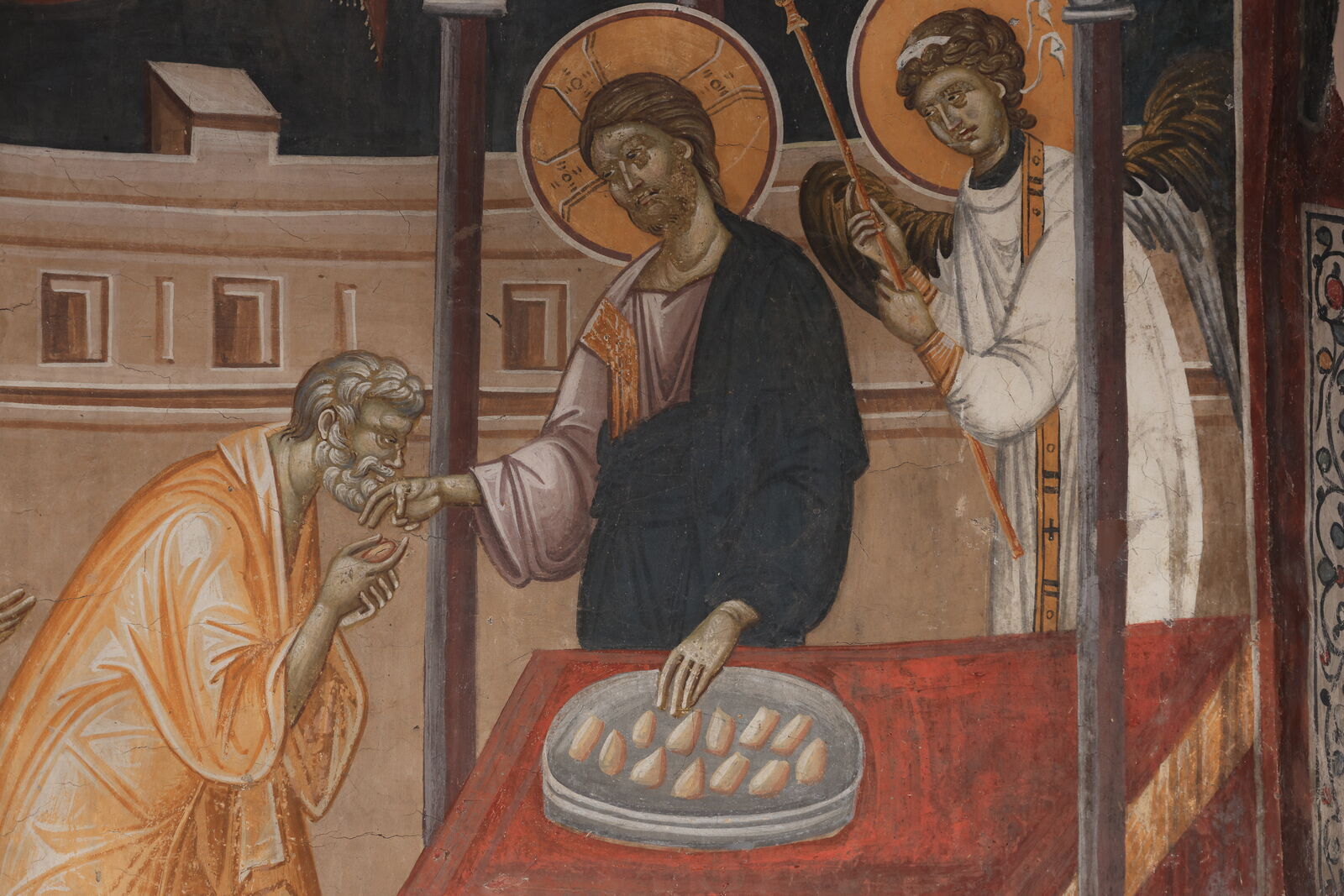
As Catholics, we approach the Eucharist again and again—week after week, sometimes day after day. We fall into a rhythm: We rise from the pew, join the line, bow or kneel, extend our hands or open our mouths. There is a kind of holy order to it.
I was thinking about none of this on the fifth Sunday of Lent, at an evening Mass at Sacred Heart Church in Hallowell, Me. I was simply moving forward, as I always do, to receive.
And then something happened that made the moment so different.
I am a visibly queer man. Often in shoes that give me an extra three to six inches in height. Well manicured nails in a different shape and color every week. Earings, broaches, rings. I’m visible, noticeable. As I approached the altar, I rolled forward off the platforms I was wearing that night to kneel. I extended my hands, colored nails now facing the ground. The priest placed the host in my palm. I closed my eyes and lifted my hand to to my mouth to consume it.
And suddenly, a hand struck my face.
I opened my eyes to find a stranger standing beside me. He had reached into my hands and taken the host, crushing it in his grip. Fragments remained in my palm. He muttered something—a distorted quotation of Scripture—and referred to me as “Lilith,” insisting that I should not receive.
For a moment, I didn’t understand what was happening. I was disoriented, suspended between the prayerful focus of receiving the Eucharist and the shock of—what was happening?
The priest moved quickly, retrieving the host from this stranger’s hands, then calming him with words I could not make out and grace. I was still a bit dumbfounded, but Father soon enough turned back to me. With care and reverence, he placed the host once again in my palm.
This time, I received.
I stood, crossed myself, and returned to my pew.
But I was no longer the same.
What had just happened?
The most sacred moment of the Mass—this encounter with Christ in the Eucharist—had been interrupted by an act of hostility. I might have initially dismissed it as just toward me or any visible LGBTQ person, but as I came to realize in the hours and days later, this hostility was also toward the sacrament itself. It was jarring, confusing and, in a real sense, violating.
And yet, that is not what has stayed with me most.
What I remember just as vividly is what came next.
After the recessional hymn, I knelt again in prayer. Before I could even begin, a Eucharistic minister who had been serving alongside the priest came over to me. She was visibly shaken. “Are you okay?” she asked.
Before I could answer, she told me she wasn’t.
I gave her a tight hug. I assured her that I was fine. Perhaps too quickly. Acts of harassment and hostility are not unfamiliar to me. As a visibly queer man, I have learned to expect them in certain places. I have been shouted at on the street, insulted, made to feel unsafe. In that moment, I tried to place what had happened at Mass into that same category: another instance of a world that is not always kind.
But something about this was different.
When I returned home, the messages began. Texts. Emails. Facebook notifications. People had seen what happened. Heard what happened. They were asking if I was okay—not only physically, but emotionally, spiritually. Word spread quickly through the parish and beyond.
But in the wake of this incident, I experienced something deeper than tolerance.
Dare I say: I experienced more love from church than I’ve ever felt before.
And slowly, I began to realize: this was not just about me.
What had happened was not only an act of personal hostility. It was an offense against the Eucharist, against the community, against the very heart of what we believe the Church to be.
And the community responded accordingly.
In the hours and days that followed, I heard from parishioners, clergy and religious from across Maine. People reached out with concern, with prayers, with solidarity. They wanted me to know that what happened was not acceptable—not in their church, not in their community, not in the body of Christ.
That outpouring of care revealed something to me that I had not fully allowed myself to believe.
Like many LGBTQ Catholics, I have sometimes wondered about my place in the church. Even in welcoming spaces, there can be a lingering question: Am I truly accepted, or simply tolerated?
But in the wake of this incident, I experienced something deeper than tolerance.
I experienced love. Maybe I knew God wanted me in his church. Maybe I knew some parishioners wanted me there too. But to feel this loved and cared for by so many in hours, days, weeks after the incident. To feel this affirmed. Dare I say: I experienced more love from church than I’ve ever felt before.
At the same time, the incident laid bare another truth: the reality of anti-LGBTQ hostility is not distant or theoretical. It is present, even in places we hope will be safe.
What happened at Mass brought that reality into a sacred space, making it visible in a new and unsettling way.
As we moved into Holy Week, I was encouraged too to reflect on Christ’s own experience of unjust violence—of being confronted, misunderstood and attacked in moments that should have been marked by holiness and truth.
I left that Mass shaken but physically unharmed. Jesus endured far more.
That comparison does not minimize what happened. But it does place it within the larger story of our faith—a story in which suffering, while real, is never the final word.
And perhaps that, too, is part of what it means to receive the Eucharist: not only to encounter Christ in the sacrament, but to recognize him in the people who gather around us—especially when they choose compassion over fear and love over division.