Outreach asked some of the world’s leading Catholic theologians and scholars to reflect on the import of the work of Study Group 9: what it means for the church and for LGBTQ Catholics. We hope this series helps you as well to reflect on this group’s important work.Read more from Outreach’s series here.
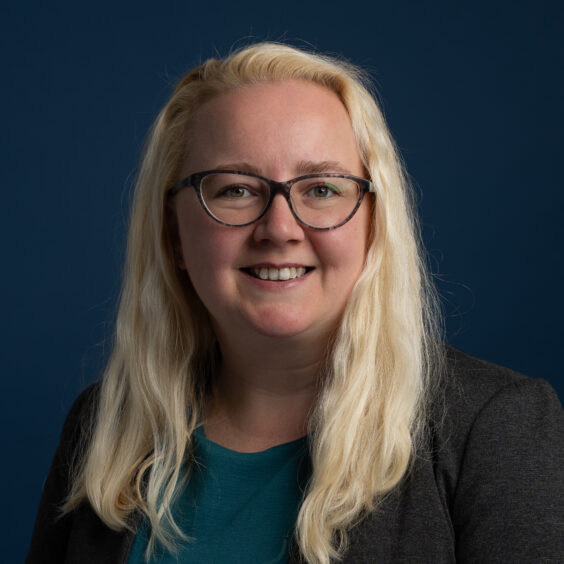
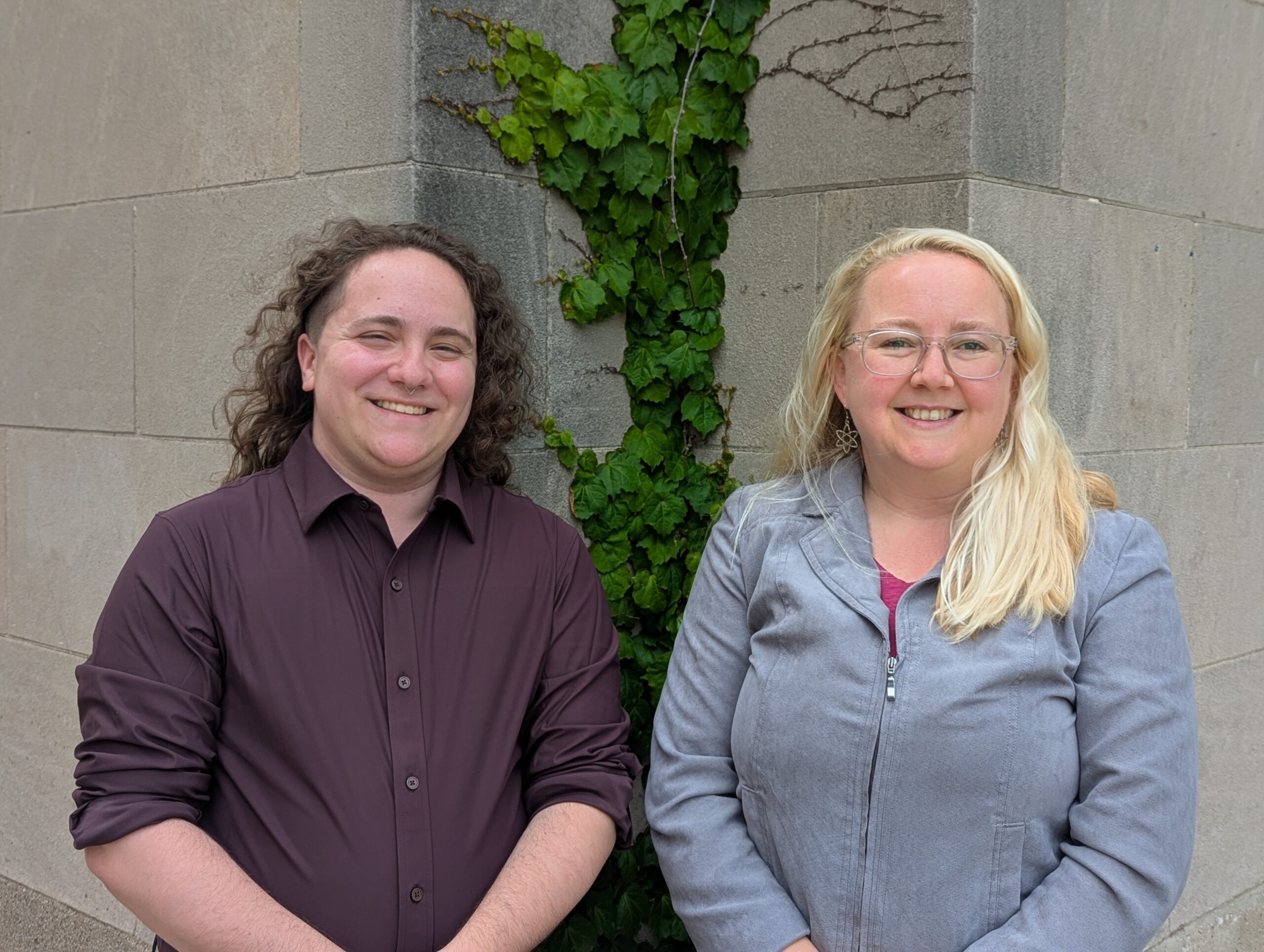
Our reflections on the publication from Synod Study Group 9 are informed by our participation in the Synod on Synodality. Kate, a theology professor at Marquette University in Milwaukee, offered a course where each student hosted their own “Conversation in the Spirit” (the form of dialogue used during the recent Synod of Bishops) and co-authored a report for the international Synod assembly. Maxwell, then an undergraduate at Marquette, joined the class with a passion he still carries: for creating welcoming spaces for LGBTQ people in religious communities. The “Conversation in the Spirit” Max hosted was geared towards LGBTQ students, but many other students reported that issues of welcome and inclusion for LGBTQ people came up at their listening sessions.
We are glad that the Synod continues to keep LGBTQ people’s concerns visible in the church and saw in this document both successes and challenges for the future.
The document’s proposed dialogical listening method may feel new but in some ways it is quite traditional. By recommending listening to the experiences of LGBTQ people, the Synod study group asks church communities to engage in what academic theology calls natural law reflection.
Natural law reasoning as taught by St. Thomas Aquinas is not a set of pre-baked conclusions, but a rigorous ethical method that requires deep attention to theological anthropology, understanding what sort of being the human person, God’s creature, is, and what circumstances and actions best help humans to flourish. In Catholic social teaching, familiar norms such as the right to private property, subsidiarity and workers’ right to form unions are rooted in the natural law approach. Though church teaching based on the natural law tradition teaches that “sexuality is ordered to the conjugal love of man and woman” (CCC 2360), some Catholic theologians have suggested since the 1980s that a natural law approach attentive to the experience of same-sex couples can recognize the possibility that people can flourish within loving, committed same-sex partnerships.
Listening in the Church
The church’s magisterium also has a history of practicing dialogical listening, even on matters of sexuality, although new insights are not always incorporated into existing teaching. To take just two examples, the 1960s Pontifical Commission on Birth Control involved married lay women, and more than 75,000 women participated in listening sessions for a never-issued U.S. Bishops document on women. Listening to people’s experiences is not some radical new method, but part of the church’s traditional practice.
Natural law reasoning as taught by St. Thomas Aquinas is not a set of pre-baked conclusions, but a rigorous ethical method that requires deep attention to theological anthropology.
Anthropology, the study and understanding of the human person, is crucially important in the church’s journey to understand and minister to LGBTQ people. Many LGBTQ folks in the church have encountered the idea that even identifying as gay or transgender, regardless of how one lives their life, goes against church teaching. This is a mistaken interpretation of an earlier Vatican document, debunked in many places, most recently at Where Peter Is.
Thus, we appreciate the study group’s efforts to understand lay as well as magisterial perspectives on the topic (pg 3). Nonetheless, the way the document discusses LGBTQ persons, using words like “homosexual” and those with “same-sex attractions,” unfortunately highlights the sexual nature of same-sex relationships instead of the whole persons within the relationship. Testimonies 1 and 2 discuss the deep love and care shared within each couple’s same-sex relationship, but this love and connection is not highlighted within the synodal group’s document, which focuses on the different attitudes of various Christian communities in discussing these moving testimonies.
It is true that sex is a part of many LGBTQ relationships but rarely is that the entirety of the entire relationship. The same can be said for straight couples. The document’s authors argue for a theological anthropology based on the whole Bible, rather than just those passages traditionally understood as referring to homosexuality (p. 26). They recommend excerpts from a document of the Pontifical Biblical Commission (not available in English) whose meaning is quite clear: all humans are sinners dependent on God’s grace. (To quote the Spanish version: “Todos estan implicados;” “Todos son pecadores.”) It seems the study group wanted to emphasize that sin is a universal human condition and that LGBTQ people should not be stigmatized within the church as uniquely sinful. We are in full agreement, but wish they had made that point more explicitly instead of assigning readers to draw their own conclusions.
That said, the sentiment that LGBTQ persons should not be stigmatized as uniquely sinful has been exhaustively argued, even by the church’s magisterium. The message has been received by LGBTQ people and their allies, but perhaps not the church as a whole. Here we wish the document had followed its own proposed method of listening, reflecting via the natural law method on what promotes human flourishing. Testimonies 1 and 2 are eloquent on the grace and support that can be found within loving same-sex marriages. We think observing those goods, through dialogue and listening, has probably opened more Catholics’ hearts to LGBTQ people than reflecting on the universality of sin. As part of the Synod’s implementation phase, Study Group 9’s findings are written within the context of pastoral care, providing guidance on the church’s doctrine surrounding same-sex attraction as well as highlighting the need to listen to LGBTQ Catholics.
We think observing those goods, through dialogue and listening, has probably opened more Catholics’ hearts to LGBTQ people than reflecting on the universality of sin.
The document includes a call to action, asking leaders to ponder “to what extent, and in what forms the current pastoral practices in our communities are truly capable of welcoming the life stories of believers with same-sex attractions” (p. 27). Listening to LGBTQ Catholics is an important first step, but we would argue that more needs to be done to address the way LGBTQ persons are discussed within the church, especially in educational settings, and the destructive practice of conversion therapy.
Maxwell’s experience in the church
Maxwell, a weekly Mass attendee and a Catholic school student throughout his adolescence, recalls how the US Supreme Court’s decision, Obergefell v. Hodges, which legalized same-sex marriage in 2015 was discussed during a homily where the deacon spoke with disdain, sorrow and anger over the ruling.
Maxwell was only 12 years old and had little to no understanding of what it was for a person to identify as LGBTQ, and concluded that, at least based on this homily, it wasn’t a good thing. Classmates expressed a deep care for those in the LGBTQ community, which was contrary to the emotions he saw shared by church leaders. As he grew older and began to realize that he himself was LGBTQ, discussions surrounding the LGBTQ population at his Catholic high school often weren’t much better. His questions were often ignored or answered poorly.
This lack of clarity surrounding how an individual could be both LGBTQ and Catholic was confusing, and often led to feelings of shame and despair. The Catholic church teaches the importance of caring for and loving one another, but when the topic of homosexuality was brought up, this love and care was often, as Maxwell found growing up, misplaced. A person’s homosexuality was viewed as little more than sexual deviance, failing to recognize the nuance of what it means for a person to have same-sex attraction and enter into the LGBTQ community, which includes not only one’s sexual orientation, but also the community that is formed through these deep platonic and/or romantic relationships. As expressed in Testimony #1, “sexuality doesn’t define my life, but it is an intrinsic part of me; without acknowledging it, I cannot be whole.”
When church leaders or educators discuss same-sex attraction, it is important that they are aware of the fact that LGBTQ persons may be in their audience, and that their words can have a strong impact on who they are and who they will grow to be. In other words, the listening called for in the Synod document cannot take place in such a climate of misinformation and distrust.
An important danger highlighted: Conversion “therapies”
Like many young people whose questions are treated as taboo, Maxwell sought out Catholic and Christian websites, many of which included doctrinal material that he was unable to interpret, or encouraged reaching out to religious leaders for further assistance, including those with ties to conversion or reparative therapies. These “therapies,” denounced by the American Psychological Association, aim to alter an individual’s sexual orientation and/or gender identity to their heterosexual or cisgendered norm.
The definitive and clear inclusion of LGBTQ Catholic voices when discussing LGBTQ persons is long-awaited and shows promise for further discussion within the church.
Both Testimony #1 and Testimony #2 discussed religious communities pushing conversion therapy. Research on conversion therapy has associated it with depression, post-traumatic stress disorder (PTSD), and suicidality and has found no proven therapeutic benefit. This “treatment” is dangerous and causes significant distress, yet continues to occur. Although the study group report briefly mentioned conversion therapy, we were disappointed to see no explicit call for an end to such practices or any acknowledgement of the church’s responsibility.
A big step forward
Certainly, we acknowledge how monumental the Study Group 9 document is. It includes direct statements from gay men who talk about ““my husband,” “our marriage” and “our love” on a Vatican website, a big step forward in an ecclesial climate that too often denies that LGBTQ people, and same-sex love, even exist. The definitive and clear inclusion of LGBTQ Catholic voices when discussing LGBTQ persons is long-awaited and shows promise for further discussion within the church.
On the other hand, Maxwell’s experience within the Catholic church and its education system points to the need for more clear and explicit guidance on how to talk about LGBTQ people within the church. Had he not found religious educators who encouraged and accepted him, he would not have furthered his studies in the Catholic faith. In addition, a direct acknowledgement of the impact of conversion therapy on many current and ex-LGBTQ Catholics is needed, as this issue continues to grow within the United States.