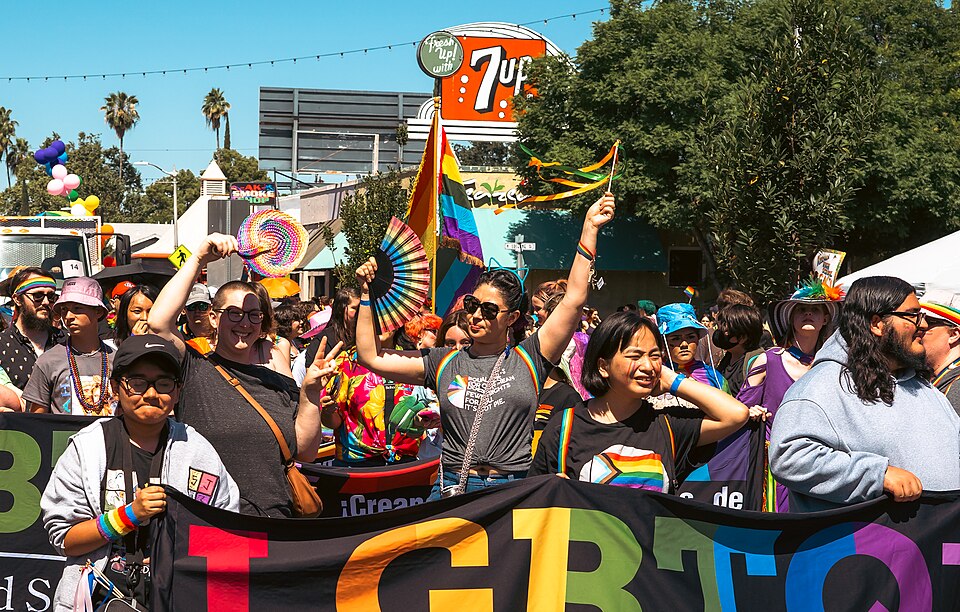
LGBTQ students in Catholic schools deserve to flourish. The U.S. Conference of Catholic Bishops holds that Catholic education “centered on Jesus Christ the Teacher…leads to human flourishing.” Yet, as Max Kuzma recently explained, the U.S. Department of Education has stripped away protections for LGBTQ young people.
Glisten reports that 67% of LGBTQ students and 71% of trans and gender-expansive students have felt unsafe at school. Additionally, they experience higher rates of sexual violence than their peers. But where state laws and school policies explicitly name sexual orientation and gender identity, research consistently finds less bullying and violence, greater safety and better mental health, including reduced suicide risk.
Understood as one of the “signs of the times” (Gaudium et Spes, No. 4), the Department of Education’s actions appear to constitute “unjust discrimination” decried by the Catholic Catechism (No. 2358). When our world targets these students, Catholic schools must “provide a ladder to the poor, the immigrant, and the marginalized.” We can help all our students “have life and have it more abundantly” (John 10:10).
Christ the Teacher “yearned to gather” our students “as a hen gathers her young under her wings” (Mt 23:37). When larger forces harm through acts of commission and omission, the principles of solidarity and subsidiarity call on Catholic schools to discern how best to promote “the flourishing of each individual person and the realization of the common good” in their own circumstances. Mental health interventions and pastoral care are absolute necessities. Yet limiting ourselves to them risks a deficit approach that can prevent us from imagining and building a world where all thrive.
With the Teacher as our cornerstone and flourishing our touchstone, five questions follow. These questions are starting points, not a checklist. They are for everyone, from student councils to superintendents and coaches to trustees. Beginning with LGBTQ students, they serve every student. Similar to the Ignatian examen prayer, they move from gratitude for where God is already at work to honest noticing of where we fall short. Within this ongoing discernment, LGBTQ persons are not objects of debate but pedagogical and theological leaders who open us all to inspired and inspiring possibilities
1. What in our systems produces harm?
Critical suicidology warns against pathologizing the individual child and instead urges us to analyze the social contexts that make life feel unlivable. Seeking the lost sheep, we should examine the flock with curiosity and humility to learn why fleeing seems preferable to staying.
- What do we already do well with and for LGBTQ students, and how do we know?
- How much of our ministry manages student struggles? Should programs be retired or continued, expanded or evolved?
- Whose voices shaped our policies, and whose were missing? Are we “don’t ask, don’t tell”?
- How do we see the whole student, including their intersections with race, nationality, religion, culture, class, ability, and neurodiversity?
- When does majority comfort, including ours, outweigh minority suffering? Where are our fears codified in curriculum and culture?
2. What can’t we compromise
Catholic schools share the mission to build a “culture of life” (Evangelium Vitae, No. 95). We do so by answering the recent synod’s summons to “enlarge the space of your tent” (Is 54:2) and recognizing those whom the world rejects as “members of the household of God” (Eph 2:19).
- Do we honor each student’s inherent dignity and nurture their sacred gifts?
- Are our students experiencing life-giving community
- How are we forming students of competence, conscience, compassion and commitment?
- Are we a refuge and advocate for the vulnerable?
- Are we listening for understanding and shared wisdom?
- Do we keep the Church’s promise to safeguard young people from sexual violence, especially those more likely to experience it?
3. What does flourishing look like here?
The catechism teaches that LGBTQ persons “must be accepted with respect, compassion, and sensitivity” (No. 2358). Animated by the Spirit, our schools can approach these not as a ceiling but as a springboard.
- How do LGBTQ students create joy and look out for one another?
- Do we concretely love, avoid harm, repair damage, and/or silently support?
- How and where are we hearing LGBTQ young people’s own stories? Are we promoting student agency?
- What does our hidden curriculum teach about what belonging costs? What parts of themselves do students leave at our doors?
- What do medical, psychological, public health and social work experts recommend to reduce shame and isolation and foster self-worth and communion?
- What risks do our LGBTQ employees face, and what perspectives do they bring? Why do they choose to stay?
4. How do we discern together?
Praying with the Communion of Saints and working as the People of God, we draw on a deep tradition. We are also enriched through dialogue with public educators, scientists, scholars, and community leaders.
- Are we praying with Mark 10 and John 13, embracing, blessing and washing the feet of LGBTQ young people?
- When can we discuss the Study Group 9 report alongside queer and trans theologies and pedagogies? What do we lose without them?
- For LGBTQ young people, the greater the support at home, the lower the risk of suicide attempts. What community do we offer their families? How do we engage and educate parents whose concerns reject respect, compassion, and sensitivity?
- Do we collaborate with local organizations serving LGBTQ youth?
- When something is not yet possible, does resistance stop us, or do we keep discerning?
5. What will students actually experience?
The evidence of our success is our students’ flourishing, “on earth as in heaven” (Matthew 6:10).
- Do our bullying and harassment policies explicitly name sexual orientation and gender identity? Do bathrooms, locker rooms and retreat housing offer private options for everyone?
- Can every student gather, participate, play and dress (especially for liturgy) without unnecessarily gendered barriers? In everyday language, can ‘ladies and gentlemen’ become ‘fellow learners,’ and ‘brothers and sisters,’ ‘beloved siblings’?
- Are students represented in assignments, given choice in reading, and connected with library cards and resources like Books Unbanned?
- Are our safe space stickers backed by training that makes those spaces truly safe and lets staff ask questions without judgment?
- Are we honest about our limitations? Do we partner with other schools to connect students and families with local and digital networks of care?
- How would our LGBTQ students and alumni grade us?
Recent laws and policies tell our LGBTQ students that they are not protected and do not belong. Scripture responds: “Do not fear, …I have called you by name: you are mine” (Is 43:1). God yearns to gather them. As the body of Christ, we are sent to incarnate this love “not in word or speech but in deed and truth” (1 Jn 3:18). We ask for the grace we need.