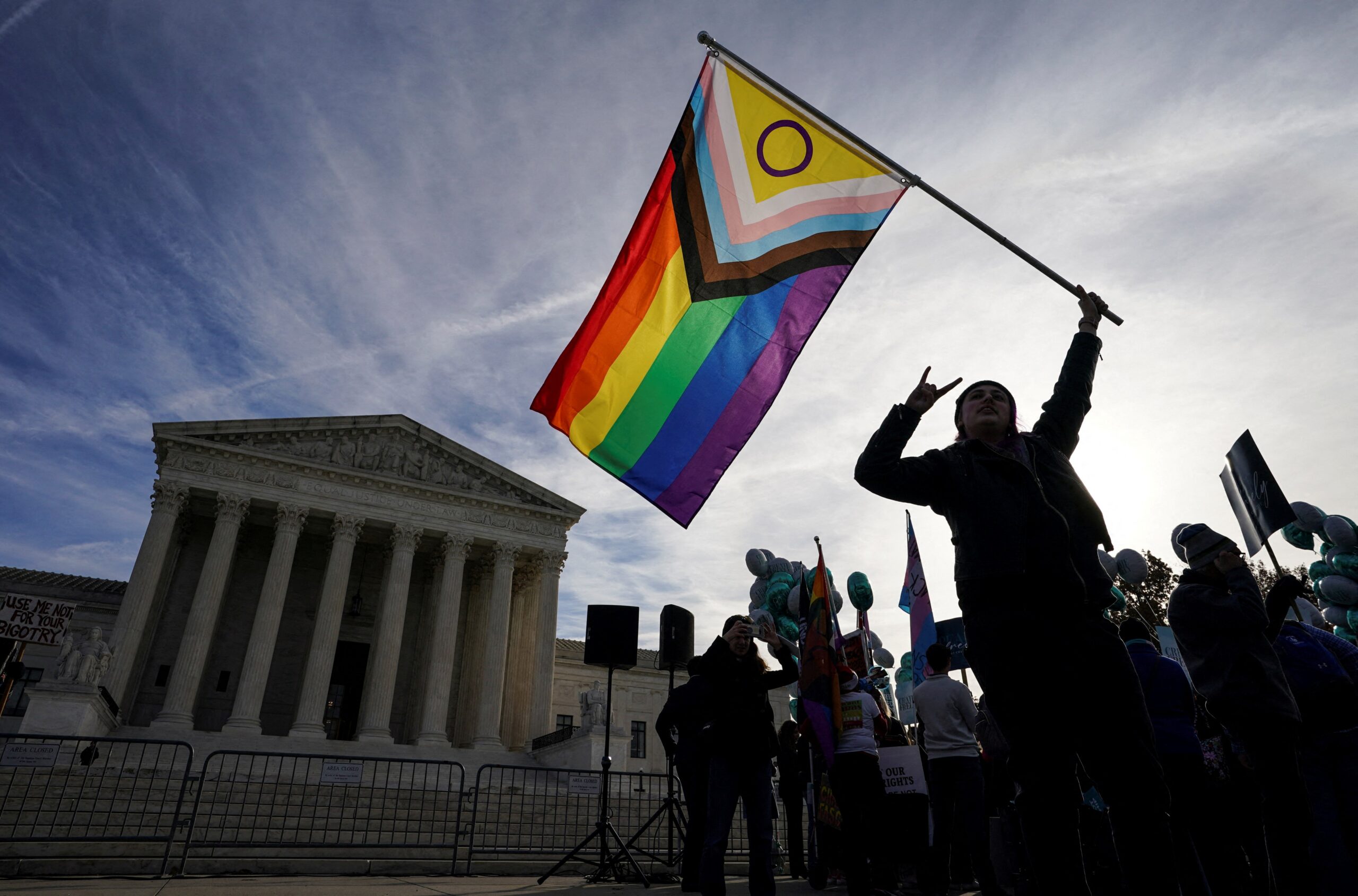
On Monday, Education Secretary Linda McMahon announced that the Trump administration is formally repealing Biden-era Title IX regulations that explicitly clarified protections against discrimination based on sexual orientation and gender identity, returning schools to the Title IX framework established during the first Trump administration in 2020. The change also reinstates the 2020 procedures for handling sexual-misconduct complaints, including more adversarial, courtroom-like proceedings that survivor advocates argue can discourage reporting.
While this particular rule does not itself define “sex” as biological sex, it is part of the administration’s broader effort to impose that definition across federal law. In practice, returning to a strictly “biological” definition of sex strips transgender people of civil rights protections that other students are entitled to, leaving them with fewer legal tools to challenge discrimination simply because the law no longer recognizes gender identity as a protected category.
In the Catholic Church, the theological categories of male and female are a core element of official teaching, and this influences the response to transgender people. There has not been a genuine reckoning with the complex reality of human biology that reveals an immense variation in God’s creation of human chromosomes, hormones, reproductive anatomy and sex development.
The April 2024 Vatican document “Dignitas Infinita” described gender-affirming surgery as a “grave violation of human dignity,” placing it alongside global ills like war and human trafficking. Yet Pope Francis repeatedly emphasized pastoral encounter and welcome, meeting with transgender people personally and approving Vatican guidance that allowed transgender people to serve as baptismal witnesses at Catholic weddings and also as godparents. Francis also believed in legal protections for same-sex couples.
Theology gives us the language to ask who God is and how our relationship to God should affect our relationships with one another.
While transgender people are currently highly politicized, we are also particularly vulnerable because of high rates of marginalization and stigma, discrimination and systemic inequality. We encounter barriers in accessing health care as well as finding and maintaining employment and safe housing. We may also face legal challenges regarding identity documents, which can further exacerbate our vulnerability to violence and discrimination. Theology gives us the language to ask who God is and how our relationship to God should affect our relationships with one another. But theology does not teach us to ignore the material realities human beings actually live in.
Catholic social teaching is especially insistent on the need to attend to the material realities people face. It puts a primacy on caring for the most vulnerable, without judgement, without blaming the most vulnerable for their position in society. As Pope Francis highlighted in “Querida Amazonia” No. 27: “Dialogue must not only favor the preferential option on behalf of the poor, the marginalized and the excluded, but also respect them as having a leading role to play.
Others must be acknowledged and esteemed precisely as others, each with his or her own feelings, choices and ways of living and working.” This is precisely the posture Catholic social teaching calls for when confronting people whose lives and circumstances have left them vulnerable to exclusion.
Catholic social doctrine also places particular responsibility on public authorities to protect the vulnerable. In his first encyclical, “Magnifica Humanitas,” Pope Leo took pains to outline the importance of Catholic social doctrine and noted at No 64, “…public authorities have the delicate duty to “harmonize the different sectoral interests with the requirements of justice,” seeking a balance between individual interests and the common good, without leaving behind the most vulnerable.” That principle has direct relevance to laws like Title IX, which determine whether vulnerable students have meaningful protection against discrimination and abuse.
Students need a meaningful avenue for protection when they experience discrimination, harassment or sexual violence.
Students need a meaningful avenue for protection when they experience discrimination, harassment or sexual violence. Removing explicit protections for LGBTQ students means that transgender students now have fewer federal tools to challenge discrimination against them.
Shiwali Patel, senior director of education justice at the National Women’s Law Center, noted in a statement, “while the administration is unlawfully eroding protections for trans students under the guise of ‘protecting women and girls,’ they are systematically weakening the very laws that keep students safe and schools accountable.”
Catholic teaching on the human person cannot be separated from what happens to human persons in the world. If transgender people are created in the image and likeness of God, then their dignity does not become less real when they encounter disagreement, political controversy or legal uncertainty. And if Catholic social teaching asks us to give particular attention to those who are vulnerable, marginalized or excluded, then transgender students cannot simply become invisible when the law changes the categories used to protect them.
The question, then, is not whether the church must abandon its theological convictions about sex and gender. It is whether those convictions can coexist with a commitment to protecting the dignity and basic human rights of people whose lives do not fit neatly within those categories.
Catholic social teaching gives us a framework for answering that question: Encounter the person first, listen to those who experience vulnerability and ensure that public institutions do not leave the vulnerable behind. Every person deserves the protection of the institutions meant to serve the common good.