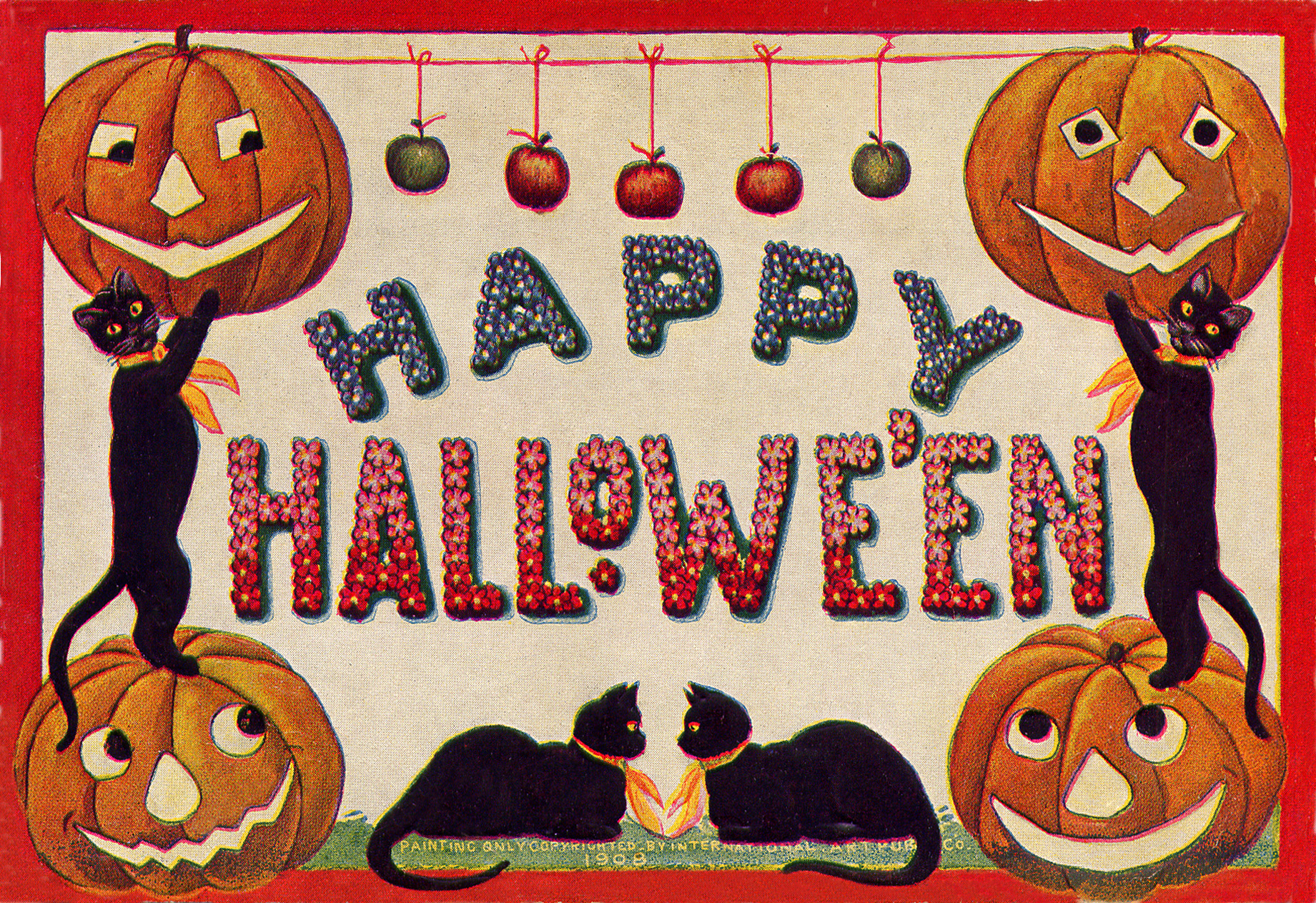
Halloween has always held sacred meaning for the LGBTQ community. I believe this is especially true for LGBTQ Catholics, who rarely have the opportunity or freedom to show up in church spaces as themselves without fearing discrimination. As we celebrate Halloween, a holiday with roots deeply interwoven with All Hallow’s Eve—the day before All Souls Day, I believe Halloween is and can be a special feast day for our community. It can serve as a sacred invitation to show up in church as our true selves and to remember and celebrate our beloved queer ancestors.
Halloween’s meaning to the queer community is both personal and historical.
Many LGBTQ people have at one time felt a kinship with the stories of the monstrous—tales of creatures who are pushed out and live on the margins, who are disowned by their families or communities, religious or otherwise, for who they are. Think of Frankenstein, Dracula or Wolf Man. In the time of the 20th century Hays Code, when LGBTQ characters could not appear openly on screen, early horror films like “Dracula” (1931), “The Old Dark House” (1932) and “Dracula’s Daughter” (1936) subtly coded these monsters to explore elements of “otherness.” Some of the filmmakers behind these classic films were themselves gay. Perhaps this is why so many LGBTQ community members have become devoted horror fans.
Halloween can serve as a sacred invitation to show up in church as our true selves and to remember and celebrate our beloved queer ancestors.
This is especially true for LGBTQ people in the Catholic Church who—despite greater recognition in synodal discussions—are still told they are “intrinsically disordered.” Many of us have been told that we are inherently unlovable by God because of what the church says about LGBTQ identity. So we often find solace in the stories of the monstrous who also heard and often internalized these untrue things.
Today, many conservative Catholic communities refuse to celebrate Halloween, believing its exploration and embrace of the monstrous (or the marginal) stems from Satanic worship. In truth, it’s a uniquely Catholic holiday. Halloween itself is rooted in All Hallow’s Eve, the vigil before All Saints or All Hallows Day on Nov. 1 and All Souls’ Day on Nov. 2. In many communities, All Hallows Eve is a time to remember, celebrate and be with our ancestors and loved ones in cemeteries and on our altars. Some communities even believe that the dead return to join us, to share a meal or a moment with us on earth.
For a community still collecting and preserving its history (much of which is lost and destroyed), All Hallows Eve is a time for us to remember our families—biological or chosen. It is also a time to remember all of our queer ancestors—those whose names are both known and forgotten—who preceded us. Whether they were in the closet or out, whether or not they used the same words we identify with today, they are important members of our communities, and Halloween is a wonderful opportunity to honor the members of the LGBTQ who have gone before us.
In many communities, All Hallows Eve is a time to remember, celebrate and be with our ancestors and loved ones in cemeteries and on our altars.
At the same time, Halloween—which often foregrounds imagery of death—directly connects to the Catholic tradition of memento mori (“Remember you must die” in Latin). For a community still facing an epidemic of anti-LGBTQ violence (including the Berlin Pride attack in July and the recent shooting at a gay bar in Tucson in early September), death can feel especially close to us. Many LGBTQ Catholics today recall the AIDS pandemic of the 1980s, while younger generations reflect on living during a time of mass shootings.
With so many members of the LGBTQ community affected by death, it is good to remember this Halloween that as Catholics, we believe we will live again anew. I think of the medieval “Danse Macabre,” also known as the “Dance of All Hallows Eve,” which became popular in the 14th and 15th centuries in Europe. Amid the explosion of the Black Death, the performance showed how everyone—kings, popes, peasants, indentured servants, children—all share the same end. For those of us who face the reality of losing friends, partners and community members because of queerphobic violence, the promise of eternal life offers hope.
Historically, Halloween was also a time when LGBTQ people could show up as their authentic selves. Throughout the 19th and 20th centuries, anti-sodomy laws, “three-article” laws, and anti-cross-dressing laws spread and tightened across the United States. However, police could not arrest everyone who was cross-dressing on Halloween, so the holiday became a night of freedom and protection for people to show up as themselves. As a result, LGBTQ individuals and communities began hosting a variety of holiday celebrations to find time for community and togetherness, like Halloween balls in Chicago, and “bitches Christmas,” in Philadelphia, a celebration in the 1950s and 1960s where LGBTQ revelers would follow drag performers from gay bar to gay bar.
Ironically, Mardi Gras was the only other day when strict anti-sodomy and anti-cross dressing laws were relaxed—the day before Ash Wednesday and the start of Lent. In fact, the underground LGBTQ community in New Orleans created events and safe spaces like the 1949 Fat Monday Luncheon (the oldest organized event in LGBTQ history) and early gay krewes that would gather and parade together throughout the city. Mardi Gras celebrants and Carnival revelers have long dressed in drag to visualize a blurring of gender and class separations. With thousands of celebrants flooding the streets, police could not arrest everyone.
For those of us who face the reality of losing friends, partners and community members because of queerphobic violence, the promise of eternal life offers hope.
I believe the fact that these two nights of the year when anti-LGBTQ laws were historically loosened coincide with Catholic feast days is not a coincidence. Throughout Catholic history, Carnival (the festive tradition that inspired our modern Halloween and Mardi Gras) has been a time of “symbolic inversion,” when social rules, hierarchies and gender norms were turned on their heads. In these celebrations, LGBTQ Catholics found solace and strength across time. When we continue the tradition by gathering to celebrate a holiday that has become largely commercialized with a secular celebration that is not a Catholic feast day, we continue the legacy of what this holiday meant to our ancestors.
These holidays are a reminder that there has always been space for us in the church, that traditions of feasting and remembrance center around a world where the people living on the margins are made center, where our beloved ancestors can return to and embrace us.
This Halloween, I invite all LGBTQ Catholics to see this holiday anew, as a day not just of festivities but also one of solidarity with and celebration of our beloved LGBTQ forebears who showed up as who they were and fought for us to do the same.