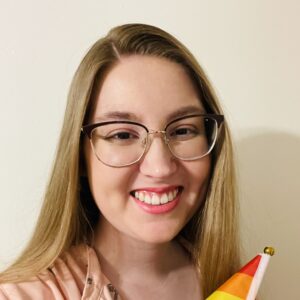
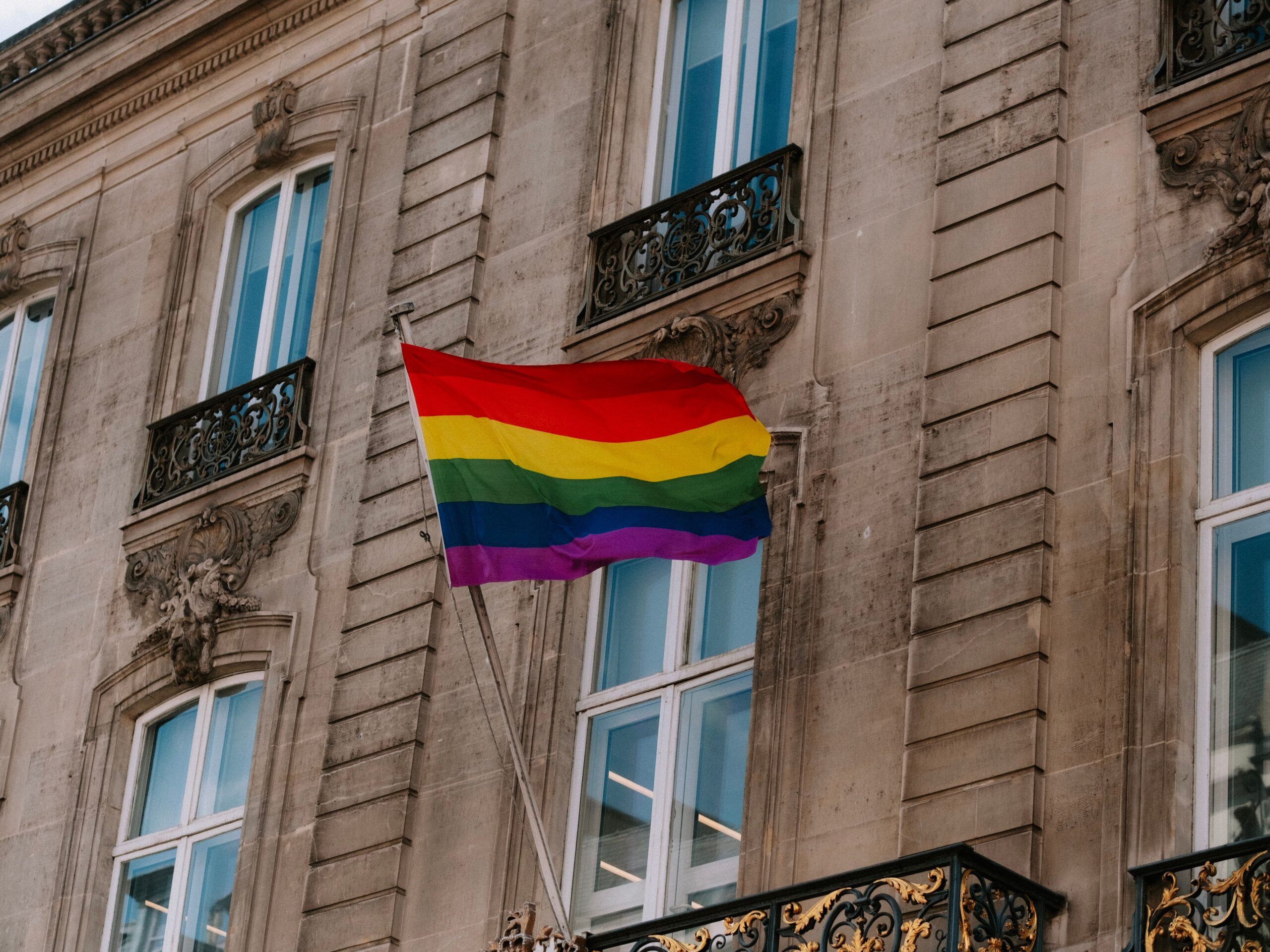
October is LGBTQ History Month, a critical time to reflect on the history of our own communities. Four years ago, I founded the Queer and Catholic Oral History Project and have so far collected over 100 oral history interviews with LGBTQ priests, sisters, artists, actors and advocates who share how they navigate their relationship with the Catholic Church. These interviews document vital, previously undiscovered histories surrounding LGBTQ Catholic organizing and advocacy. These interviews record Catholics creating their own faith communities, along with stories of people’s strength and survival in the face of institutional homophobia.
But often when I ask people if they want to participate in an interview, they explain their lived experiences are not worthy of collecting or preserving.
This is fundamentally untrue. But it comes from a place of historical erasure and internalized homophobia. When we grow up not learning about our communities and their histories, it perpetuates the false narrative that our communities are relatively new—that we are the first gay, lesbian, bisexual, transgender or intersex person to ever exist. It is an isolating experience. LGBTQ people have existed as long as humans have, and while our ancestors may not have used the terms that we do today, historians increasingly uncover stories of people who look and love like us throughout time.
LGBTQ people have existed as long as humans have and historians increasingly uncover stories of people who look and love like us throughout time.
But these historians’ work is extraordinarily difficult because for centuries, queer stories have been erased or have gone unrecorded in preserved records. Part of this was the result of institutional homophobia, but part of it had to do with survival. In a time when being identified as LGBTQ could mean a person was disowned, shunned or even killed, destroying the community’s materials—charter documents, membership minutes, mailing lists and photographs—was among the only ways to protect the community. At a time when being who we were was criminalized, it made sense that any record of this identity, and those organizations, was dangerous to keep.
Even today, LGBTQ history remains under threat at our largest historical institutions, with attempts by conservative political forces to silence and erase our histories once more. When LGBTQ groups (especially LGBTQ Catholic groups) gather in community, bigots often protest and threaten them. Even as I am working to preserve LGBTQ Catholic history, a number of people that their names to be redacted or their pictures be blurred, out of fear that being out puts them and their families at risk, an understandable choice.
But as we survive and fight for our rights, it is critical that we preserve our histories.
Preserving our histories can mean many things for our community. For instance, this can mean participating in an oral history interview, as part of the Queer and Catholic Oral History Project or any other local initiative documenting your story. Oral history is a form of reparation, one that acknowledges that marginalized communities often do not leave written records because of oppressive outside forces. These interviews hold space for people to share their stories in their own time and in their own words.
But this preservation can also mean going through your own records—through your basements, backrooms, attics and filing cabinets to find the flyers, posters, prayer cards and diaries that document our histories. These pieces of our lives, our loves and our organizational power that we often do not think to keep or have shoved away are can find homes in university or community-based archives or local digitization initiatives. Historians thrive on these records. These are some of the only written or printed records our community has.
Choosing to collect our histories, to maintain the records of our organizations and our own personal journeys privately is also a revolutionary act.
But the act of preserving our histories does not need to be public. Choosing to collect our histories, to maintain the records of our organizations and our own personal journeys privately is also a revolutionary act. Not everyone is safe to come out and share their history publicly. In all honesty, the threat that a person would be disowned, shunned, or even killed if they were outed is still very real for many of us
I have hope that one day we will not need to fear for our lives, for our families, in being who we are. When that day comes, I want to make sure that there is a history there for archives to collect and historians to share. There are two reasons for this: resilience and accountability.
When people share that their histories are not worth collecting, I share that just surviving as a queer person is resistance. Finding and fostering our communities will always be enough. It is the history that someone out there may need to hear, stories of how they can flourish as someone raised in the Catholic Church, and find a home in a church LGBTQ people have long been part of—not just as lay people but in religious orders.
Our personal stories are meaningful; the records of our lives, our loves and our faith are worth collecting. This is especially true of LGBTQ Catholic histories, histories of people who organized and advocated for our right to exist free of discrimination and violence, free to bring our gifts and unique talents to our church communities.. The church cannot deny that the histories of DignityUSA, New Ways Ministry and, more recently, Outreach are inseparable from the history of the institutional church, as is every single LGBTQ Catholic who continued to take up space or whose absence was seen and felt by the community once they left.
This LGBTQ History Month, please make a commitment to recording your own history.
In a recent conversation with the president of DignityUSA about the 40th anniversary of the “Halloween Letter,” Marianne Duddy-Burke shared how important it was that Dignity members kept their records and went through them as part of their upcoming four-part series reflecting on the legacy of this letter.
“The fact that people have kept their documents about how they communicated with other members of Dignity/Chicago and with Cardinal Bernardine and with the sisters that were supposed to hold their retreat and cancelled it, all of that stuff is in people’s files. They know where it is and they can dig it out, or they can go to their archives. It’s really important.”
This LGBTQ History Month, please make a commitment to recording your own history. Whether you do this by participating in an oral history interview, writing down your personal memories or those of your community or by organizing your papers and making a plan to give them to an archive or have them digitized, any step taken to preserve our community’s history is a radical one, one that pushes us toward recognition and equality and liberation, in our church communities and beyond.