Lea este artículo en el español original aquí.
“The fundamental dignity of each person, therefore, is neither acquired nor earned, nor does it need to be justified.”
–Magnifica Humanitas, Pope Leo XIV
In 1991, in Washington, D.C., I came out of the closet. I finally acknowledged something that nearly everyone around me had discreetly known for years: I was gay.
My realization took place within the context of a deep Catholic upbringing and a community of faith that had been driven away from any ecclesial ground by Cardinal Joseph Ratzinger. All this allowed me to appreciate a community of believers who remained profoundly committed to a church that rejected them in the most egregious ways. This faith, inherited by some, discovered by others, was an intrinsic part of all their identities. In my case, this new understanding of myself soon found expression in pastoral care.
Every Sunday, other community members and I gave Communion to patients at the Whitman-Walker Clinic, at the heart of Washington’s HIV/AIDS crisis. For them, the diagnosis of the disease was practically a death sentence. Fear of infection led many within the church to quietly evade ministry among those particular suffering souls. The scenes we encountered each week were worthy of Dante’s Inferno. I will never forget them nor do I want to. There I learned that, confronted with fear, rejection and exclusion, one must trust God and build bridges.
It is from the remembrance and echo of those experiences, and in light of Pope Leo XIV’s recent words during his visit to Spain, that I find myself reflecting on the church in Latin America and particularly in the Dominican Republic. I perceive a church insistently called upon by reality itself to search out the wounded and the marginalized. I cannot forget or ignore the times when this church has failed to answer its call. Few realities typify that failure more clearly than the relationship, or lack thereof, between our ecclesiastical hierarchy and the church’s own LGBTQ people.
Law does not encompass the entirety of human experience. Love does.
The experiences of LGBTQ persons in Latin America are diverse. Argentina, Uruguay, Colombia, Brazil and Puerto Rico offer broad legal recognition and relatively robust protections. In contrast, Chile, Cuba, Costa Rica, Mexico and Ecuador have made significant legal progress while still struggling to ensure that those rights are fully realized in everyday life. Finally, in the Dominican Republic, Nicaragua, Haiti, Jamaica, Honduras, Paraguay, Guatemala and El Salvador serious legal and social gaps and ambiguities remain.
This categorization is not an objective measure of dignity, acceptance or humanity. Human experience rarely conforms neatly to legal well-defined categories. Brazil possesses one of the region’s most advanced legal frameworks while continuing to exhibit alarming levels of violence against LGBTQ people. Puerto Rico enjoys extensive legal protections through the U.S. federal system, yet social ridicule and family rejection remain common. Chile has made remarkable legislative advances, but current realities still depend heavily on geography and social class.
Law matters. Yet, as Saint Paul reminds us in Romans 13:8–10, “love is the fulfillment of the law.” Moral reality cannot be reduced to legal norms; it reaches its fullness in love of self and neighbor. Law does not encompass the entirety of human experience. Love does.
And while a significant gap often exists between recognized rights and real-life dignity throughout Latin America, it is precisely this gap that ironically unites the faith experience of many LGBTQ believers across the region.
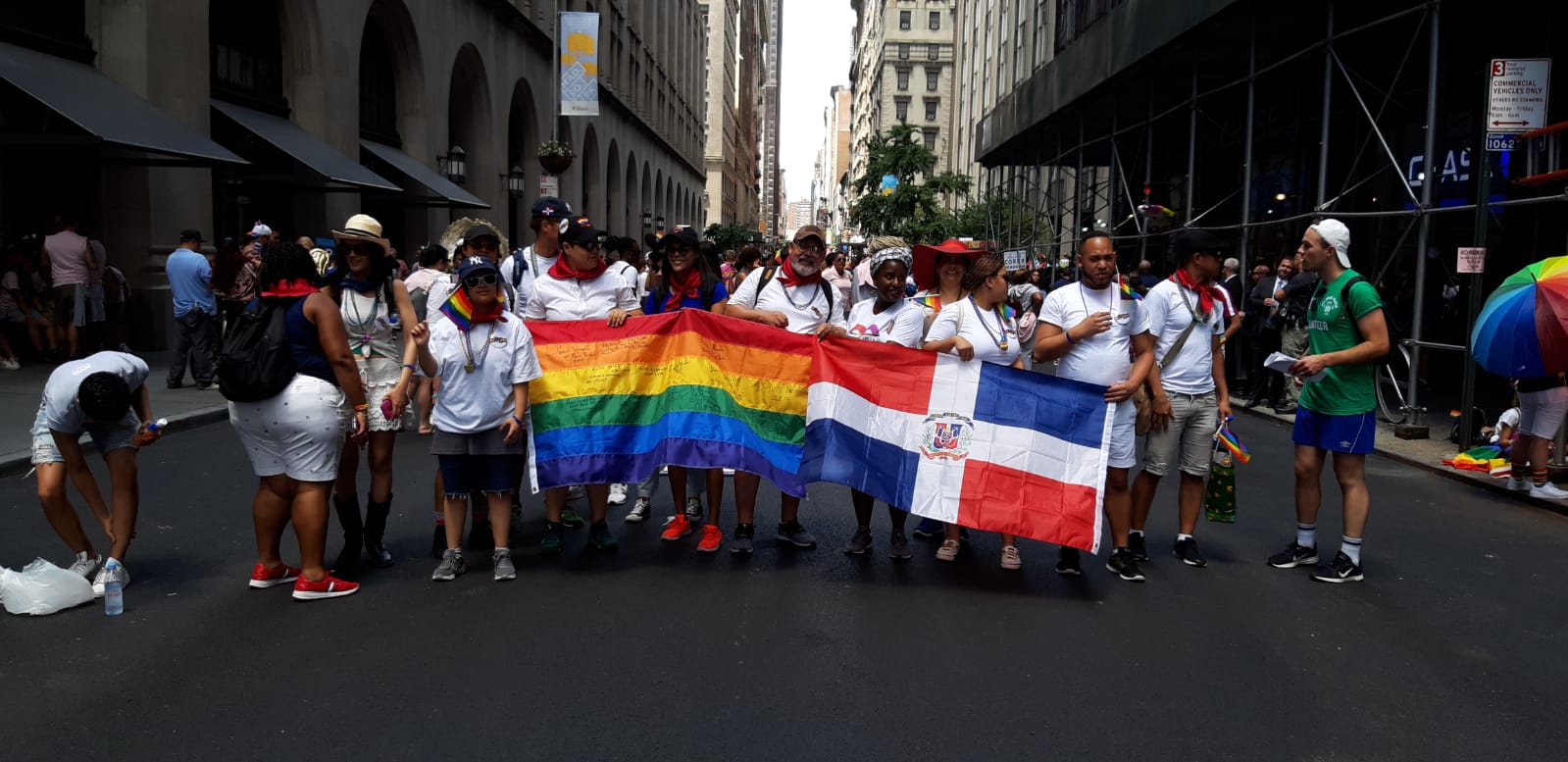
In the Dominican Republic, same-sex relationships are not held to be criminal offenses. Yet during the recent revision of the Penal Code, one legislator took particular care to remove any language that would have protected the LGBTQ community from discrimination. Beyond a mere legislative position, this was an act of open and explicit hostility and erasure, made all the more troubling by the fact that, in discriminating against a significant portion of the population, she was also discriminating against members of her own family.
As soon as I realized my own reality, my path became clear: to live openly. But I harbor no illusions about the cold, high price I have paid for that decision.
Its practical consequences extend beyond the denial of basic legal protections to members of the very church that claims them as its own. More scandalous, however, is that such actions seem to carry the clear but implicit approval of some who represent the church, leaving many believers with a profound sense of abandonment and despair. The problem facing Dominican Catholics goes beyond questions of legal protection and into issues of Christ’s love.
Although this reflection focuses on the LGBTQ community, it is only fair to acknowledge that similar dynamics affect other groups: migrants, particularly Haitians; Dominicans of Haitian descent; and women, especially those who are poor, young and/or racialized.
Gay, bisexual, intersex and transgender Dominican Catholics have historically experienced various forms of rejection, some of them remarkably cruel. For the most part, the church has failed to provide either institutional recognition or genuine pastoral care. In practical terms, this relegates LGBTQ Catholics to choose between two broad paths: to live their identities openly, enduring ridicule, exclusion, and humiliation in spaces that should offer welcome; or concealment to avoid public scrutiny and shaming. Those with economic means often leave the country. Others drift into lives marked by sexual exploitation using money as an excuse to live their truth.
Yet all these paths ultimately converge in the same place: the deep internalization of rejection.
As soon as I realized my own reality, my path became clear: to live openly. But I harbor no illusions about the cold, high price I have paid for that decision.
When rejection no longer comes from outside but rather takes up residence within, the consequences are profoundly powerful. Dignity ceases to feel like one’s right. The freedom promised in baptism becomes unattainable. The person learns to look at themselves through the eyes of those who despise them. At this point, the primary obstacle to grace is no longer sin, but a lie believed so deeply that it leads to self-contempt and total lack of consolation. The issue ceases to be merely social and becomes spiritual.
The essential question is simple:
What should the relationship between the church and LGBTQ people be?
This question is not new. The universal church has been wrestling with it explicitly for generations. Nor, in my view, is the answer entirely new.
During his visit to Spain, Pope Leo XIV repeatedly returned to the same theme. Addressing the Spanish bishops, he reminded them: “Your mission calls you to safeguard unity, foster dialogue, heal divisions, and accompany the journey of the people entrusted to your care.”
Later, at the Abbey of Our Lady of Montserrat, he prayed: “Let us ask Mary, Queen of Peace, to teach us to renounce hurtful words, hasty judgments, gossip, and slander. And let us learn to nurture love within families, among friends, in the workplace, on social media, in political debate, and within Christian communities, so that hatred may give way to hope and peace.”
His message sounded the unmistakable chords of the shepherd and resonated with hope. And, though not directed specifically toward LGBTQ persons, its relevance for us is evident.
The Holy Father addresses the pastoral questions: How do we actually treat human beings? How should the church act pastorally in a society afflicted by polarization, fear and exclusion?
No consideration can eclipse human dignity, says the Pope.
Wisely, pontifically, he does not prescribe. He invites us, in gentle words, to recognize a simple truth emphatically proclaimed by Saint John Paul II and reaffirmed repeatedly by the church’s magisterium, still resisted in some ecclesial circles nearly half a century later: “An infinite dignity, grounded in its very being, belongs to every human person, beyond all circumstances and in whatever state or situation he or she may be.”
No consideration can eclipse human dignity, says the Pope. He insists that human dignity is not a function of any outward condition, neither explicitly by age, origin, race or social status, nor implicitly by sexual orientation or gender identity. His words remind us that in the Gospel, encounter precedes conversion. They teach us that it is imperative not to exclude anyone from a Christian community until they have been heard and they have felt heard.
From the simplicity of this reflection, I pray that the church may hear this plea. That it may understand that affirming humanity and hence the dignity of the marginalized does not require abandoning conviction or embracing alien ideas. It just requires creating spaces where all people can speak without fear, listen without prejudice and accompany one another without preconditions. It requires building bridges of reconciliation between God and all his people.
For absent such bridges, dignity devolves into an abstraction and freedom into an empty promise. Yet wherever a community learns how to approach one another without judgment, the church’s miracle is revealed: differences cease to be viewed as threats and become transmuted into the concrete expressions of God’s universal Oneness.
More than thirty-five years ago, I stood among the dying. Some were convinced of their own unworthiness. Some were filled with self-hatred. Others directed hatred towards their imagination of a God they were about to meet. All were deprived of the care, consolation and even the presence of a church called upon to reflect Christ in the world.
Yet it was there that I learned that faith finds its fullest meaning only when it leads us toward an encounter with God grounded in the dignity of the human person.
Pope Leo XIV ‘s invitation from Spain to the universal church is an old and familiar one: that the church embodies, through concrete and compassionate pastoral care, the true mystery of the cross: that nothing can diminish the God-given infinite and unconditional dignity of every human being.