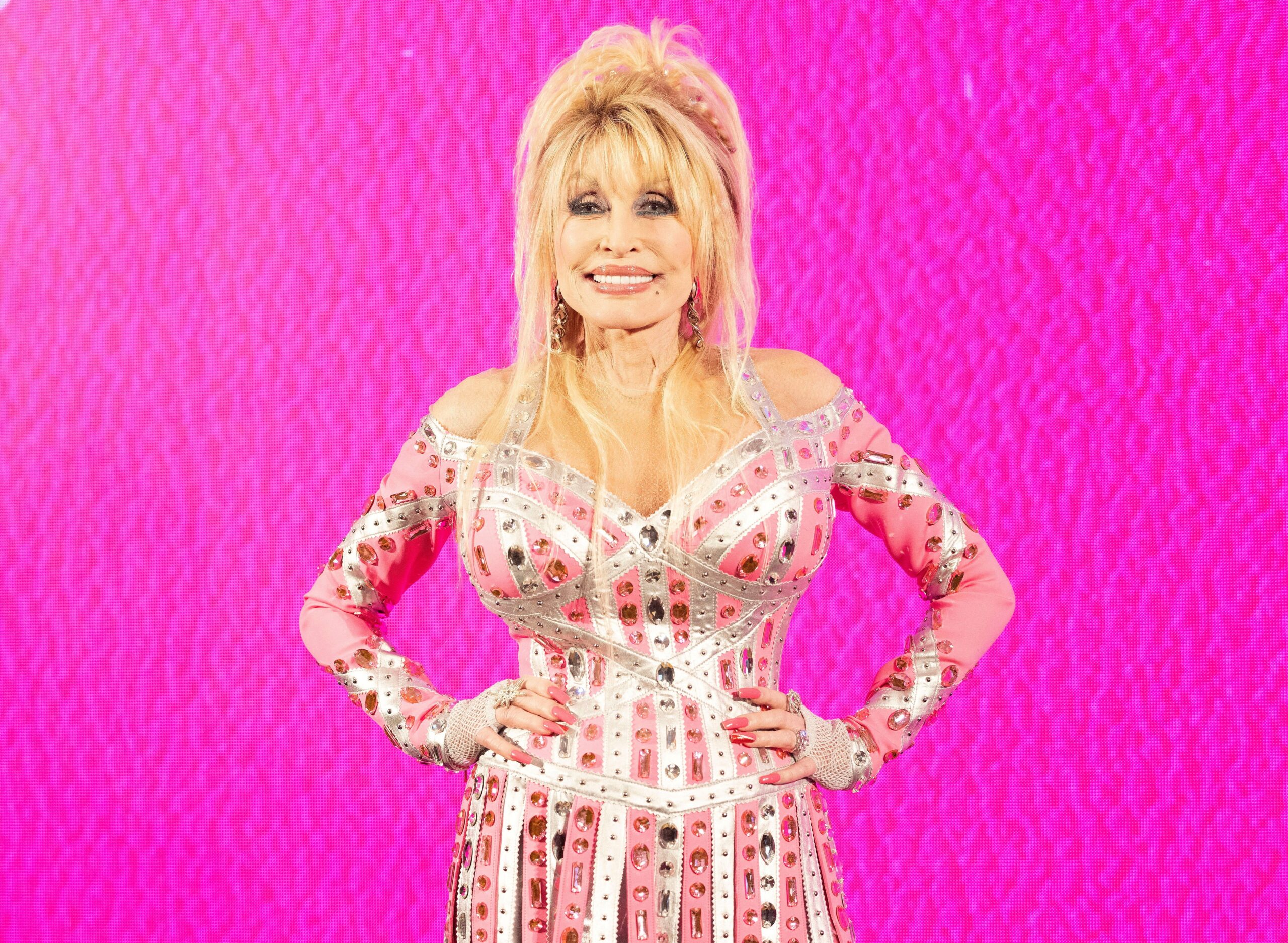
Dolly Parton’s death inspired countless tributes from her fellow musical artists from every genre and style. Every single one of the remembrances I read—whether by country or bluegrass artists, pop, rock or soul—included in their praise of her extraordinary musical gifts a mention of her charitable kindness, her joyful spirit of inclusion and her loving acceptance of all people. She sang with and for everyone without a hint of judgment or disapproval because that is what art and music are about—and frankly it is the message of Scripture too.
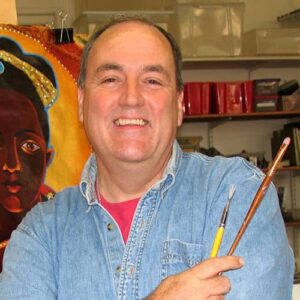
Psalm 49 states, “With a harp I will solve my problem” (cf. Psalm 49:4). In my own personal interpretation of that image over the years, the harp becomes a paintbrush or sketching pen because they are my preferred instruments of problem solving or prayerful contemplation . In a process that begins with Lectio Divina—or Sacred Reading—my wild imagination goes into the realm of Visio Divina—or Sacred Viewing—where darkness becomes light and anxiety evolves into hopeful joy. Whether it’s the music of a single harp or a full orchestra, the pounding beat of a rock anthem, a moody jazz arrangement of a sacred hymn or, in my case, a paintbrush loaded with my favorite colors of the day, art and beauty in any form help us solve our problems, overcome our fears and share our discoveries with our fellow humans in search of hope and encouragement.
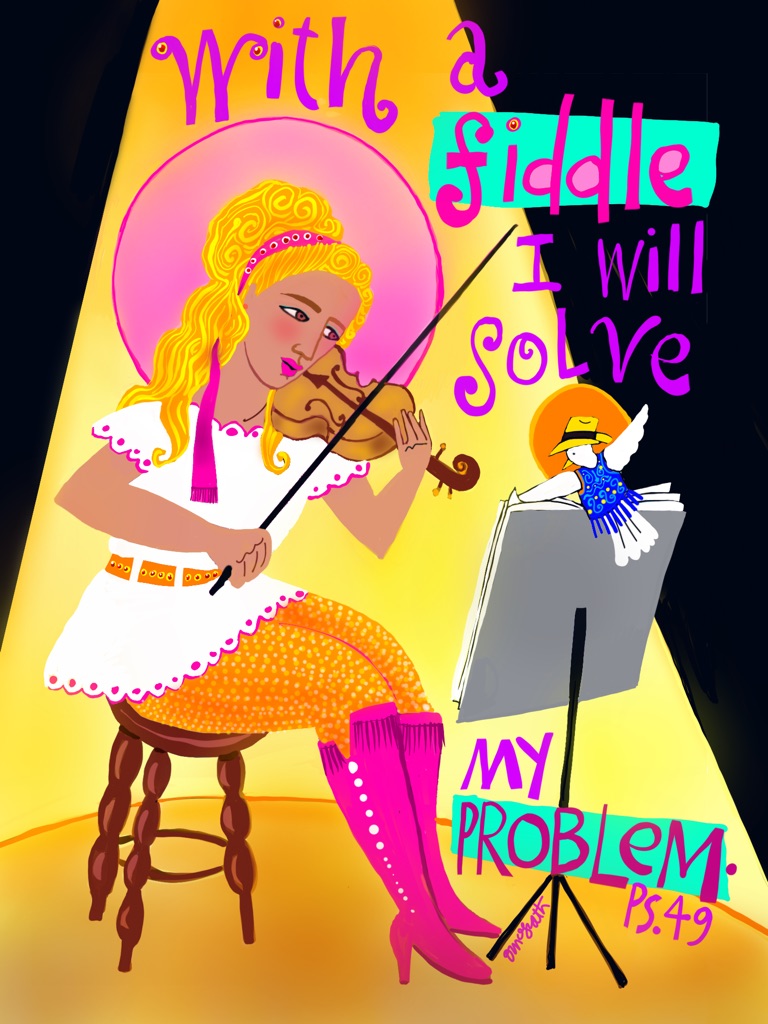
No matter our race, gender or sexual orientation, we are made in God’s image and likeness, a theological point I’ve found best expressed in music. Several years ago in preparation for a retreat presentation for liturgical musicians, I created a new image to illustrate the words of Psalm 49:4, turning the “harp” into a fiddle being played by St. Cecilia herself, the patron saint of musicians. With each thoughtful stroke of my pencil, St. Cecilia began to resemble the one and only Dolly Parton, with the Holy Spirit being represented next to her, donning a cowboy hat and vest, representing God’s work in her.
Servant of God Sr. Thea Bowman is another saintly musician who used her gift of song to get her audiences on their feet, link arms and join together in singing “We Shall Overcome.” Most memorably, at an event with all of the bishops of the United States, she was able to use music to have everyone present join in prayerful song and cheer. She began her talk to the over four hundred bishops gathered by singing “Sometimes I Feel Like a Motherless Child.” She was dying of cancer and spoke to them from a wheelchair, giving witness and testimony to the musical healing power of faith, hope and love. She was Christ before them, inviting them to break free, at least in those moments, of their identities as men with power and authority in a black and white world of rules and regulations. She began and ended her time in song, helping to make those bishops aware of God’s colorful—and musical—presence. This is the sacred work of art: it touches our hearts and memories, our hopes and dreams, in ways like nothing else.
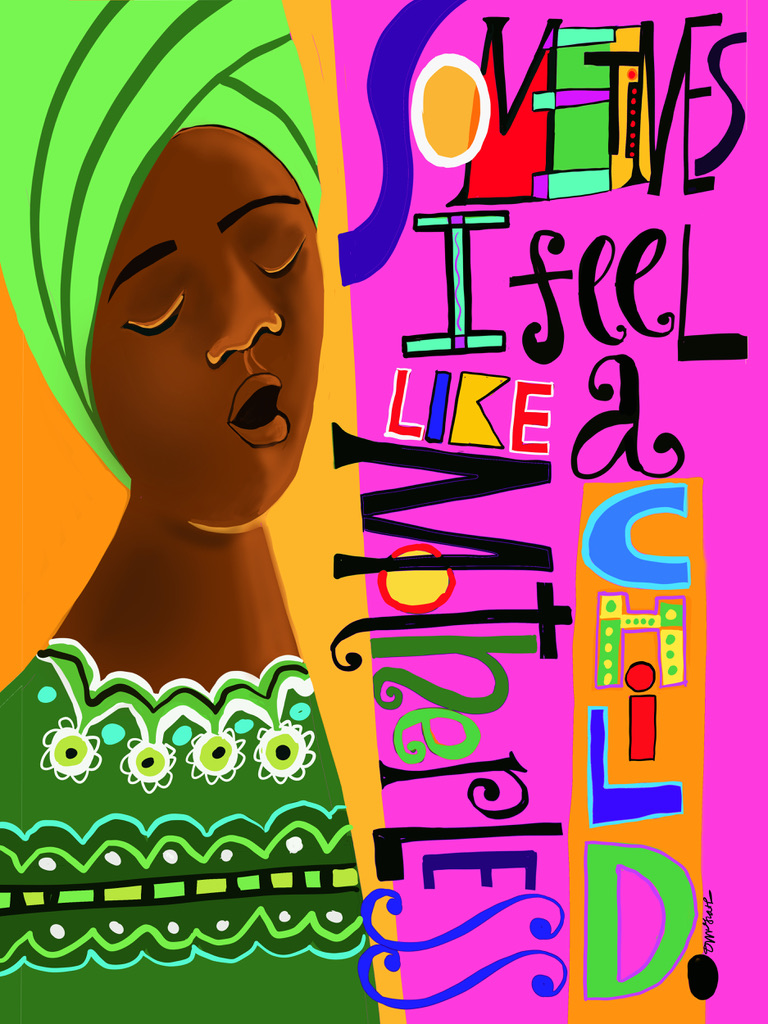
I, too, sometimes feel like a motherless and even a fatherless child, not only because I am one but because the world changes each day. Dolly Parton, Sr. Thea Bowman and countless other artists of every stripe feed my soul and inspire me, encouraging me to keep on steppin. I trust them fully and know in my heart that even in times of anxiety and fear, love wins, along with hope, faith and beauty in all of its forms and expressions. Thank you Dolly Parton and Sr. Thea Bowman for reminding us that the Holy Spirit is alive and well in each and every person.