I knew the Outreach conference at Georgetown on June 19th would defy my expectations as soon as I opened the information packet and read Archbishop Robert Cardinal McElroy’s welcome letter. What a momentous moment; a sitting archbishop “delighted” with the “faith-filled and diverse disciples” coming to his diocese. Reading his emphasis on the new paradigm emerging from the Synod on Synodality and his reiteration of Pope Francis’s “todos, todos, todos” I realized then I was in for a transformational experience.
Everyone who comes to an encounter brings a story and a reason for being there. As the parent of two daughters who are members of the LGBTQ community, I came hoping to better understand the church’s current path toward LGBTQ inclusion. Over the years, I have been saddened when people close to me—including members of my own family—have made comments questioning the audacity of queer people actively attending Mass or calling themselves Catholic. The recent political climate has intensified that sentiment into something more sinister, creating an “us versus them” culture that seems to revel in naming LGBTQ transgressions and, at times, drifts into a Christian nationalism that offends and confuses me. I freely admit that I am no theologian or Catholic scholar—I even struggle to remember my catechesis when pressed—but my discontent challenged me: How could I better educate myself in the truth of my church and how could I be a true ally to the LGBTQ community and help advance Catholic inclusion?
The first step in answering those questions was easy: align with Fr. James Martin, S.J. I embraced Ignatian values during my college years at Fairfield University, and once I discovered Fr. Jim, I continued to seek out his online counsel whenever what I was hearing or experiencing within the church did not seem to reflect a loving God. Increasingly, that search for guidance focused on LGBTQ issues, which led me to Outreach and its forthright, unapologetic ministry.
The second step was harder: educating myself enough to speak truth to power, especially at the intersections of doctrine, theology and Catholic teaching. Again, with the help of Outreach, I felt more empowered with each article and essay I read—ready to put on my mama-bear mantle and do battle with anyone who wanted to point fingers or engage in intellectual sparring over religious righteousness. I was on a mission, my own personal crusade to prove I was a passionate ally who could match wits with any firebrand. It was with that mix of education and desire to fight for the cause—emphasis on fight—that I made my pilgrimage to Georgetown.
Looking back, I expected some kind of pall or heaviness over our time together. Whether because of naiveté or lack of experience in this space, I imagined a rally-type atmosphere: a call to arms, a mobilization of our collective anger and shared grievances.
The Outreach Conference reminded me that meaningful change in the church will not come from confrontation or derision, but from the steady, courageous work of love.
But I was so wrong. To reduce the weekend to one word feels impossible. It was an immersive experience across a magnificent spectrum: welcome, joy, forgiveness, celebration, Eucharist, prayer, progress, reflection, love, encouragement and, in the remarkable words of Fr. Jim Keenan at our closing keynote, “prudence.”
The conference underscored for me a simple but transformative truth: lasting change in the church begins with love—not force, spectacle or antagonism. Every session, every story and every pastoral insight pointed back to the same spiritual posture: walk with people, listen deeply, honor their dignity and trust that the Holy Spirit works through patient accompaniment.
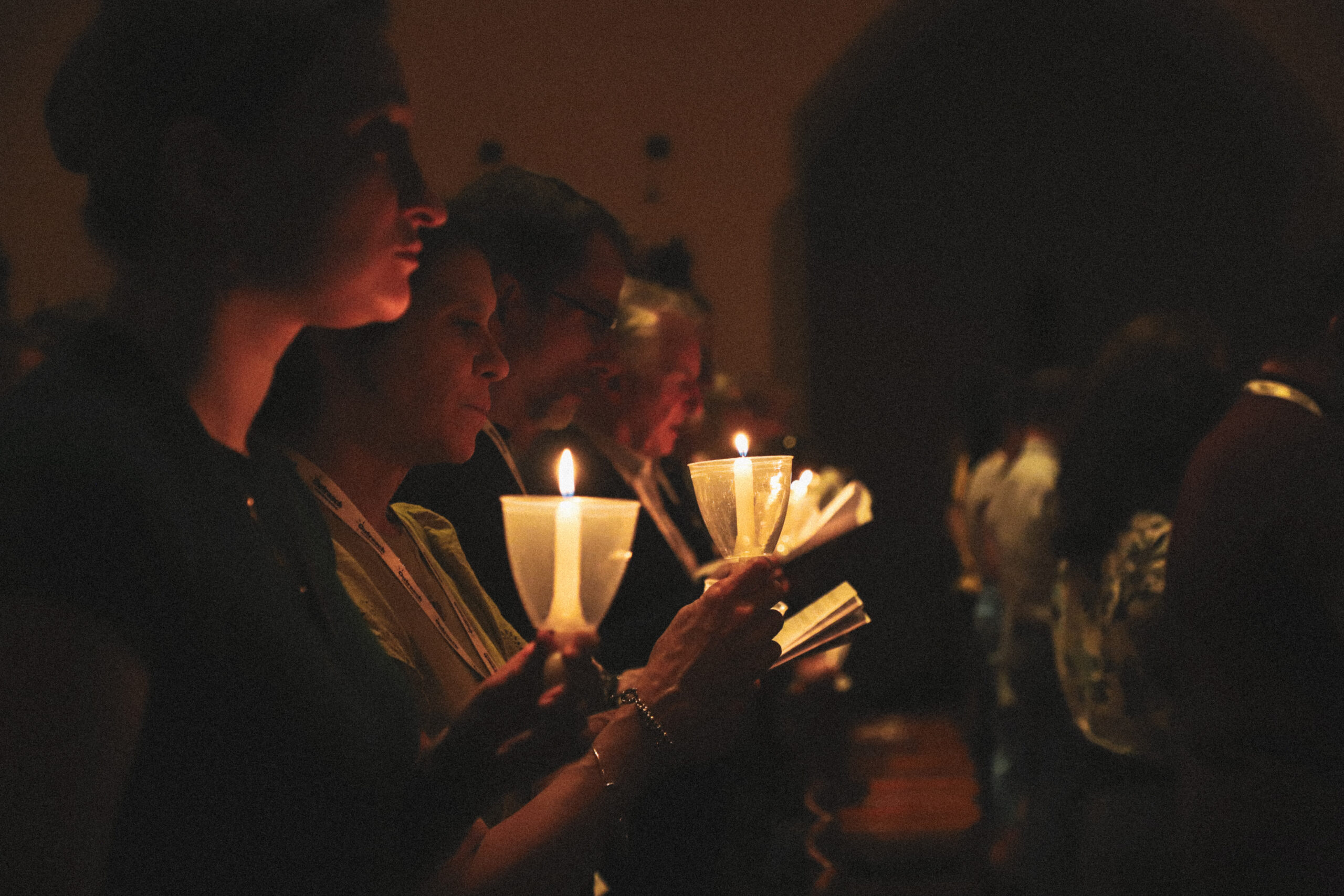
Nowhere was this more evident than in the joyous, heartfelt, beautifully orchestrated Masses. I lost count of how many times I needed to collect myself while thinking, “How do all of these LGBTQ Catholics continue not only to model Jesus, but do so enthusiastically and with their whole beings?”
The Outreach Conference reminded me that meaningful change in the church will not come from confrontation or derision, but from the steady, courageous work of love. LGBTQ ministry is not an act of rebellion; it is an act of fidelity—fidelity to human dignity, to the Gospel’s call to welcome and to the Catholic conviction that every person is a beloved child of God. The path forward is not paved with “in-your-face” tactics, but with listening, accompaniment and the quiet courage to be someone’s Bible when they are struggling. I learned Scripture itself reveals a God who continually widens the circle of belonging and our ministry must do the same. If we lead with love—persistent, patient, Spirit-guided love—change will come, not through force, but through the conversion of hearts.