There is a wicked spirit, some demonic force, devouring the youth of this tight-knit, Australian-based faith community. So believe the fundamentalist adherents of a strange Christian sect, its reliance on magic rituals and supernatural practices hewing closer to paganism than Protestantism, who seek to exorcise the diabolical urge making their sons fall in love with each other.
This sect offers a single path for its queer members, forced to comply by their elders. If you find yourself helplessly attracted to someone of the same sex, do not panic—there is a solution. After a quick visit to the local “deliverance healer,” some ancient man armed with a lighter and a prayer, you will writhe and seize and choke and discover that your object of desire is now trying to kill you. It is a game of doppelgängers: The murderous spirit replicates the form of whomever you most desire. Is this person, standing right over there, my lover or my executioner? Telling the two apart is futile. It’s best to abandon your beloved and avoid them altogether—because how you love may destroy you.
An uneven, sometimes awkward conversion therapy analogy that sees horror in sexual repression and religious prejudice, “Leviticus” imagines, in bloody detail, what happens when the burgeoning romance between several boys is imperiled and then hijacked by pious adults who decide they know best.
“Leviticus” is most effective on a visceral level, its agony capturing the searing pain of religious oppression experienced by many LGBTQ people.
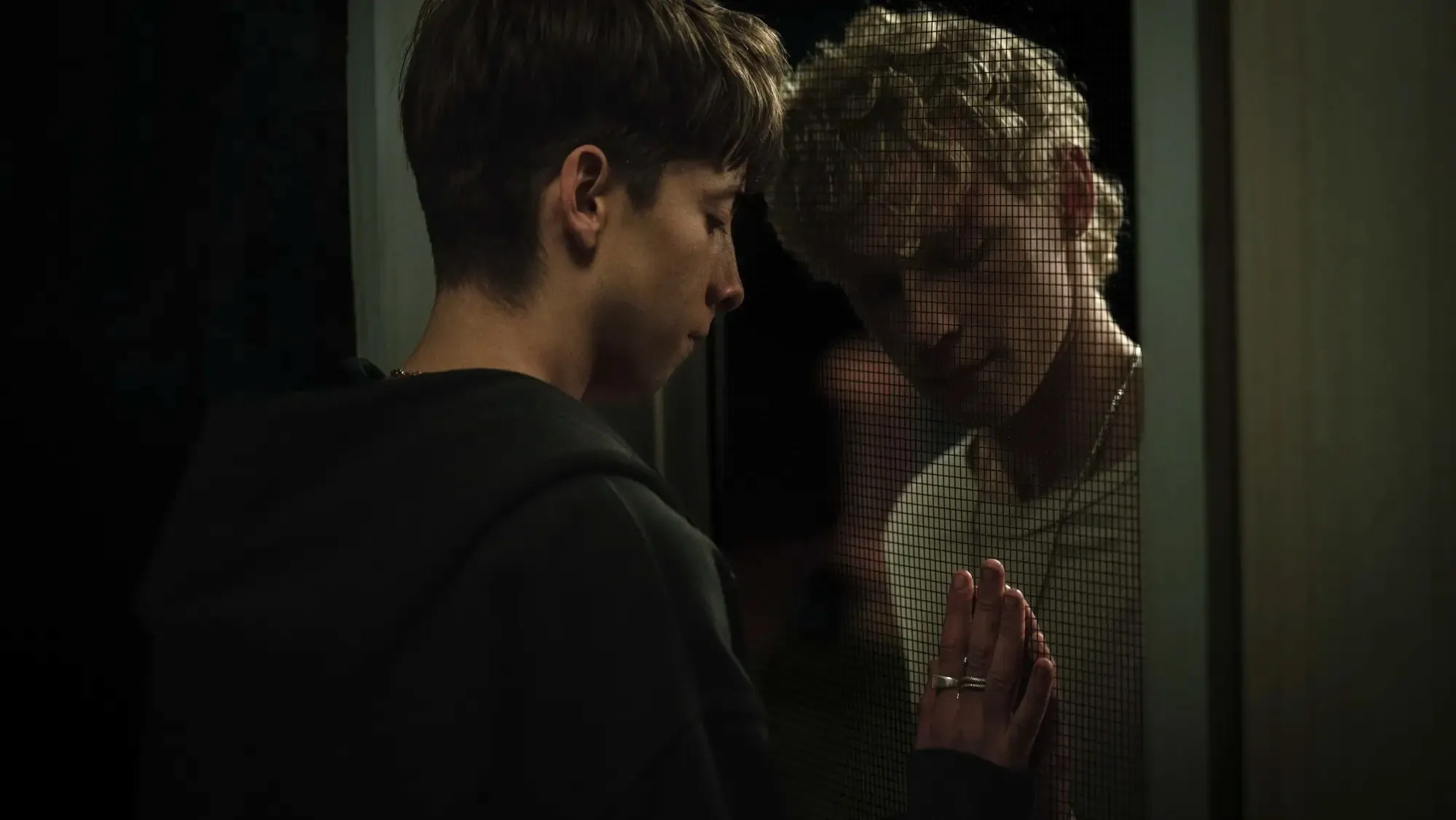
High school friends Ryan and Naim (promising newcomers Stacy Clausen and Joe Bird) have embarked on a secret love affair. In private, they are free from the disapproving glances and judgmental glares of their devoutly religious parents. But when the boys’ relationship is revealed, they are ultimately subjected to a kind of conversion therapy, by way of the occult. The result is tragic and fatal, the boys primed to see each other as mortal threats instead of romantic partners.
While some faith leaders have decried conversion therapy as dangerous and ineffective, the practice has not disappeared entirely from the church, according to an investigation by Eve Tushnet in 2021. A psychologically harmful, widely discredited practice that aims to change an LGBTQ person’s sexuality, conversion therapy is at the center of a recent Supreme Court decision involving Kaley Chiles, a Christian mental health counselor who helps some clients “reduce or eliminate unwanted sexual attractions,” per court filings.
Chiles challenged a Colorado law prohibiting counselors from practicing conversion therapy in the state, and the Supreme Court ruled in her favor on free speech grounds. “Colorado’s law banning conversion therapy […] regulates speech based on viewpoint,” thereby violating the First Amendment, held the court.
The suicide of a 24-year-old Catholic woman, Alana Chen, in 2019 prompted questions about the role of conversion therapy in her death. “Although […] church officials deny engaging in ‘conversion therapy,’ it’s clear from Alana’s journals and what she told me before she died that priests and other representatives of the church encouraged her to conceal and suppress her sexual orientation,” wrote Chen’s mother, Joyce Calvo, in 2022.
“Leviticus” is most effective on a visceral level, its violence and agony capturing the searing pain of religious oppression and familial rejection experienced by many LGBTQ people. The film presents its queer characters as clear victims to their congregation’s virulent homophobia but also, in its narrative construction, blames one queer character for unwittingly causing the suffering that befalls two others and then himself.
I am confident that screenwriter and director Adrian Chiarella did not intend to implicate a gay character in the suffering of his friends, teenagers tormented by the bigotry and intolerance of their faith group. While “Leviticus” is murky on the details, its scares are robust and frequent enough to hold viewers’ attention throughout, while simultaneously distracting them from the film’s narrative faults.