
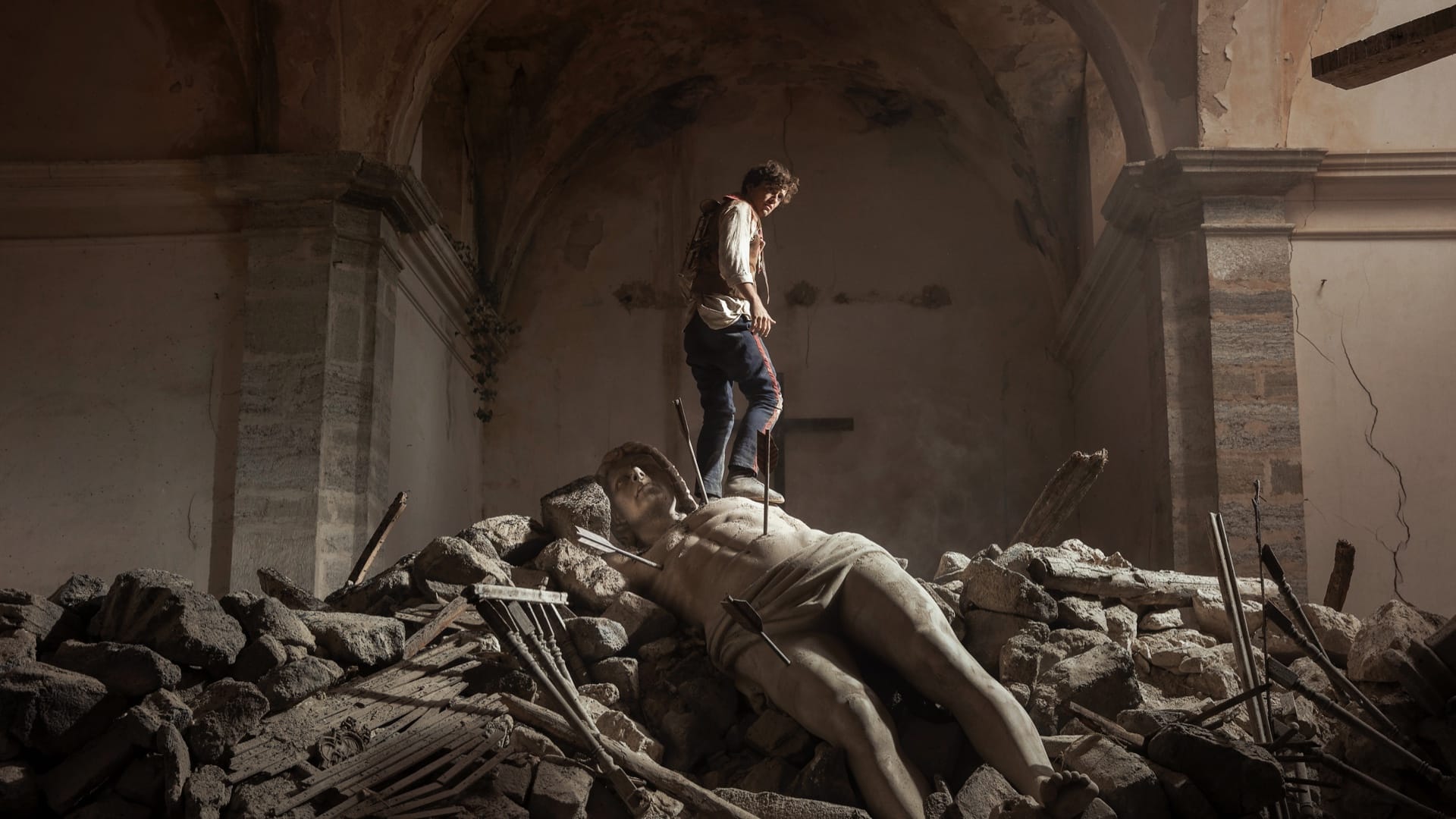
When the gay Spanish poet Federico García Lorca was assassinated in 1936 during the early weeks of his country’s bloody civil war, he left behind scraps of an unfinished play. Murdered by Nationalist forces one month after rebel generals (including the soon-to-be dictator Francisco Franco) sought to overthrow the liberal government, Lorca was viewed by monarchists as a “socialist and a freemason,” an alleged homosexual under police watch in Granada.
Perhaps the playwright was unsurprised by his fate. The scholar Michael Wood notes that Lorca mentions assassination nine times throughout Poet in New York, a poetry collection published four years after his death. Despite exhaustive efforts over several decades, his remains were never found.
But portions of a play survived. In a letter to the globetrotting theater director Cipriano de Rivas Cherif, who was also brother-in-law to the Spanish prime minister Manuel Azaña, Lorca described the opening scene of his unrealized and “impossible” play. “La Bola Negra”—in English, “The Black Ball”—concerns a young man denied entry to a prestigious casino membership, a kind of social club, because he is gay. In the scene Lorca shared with Rivas Cherif, the young man comes out to his father and explains why he was blackballed from the casino.
In their staggeringly ambitious new film exploring forbidden gay desire in wartime Spain and setting the nation’s queer ancestors in dialogue with modern gay life, the directors Javier Calvo and Javier Ambrossi (collectively, “Los Javis”) pick up where Lorca left off—and perform a narrative magic trick.
In their ambitious new film exploring gay desire in wartime Spain, the directors Javier Calvo and Javier Ambrossi pick up where Lorca left off—and perform a narrative magic trick.
“La Bola Negra” seamlessly weaves four separate storylines across disparate political and cultural milieus to present an intergenerational saga about the persistence and often hidden realities of the queer experience. The film excavates the lives of gay men from a repressive history that would destroy them, resurrecting the voices of queer ghosts so they may speak with us across cultures, across borders, across the relentless march of time.
Through its grand narrative construction and novelistic format—offering viewers a nearly three-hour odyssey intertwining multiple stories of gay love and loss over more than eight decades—“La Bola Negra” engages in a kind of queer mythmaking, elevating stories of gay desire to an almost folkloric status. Lorca himself retains a mythological stature in literary history for both his work and his untimely, mysterious end.
But in “La Bola Negra,” the legends of a bygone era and the gay relationships of today are both caught up in the film’s epic sweep, acknowledging history as a living process involving our past and our present.
The film, in modern terms, is a big swing. Its aims are enormous—striving for a multigenerational gay fantasia on nationalist themes. It hopes to sit alongside some of cinema’s great familial sagas: Bertolucci’s “1900,” Visconti’s “The Leopard,” Troell’s “The Emigrants” and “The New World.” While “La Bola Negra” does not quite reach those heights, its emotional impact is undeniable; its screenwriting and editing are marvels to behold, as long-buried secrets and unexpected revelations unfurl at a leisurely pace. Cross-cutting among four time periods, each with its own distinct visual identity and narrative thrust, is no small feat.
“La Bola Negra” engages in a kind of queer mythmaking, elevating stories of gay desire to an almost folkloric status.
During the Spanish Civil War, the fascist musician Sebastián, played with a disarming innocence by the wide-eyed singer Guittaricadelafunete, is tasked with guarding the alluring Republican soldier Rafael (Spanish heartthrob Miguel Bernardeau) as he recovers from an injury. The muscular Rafael, terrified that Nationalist officers will interrogate and then execute him, is a fictionalized version of the actor Rafael Rodríguez Rapún, an object of intense infatuation for Lorca. Black-and-white scenes depict the earlier conversations between Rafael and Lorca before the war.
Our modern-day narrative guide, Alberto, a historian played with pathos and frustration by Carlos González, discovers his maternal grandfather has recently died. Seeking knowledge about his grandfather’s life, and gaining little insight from his tight-lipped mother Teresa (a powder-keg performance by Lola Dueñas), Alberto becomes a family detective wading into “an ocean of secrets.”
And there is the story of Lorca’s unfinished play, where Carlos (a secretive, beguiling, raven-locked Milo Quifes) seeks admittance to the rarefied environs of the local casino while concealing his homosexuality.
Out of these interlocking narratives “La Bola Negra” constructs an accomplished work of historical fiction and delivers a eulogy for gay lovers’ past. The film’s final line—“Beware, they still haunt us!”—is close to a key for the whole picture. This is a ghost story, and the distance between us mortals and our ghosts is thinner than we think.