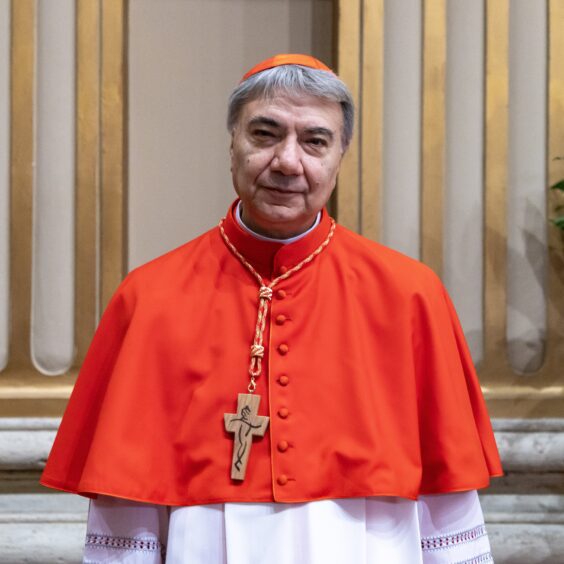
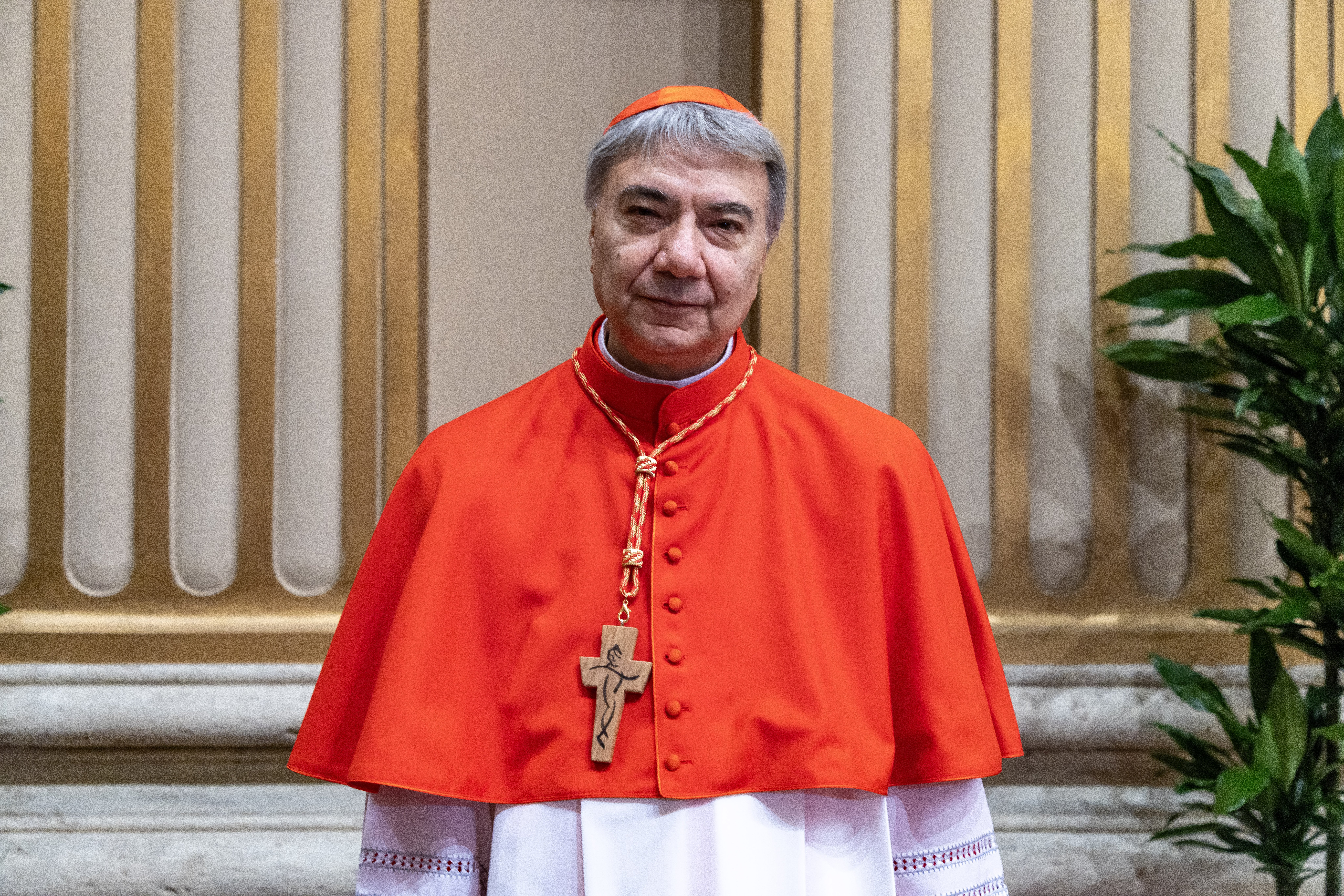
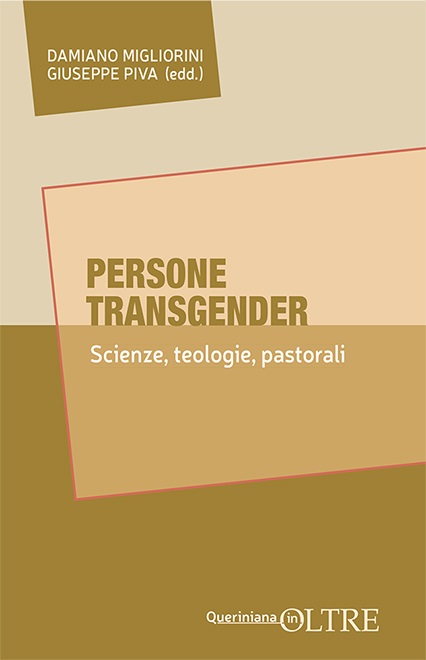
The following text is Cardinal Domenico Battaglia’s preface to Persone transgender: Scienze, teologie, pastorali (“Transgender People: Scientific, Theological and Pastoral Perspectives”), edited by Damiano Migliorini and Giuseppe Piva, S.J. and published by Queriniana. It has been translated from the original Italian and printed here with permission from Cardinal Domenico Battaglia.
There is a time for everything under heaven, says the wise man. And there is a time—today more than ever—to pause and listen. To remain silent in the face of the unknown, to take our time with stories, to embrace questions that seem greater than the answers we have. This is the time in which we find ourselves: a fragile and complex time, but also a fruitful one, because it forces us not to take anything for granted. A time that profoundly challenges the church, called to renew its gaze upon humanity, to cross new thresholds without losing its soul.
We live in a changing world, sometimes abruptly and one that brings with it profound transformations in the experience of identity, relationships, the body and consciousness. Faced with these changes, the church community is called to walk in a spirit of listening and discernment, remaining faithful to the Gospel and at the same time, attentive to the sufferings, expectations and questions that arise from the concrete lived experiences of so many people.
The church community is called to walk in a spirit of listening and discernment, remaining faithful to the Gospel and at the same time, attentive to the sufferings that arise from the concrete lived experiences of so many people.
This volume brings together contributions that vary in origin, perspective and content. These are voices from the worlds of science, psychology, anthropology, theology and pastoral ministry. Voices that do not all speak the same language, but which together address a complex and delicate topic, offering the reader an opportunity: that of pausing. To reflect, not to flee, not to rush to define, but to remain faithfully within the tension of the search. The topic of gender dysphoria, transgender identities and life experiences that do not conform to traditional models raises profound questions. Even for the church.
But precisely for this reason, it calls for an even more respectful and attentive listening. A path that is not one of judgment, but one of accompaniment. No one is excluded from the heart of God. No life is foreign to the mystery of salvation. And every person, every story—even those that seem distant or difficult to understand—carries within it the possibility of a revelation. The revelation of a God who draws near, who allows himself to be touched, who dwells in wounds, who does not fear the fragile flesh of the children of man. For he took on that flesh, lived it and transfigured it.
At the heart of this journey of human transfiguration, the Gospel remains for us a light and a guide, inviting us to walk a path of faithfulness and trust. Fidelity is movement in the Spirit; it is a communal search; it is the will to remain anchored to Christ while traversing uncharted territories. For this reason, it is not a matter of taking hasty positions, but of maturing through dialogue, prayer and the spiritual and theological depth of a broad, shared ecclesial discernment that respects individuals and is rooted in truth.
At the heart of this journey of human transfiguration, the Gospel remains for us a light and a guide, inviting us to walk a path of faithfulness and trust.
This book can be a useful tool on this journey. Because it offers perspectives and encourages us to ask the right questions. And above all, it reminds us that before ideas, there are people. People to meet, to listen to, to accompany. With the wisdom of the church, with the strength of charity, with the beauty of the Word, with the tenderness of care. I hope that reading these pages will inspire not so much agreement as attention. Not so much judgment as dialogue. Not so much opinions as compassion. Because it is only on this ground that a true pastoral ministry can grow—one capable of truth and tenderness, of consistency and openness, of fidelity to the Gospel and closeness to the human condition.
To the reader, I hope you will allow yourself to be moved. To enter into the folds of the stories, the reflections, the doubts. And to feel that at the heart of it all—beyond differences, beyond conflicts, beyond struggles—there remains the desire for a church that never ceases to be a mother. A mother who accompanies, who listens, who protects. A mother who knows, with humility and courage, how to set out on the journey with everyone, safeguarding and sharing the truth that sets us free.