A few days into a nine-month retreat in daily life, I knew I had a problem.
I signed up for the retreat without knowing what I was in for. One of the retreat’s main purposes was to get to know Jesus. I discovered quickly in my prayer life that I had an initial aversion to doing so.
I shared this prayer experience with my spiritual director, just as I would do for the next 37 weeks. He paused, thoughtfully.
“Who would you like to get to know?” he asked.
Without missing a beat, I answered, “Mary Magdalene.”
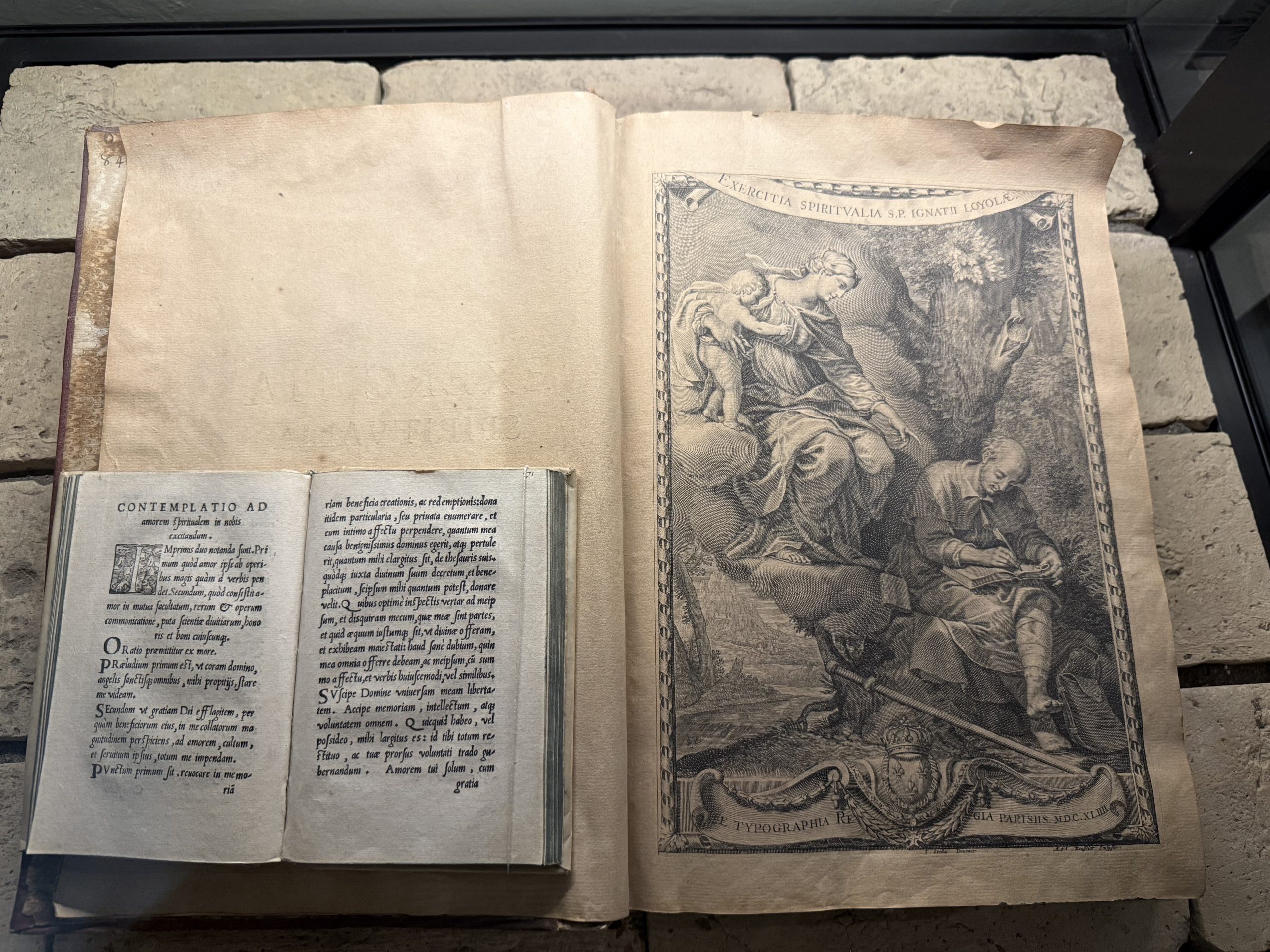
I was completing St. Ignatius Loyola’s Spiritual Exercises in the form described in the 19th Annotation, a retreat that takes place during daily life over the course of nine months, with weekly spiritual direction. In addition to befriending Jesus, retreatants who take on the Spiritual Exercises learn the language of how God speaks to them and who God calls them to become.
By the time we started this retreat, my spiritual director and I had been meeting monthly for over a year. Recently divorced from my ex-husband and starting to discern becoming a spiritual director myself, I knew God was moving in my life. The retreat offered a way to further attune myself to that movement. But, naïvely, I did not realize it would include Jesus.
I had no idea why I had such an aversion to Jesus. I grew up Catholic and admired the religious sisters who taught me, and I loved going to church, but I effectively stopped practicing Catholicism in my 20s. I will always remember my religion class; it was one of my favorites. It was there, in fourth grade, that I learned about Mary Magdalene. When our teacher taught us that she was a prostitute whom Jesus saved, an anger grew in me. Something about it felt unjust, though I didn’t understand why or find the words to describe my feelings.
I discovered that what I longed for was not religious life itself, but to be like the powerful women who had mentored me.
About a decade later, I learned that the label of “prostitute” was attributed to Mary Magdalene, only because Pope Gregory the Great erroneously conflated her story with other biblical stories about other women. But something woke up in me that day in fourth grade, a connection to something beyond myself.
That connection would return later as I discerned becoming a religious sister. Each time I discerned that path, I eventually realized it was not an invitation into God’s love but a temptation away from it.
I discovered that what I longed for was not religious life itself, but to be like the powerful women who had mentored me: women whose lives offered community, purpose and the courage to change the world. I was drawn to a life lived among women. For a long time, I told myself that specific draw was only admiration. I was afraid to ask whether that admiration was also attraction.
It turns out the truth was in the fear. Quite unexpectedly, the long retreat gave me the safety to explore that fear and my sexual identity.
As I prayed with St. Ignatius’ rules for “discernment of spirits,” by which a retreatant learns to identify movements in prayer that are bringing them closer to God, an image of a cape of feathers kept appearing. My director and I explored this imagery together.
“Feathers are light, but this cape feels like lead,” I said and then paused. “I can’t figure out how to take it off.” My director invited me first to consider what God might be revealing through this image.
As I sat with the image more, the feathers were heavy with the homophobic messages I had absorbed for over 30 years. Growing up, I remembered how some of my relatives reduced single, independent women to a warning sign: They were lesbians, who would die alone. Although my LGBTQ friends were welcomed at family gatherings, their welcome had limits. One relatively distant relative would tell me: “They’re welcome, but you know what Jesus says. You know where they’re going on judgment day.”
There was the weight of those feathers. This aversion I had to deepen my relationship with Jesus was rooted in the fact that he had been used as a weapon against the people I loved in my life. I had no idea that my relatives’ comments were cutting into a part of my identity I hadn’t yet come to terms with. The lining of the cape protected me from the words, assumptions and truths I was not ready to face regarding my identity. However, in turn, it blocked my full connection with God.
The weight of the feathers also held confusion around what to call my authentic sexual identity. In prayer, I held this question with Ignatian indifference, that is, being detached from outcomes and expectations. During a weekly session, I told my spiritual director, “I am terrified of saying the truth out loud. What will happen when I do? It’s real then.”
Finally, in the sacred space of spiritual direction, I found the courage to say for the first time, “I’m lesbian.”
With the name stated boldly and clearly, the heavy cape of feathers came off. To my surprise, God was there as it fell, embracing me completely. I felt relief, peace, joy and courage. It was a consolation, a movement of the spirit that brings a retreatant closer to God.
The 19th Annotation retreat taught me that my identity as a lesbian is not an obstacle to grace. Instead, it is a site where I receive it.
The Spiritual Exercises are one way to explore and discover an answer to the question Jim Martin, S.J., posed at Outreach 2026: “What does it mean to be an LGBTQ Catholic?”
As Father Martin says, the answer is different for everyone, but I believe that the Spiritual Exercises offer one way to discern this answer for ourselves.
The 19th Annotation retreat taught me that my identity as a lesbian is not an obstacle to grace. Instead, it is a site where I receive it.
I discovered I was not alone in this experience.
The following year in the career discernment seminar I lead at Marquette University, my graduate students and I discussed sexual identity in the context of Ignatian discernment. Some LGBTQ students recognized their coming out process as one of the clearest experiences of Ignatian consolation. It was their journey toward truth, fullness and freedom.
Then, one student who was in a long-term heterosexual relationship, surprised us: “I wish I could discern my sexual identity.”
“Why can’t you?” I replied.
“Because I’ve never had to,” she responded. “I’m wondering what my authentic sexual identity feels like, since I’ve never had to search for it.”
Her words have stayed with me. Many LGBTQ Catholics know what living with a false sense of identity feels like. God can be found through shedding this inauthenticity. It is there, by living fully as how God created oneself, that we find the God who longs for us as much as we long for God.
I now serve as a spiritual director for LGBTQ seekers, particularly those yearning for a practicing religious community in a tradition that once excluded them. Their sexual identity is fundamental to their quest for genuine community because they know how authentic relationship feels. God has already shown that to them.
As I accompany others, I still struggle to find my own place in the church. For decades, I hid how much I missed belonging to a Catholic parish. I tried other denominations with more inclusive teachings, but I didn’t know how not to be Catholic.
Earlier this year, a colleague introduced herself as lesbian and Catholic at a work event. Following her lead, I introduced myself the same way. Tears welled in my eyes after I spoke—a sure sign of God’s love, a language I learned while completing my long retreat.
The 19th Annotation retreat helped me learn how to live in integrity.
Over the following months, I found a parish that does not ask me to hide. They celebrate diversity authentically, not as performance. That authenticity was a sure sign that I was home.
Now that I’m home, the aversion I had to developing a relationship with Jesus is softening. My prayer life reveals new layers, including some where I’m developing a relationship with him not because I’m told I need to but because I actually want to.
The 19th Annotation retreat helped me learn how to live in integrity. In a way, it led me to Jesus, though not in nine months. During that nine-month period, I learned how to show up authentically in the world and in my relationships. Years later, that lesson is helping me develop a relationship with Jesus grounded in that grace.
And it feels good to be home.