This past pride month presented me with an opportunity to reflect on the numerous ways our society and church have grown over the last several decades in recognizing the inherent dignity and human rights of LGBTQ persons. In our society, this expanding recognition is evident in the national decriminalization of same-sex relationships (2003), the national legalization of same-sex marriage (2015) and the increasing recognition of sexual orientation and gender identity as protected categories in nondiscrimination laws around the country.
In faith communities and faith-based organizations, it is seen in dramatically more favorable public attitudes and expanding institutional efforts to become more welcoming, inclusive and affirming of LGBTQ persons. Certainly, there have been setbacks along the way and progress has not been uniform. Even today some states and municipalities, just like some religious denominations, institutions and congregations, resist these changes.
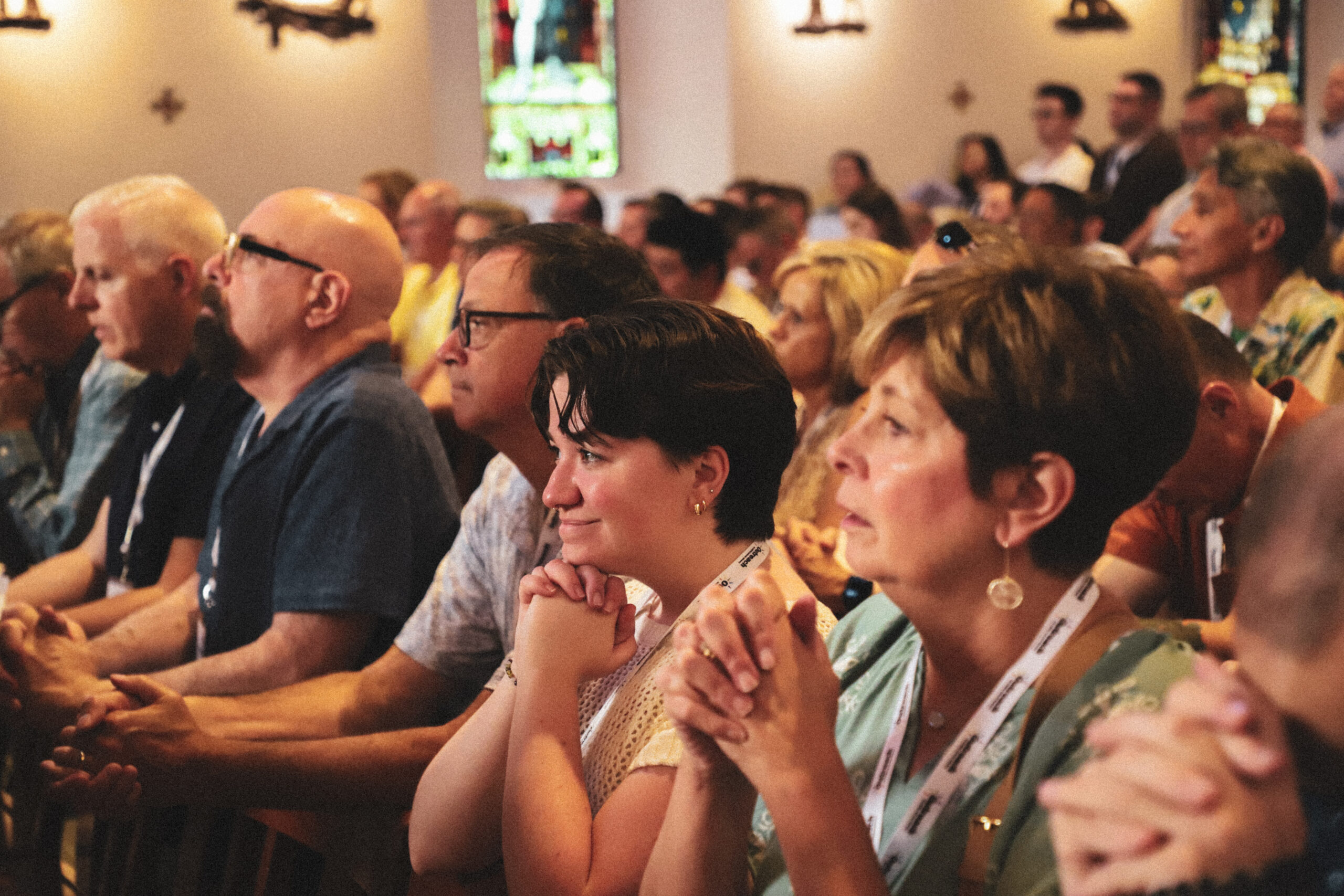
Having just returned from Outreach’s highly successful conference “Walking Side by Side: Celebrating Five Years of Outreach” at Georgetown University, I would like to share findings from my own research in the sociology of religion that should give Outreach and the numerous other Catholic special purpose groups that share its mission (e.g., New Ways Ministry, Fortunate Families, Without Exception, Dignity USA, etc.) reason to take pride in their accomplishments and optimism to fuel their momentum.
In a newly-released edited book LGBTQ Religious Activism: Rethinking Identity, Faith, and Social Change (University of North Carolina Press, 2026), I contributed a chapter titled “Evidence of LGBTQ+ Inclusion in America’s Largest Church: A Social Movements Perspective on Successes in Catholic Institutions.” In it, I sought to document not only the dramatic shift in attitudes among American Catholics toward greater affirmation of same-sex relationships and alternative family forms, but also the increasing adoption of LGBTQ-affirming policies and practices in various Catholic institutions, including colleges, universities and parishes. On all of these measures, it appears that American Catholicism has become increasingly more inclusive of LGBTQ persons and my research uncovers some of the factors that have motivated this transition.
This shift in attitudes suggests that increasing numbers of American Catholics believe that issues of sexuality are matters of individual conscience and that civil marriage should be equally available to all.
First, what is the evidence of more affirming attitudes? Drawing on data that my co-authors and I presented in an earlier book (Catholicism at a Crossroads: The Present and Future of America’s Largest Church, New York University Press, 2025), I show that the percentage of American Catholics who say that same-sex relationships are always wrong fell from 72 percent in 1991 to 47 percent in 1996 to just 21 percent in 2018. Over roughly the same time period, U.S. Catholics’ support for legal same-sex marriage climbed from 31 percent in 1992 to 65 percent in 2023.
This shift in attitudes suggests that increasing numbers of American Catholics believe that issues of sexuality are matters of individual conscience and that civil marriage, which affords hundreds of rights and protections, should be equally available to all. In other words, the majority of American Catholics believe that moral restrictions placed on same-sex relationships violate their freedom of conscience and that legal restrictions placed on same-sex civil marriage amount to unjust discrimination.
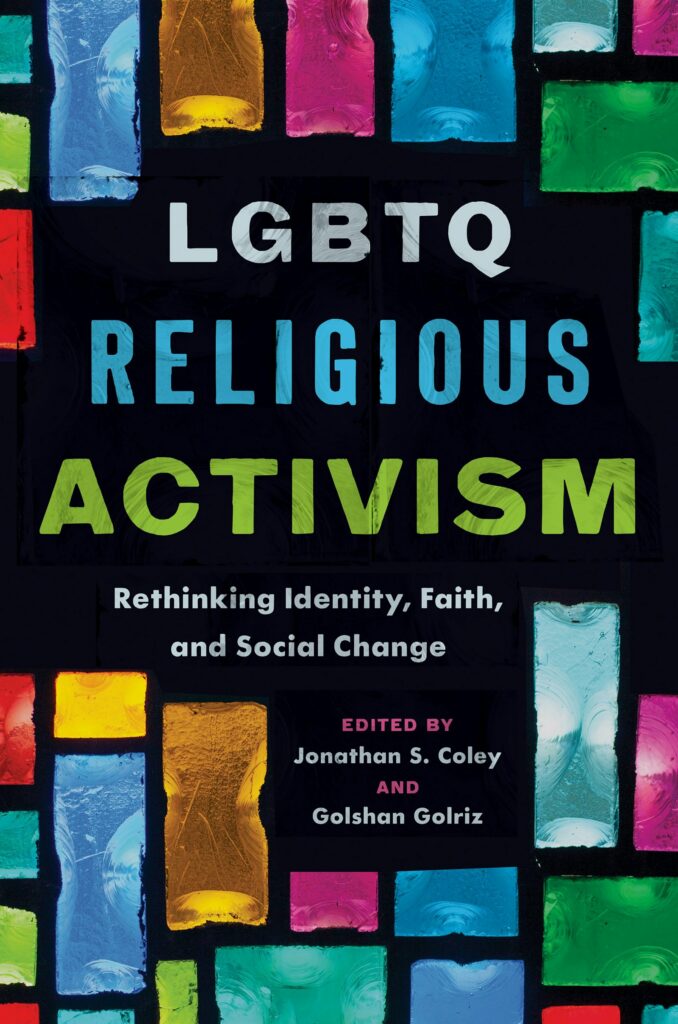
Rethinking Identity, Faith, and Social Change, The University of North Carolina Press, 2026.
What evidence reveals increasingly affirming and inclusive policies and practices within Catholic institutions? In my research, I gathered data from the websites of Catholic colleges, universities and parishes, but the most complete and accurate data were gathered in 2019 and 2022 from the websites of the 201 Catholic four-year undergraduate colleges and universities in the United States1. Analyzing these data reveals several positive indicators of increasing inclusion.
First, as recently as 2022, the majority of these institutions (117 out of 201, or 58%) have officially recognized LGBTQ student groups or gay-straight alliances and an overwhelming majority have adopted nondiscrimination policies based on sexual orientation (175 out of 201, or 87%) and gender identity (136 out of 201, or 68%). Moreover, practically all of the colleges and universities that adopted these policies of non-discrimination for students also did so for faculty and staff. Another positive discovery is that the number of colleges and universities adopting these inclusive policies and practices increased between 2019 (when I first collected data) and 2022.
As I concluded in my chapter:
Clearly, an increasing number of Catholic colleges and universities are recognizing the importance of adopting these policies either as an expression of their values, their desire to align with the more welcoming approach toward LGBTQ+ people encouraged by Pope Francis, or as a way of attracting and retaining students, staff, and faculty in a cultural environment more accepting of LGBTQ+ people, same-sex relationships, and a variety of non-traditional family forms
More than likely, all of these factors, along with the encouragement and resources offered by groups like Outreach, New Ways Ministry, Fortunate Families, Dignity USA and Without Exception, have contributed to the increasingly inclusive orientation of our nation’s Catholic colleges and universities.
Table: Percent of Catholic Colleges and Universities with LGBTQ+ Groups, Resource Centers, and Nondiscrimination Policies by Select Characteristics, 2022 (click arrow to open)
| Size of Student Body (and Number of Institutions) | LGBTQ+ Group | LGBTQ+ Resource Center | Sexual Orientation in Policy | Gender Identity in Policy |
|---|---|---|---|---|
| Less than 1,000 (31) | 12.9% | 0.0% | 48.4% | 25.8% |
| 1,000-1,999 (50) | 50.0% | 0.0% | 94.0% | 64.0% |
| 2,000-3,999 (70) | 67.1% | 8.6% | 94.3% | 78.6% |
| 4,000-7,000 (21) | 81.0% | 14.3% | 95.2% | 81.0% |
More than 7,000 (29) | 82.8% | 58.6% | 93.1% | 82.8% |
| Region (and Number of Institutions) | ||||
| South (15) | 32.4% | 13.5% | 78.4% | 51.4% |
| Midwest (42) | 57.4% | 14.7% | 86.8% | 64.7% |
| West (16) | 54.5% | 22.7% | 81.8% | 72.7% |
| Northeast (55) | 73.0% | 8.1% | 93.2% | 77.0% |
| Sponsor or Affiliate (and Number of Institutions) | ||||
| Diocesan (21) | 28.6% | 0.0% | 61.9% | 33.3% |
| Independent (12) | 41.7% | 16.7% | 50.0% | 50.0% |
| Religious Orders Combined (168) | 63.1% | 14.3% | 92.9% | 73.2% |
| Religious Orders (Broken Down) | ||||
| Jesuit (27) | 85.2% | 51.9% | 100% | 88.9% |
| Franciscan (21) | 61.9% | 4.8% | 95.2% | 66.7% |
| Benedictine (15) | 46.7% | 6.7% | 66.7% | 46.7% |
| Dominican (13) | 69.2% | 7.7% | 92.3% | 76.9% |
| Holy Cross (7) | 71.4% | 28.6% | 85.7% | 42.9% |
| Lasallian (5) | 100% | 0.0% | 100% | 60.0% |
| Mercy (15) | 60.0% | 6.7% | 100% | 100% |
| Other Religious Order (65) | 53.8% | 6.2% | 93.8% | 72.3% |
| Religious Order by Gender | ||||
| Male Religious Orders (77) | 68.8% | 27.3% | 85.7% | 67.5% |
| Female Religious Orders (91) | 58.2% | 3.3% | 98.9% | 78.0% |
| TOTAL (201) | 58.2% | 12.9% | 87.1% | 67.7% |
Finally, perhaps the most interesting discovery in my research on Catholic institutions was the importance of certain organizational characteristics in predicting the adoption of LGBTQ-affirming policies and practices. Although the size and location of the institution matter (with larger and non-Southern colleges and universities being more likely to adopt affirming policies and practices), one of the most significant factors that contributes to the adoption of LGBTQ-affirming policies and practices is the affiliation or sponsorship of the college or the university. Colleges and universities sponsored by Catholic religious orders (e.g., Jesuit, Franciscan, etc.) are significantly more likely than either independent or diocesan-affiliated colleges and universities to adopt LGBTQ-affirming policies and practices.
Among those sponsored by religious orders, the ones at the forefront are those sponsored by the Jesuits, the Christian Brothers (Lasallian), and the Sisters of Mercy. In my chapter, I suggest that this is likely attributable to these religious orders’ tendency to incorporate social justice into their institutions’ missions and to frame LGBTQ issues in terms of social justice, not to mention the fact that they are less restricted by the preferences of a local bishop.
In sum, the findings of my research provide concrete evidence of changes underway in the United States in both Catholic attitudes and institutions, changes which suggest that LGBTQ persons will increasingly feel welcomed and included in Catholic spaces.
At the Outreach 2026 conference, we learned about several of the exemplary diocesan and parish-based LGBTQ ministries established in various locations throughout the United States. Although it is difficult to say how many of our nation’s 194 Catholic dioceses and 16,429 Catholic parishes (as of 2022) have some form of outreach to LGBTQ persons, New Ways Ministry, a national Catholic advocacy organization, lists on its website the names and locations of approximately 393 parishes identified by its constituents as “LGBTQ-friendly” parishes.
My preliminary analyses of these parishes’ websites, as described in my book chapter, reveals that many are very public about their outreach to the LGBTQ community, and that compared to parishes nationwide, these 393 parishes are disproportionately administered by religious order priests (e.g., Jesuits, Franciscans, Paulists, etc.) and disproportionately located in urban areas. Given Pope Francis’s “Todos, todos, todos” rallying cry for radical inclusion, and Pope Leo’s continuance of Francis’s emphasis on accompaniment, it is surprising that only 393 parishes (out of 16,429 nationwide) have been reported to New Ways Ministry as “LGBTQ-friendly.” Obviously, a variety of factors determine which parishes get reported to New Ways Ministry (including the presence in a parish of LGBTQ Catholics who are also aware of New Ways Ministry’s data base), but one would hope that this number will continue to increase over time.
In sum, the findings of my research provide concrete evidence of changes underway in the United States in both Catholic attitudes and institutions, changes which suggest that LGBTQ persons will increasingly feel welcomed and included in Catholic spaces. Levels of inclusion are not uniform, however, and my findings suggest that LGBTQ individuals should expect more enthusiastic expressions of welcome in: 1) Catholic colleges and universities with larger student populations, located outside of the South, and founded or administered by Catholic religious orders, particularly by the Jesuits, the Christian Brothers, and the Sisters of Mercy; and 2) Catholic parishes located in larger urban areas and administered by Catholic religious orders, such as the Jesuits, the Franciscans, and the Paulists. These findings can help LGBTQ Catholics in their quest to find welcoming spaces, as well as assist groups like Outreach, New Ways Ministry, Dignity USA, Fortunate Families and Without Exception to discern where to concentrate their efforts.
- The data reported above were gathered from institutional websites in June, 2022. Some colleges or universities may have adopted policies or programs since then that are not reflected in these data. Readers who are aware of recent changes in policies or programs at particular Catholic colleges or universities are invited to notify the author, James Cavendish, at jcavendi@usf.edu, as he plans to update these data in order to track continuing progress.” ↩︎