
This essay first appeared in our weekly Scripture reflection newsletter on September 27, 2025.
Amos 6:1a, 4-7; 1 Tim 6:11-16; Lk 16:19-31
You can find the readings for the 26th Sunday of Ordinary Time here.
Last week’s First Reading from the Book of Amos excoriated those who did not care for the poor. “Hear this, you who trample upon the needy and destroy the poor of the land!” The book was written in a time of increasing disparity between the rich and the poor, and it served as a stark warning against those who not only ignored poor people but also exploited them. “Never will I forget a thing they have done,” said the Lord in the Book of Amos. This week, the prophet rails against those who “lay on beds of ivory.”
Caring for the poor (as well as the widow, the orphan and the stranger) is a consistent theme in both the Old and the New Testaments. It’s so persistent that I’m always astonished by the number of Christians who seem to downplay, ignore or even reject calls to provide for the indigent. Serving the poor may be difficult, it may be inconvenient, it may even occasionally go against your political beliefs, but it is what all the prophets and Jesus commands us to do. Like it or not, it’s part of being Christian.
Serving the poor may be difficult, it may be inconvenient, it may even occasionally go against your political beliefs, but it is what all the prophets and Jesus commands us to do. Like it or not, it’s part of being Christian.
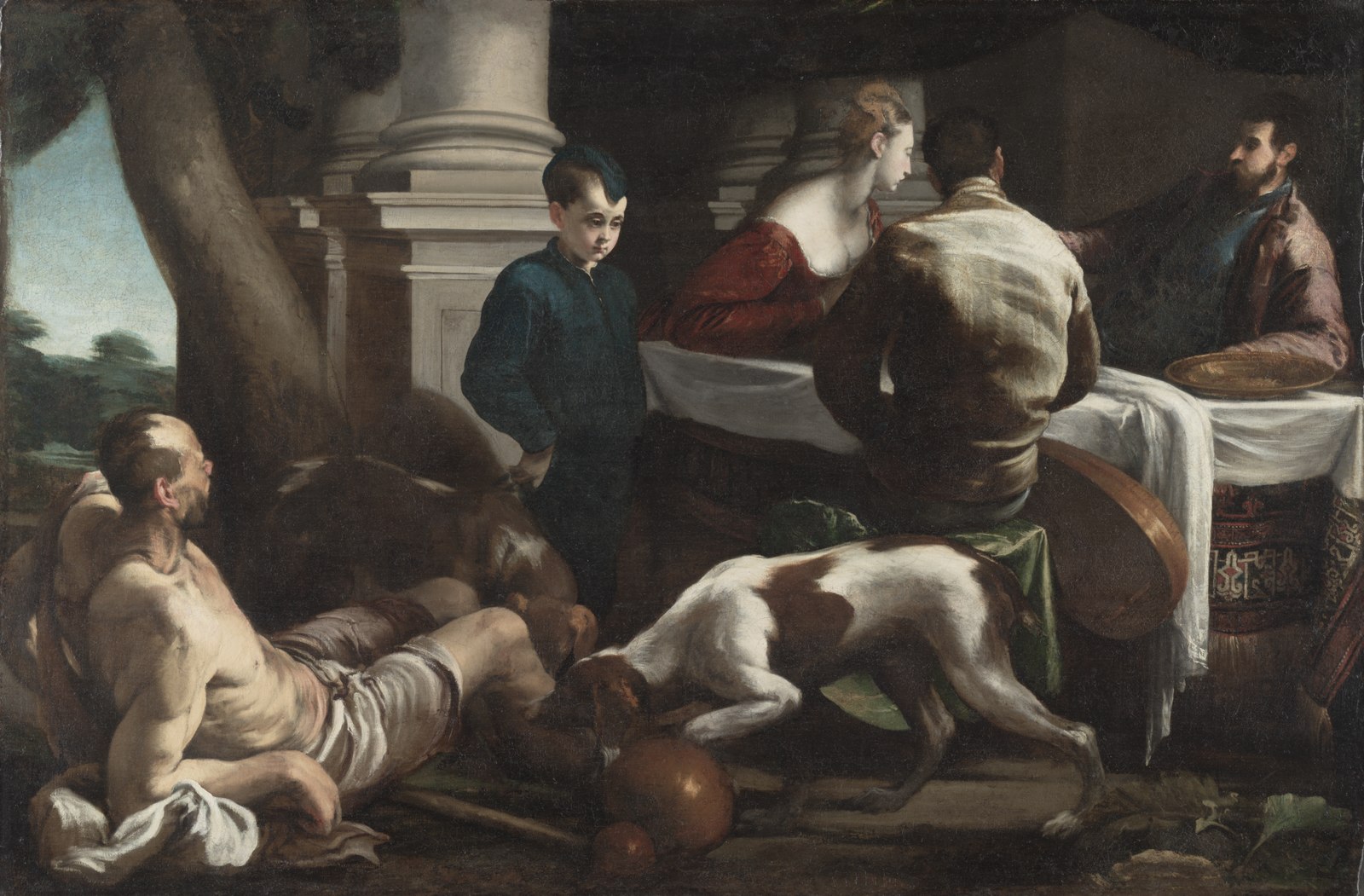
Today’s parable, often called “Lazarus and Dives” (the second name from the Latin word for “rich”) is one of Jesus’s many parables about helping the poor. In it, a man named Lazarus (more about that name later) sits outside the home of a wealthy man who consistently ignores him. So sick, weak and hungry is Lazarus that the dogs come to “lick his sores.” It’s a disgusting image that contrasts with the wealthy man clothed in purple (a dye only the richest could afford) and feasting “sumptuously” every night. After both men die, the poor man is sent to the “bosom of Abraham” and the rich man to Hades.
The reason for the rich man’s punishment is obvious. As Gerhard Lohfink writes in his book The Forty Parables of Jesus: “Jesus has said enough to make it clear how hard-hearted the rich man is, nothing more is needed. The rich man lives a life of complete indifference to the misery of the poor; he is not even conscious of the poor man outside his gate. He is guilty of the poor man’s death.”
Trapped in Hades, the rich man begs Abraham to have Lazarus dip his finger in water and slake the rich man’s thirst. Notice that even in Hades, the rich man does not ask for forgiveness. Instead, he sees Lazarus as a kind of servant.
“The rich man lives a life of complete indifference to the misery of the poor; he is not even conscious of the poor man outside his gate. He is guilty of the poor man’s death.”
Finally, the rich man asks Abraham to send Lazarus back to warn his brothers about this terrible fate. Again, he is asking the poor man to simply do his bidding. And, again, he does not ask for forgiveness. Abraham responds that even if someone returned from the dead, people would not believe him. Of course, this is a parallel to the Resurrection of Jesus. (As an aside, this is the only parable where Jesus uses a proper name—Lazarus. And since this is about a man returning from the dead, some New Testament scholars believe that Luke knew about the tradition of the Raising of Lazarus, as recorded in John’s Gospel.)
As I said earlier, it consistently amazes me that so many Christians ignore these readings. Many of Jesus’s parables are intentionally open-ended (“teasing the mind into active thought,” as the biblical scholar C.H. Dodd once said). But some, like today’s, are quite clear: Ignore the poor not only at their peril, but yours.