
You can find the readings for the Second Sunday of Lent here.
The second Sunday of Lent offers a trove of meaningful words to reflect on, but what jumped out the most to me was the lack of punctuation.
Indeed, in several translations of today’s second reading, from St. Paul’s second epistle to Timothy, this brief passage is rendered as one long, long sentence interspersed with multiple relative clauses about the nature of God and his grace. The initial instruction from St. Paul through which we are supposed to read this long sentence, however, is clear: “Bear your share of hardship for the gospel with the strength that comes from God.”
In living out God’s will, we have to draw on the strength that God has already given us because we are already abundantly worthy by God’s own design.
That’s a clear enough premise, if easier said than done (like most instructions we find in the Bible). In living out God’s will in our lives and in our communities, we have to draw on the strength that God has already given us because we are already abundantly worthy by God’s own design.
What we see here is the big-tent of grace for those of us who respond when God “[calls] us to a holy life” and it’s something that any LGBTQ Catholic will hold fast to. I’ve been asked before why I stay in the Church when there are so many reasons not to. Though I have several reasons, many of them have to do with the numerous, wonderful people in my life who live out their Catholicism inspired by Jesus. In both their faith and in their good works, they inspire me to live out what we are ultimately encouraged to do in this reading. It is grace that propels them (and me), and just like the words of this passage, it runs continuously, sometimes seeming slower but never stopping outright, along across the arcs of our lives. The reward that the gospel guarantees is affirmed in hardship, in perseverance, in asserting yourself with the strength that comes from a God who makes no mistakes.
It is grace that propels them (and me), and just like the words of this passage, it runs continuously along across the arcs of our lives.
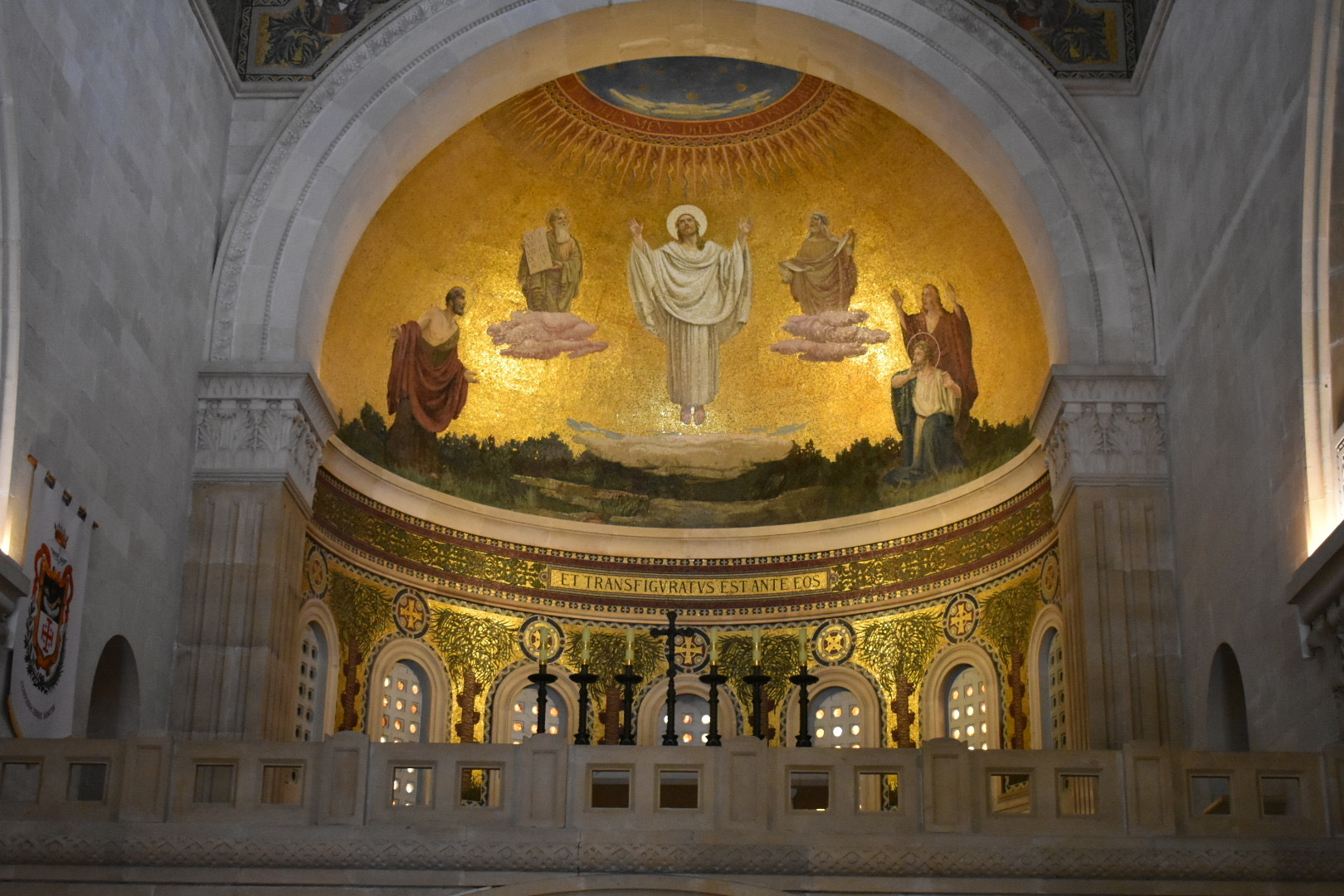
We feel this certainty in God’s destination for us elsewhere in this week’s readings, especially in the Gospel, when Jesus is transfigured before three of his disciples and God punctuates the scene to say outright, “This is my beloved Son, with whom I am well pleased; listen to him.” And I imagine it’s equally poignant for trans and gender nonconforming Catholics that God chooses to pipe in and claim Jesus as his own at the very moment he, “transfigured,” looks like something other than what the disciples were used to seeing him as.
But making your way through a grammatically wonky passage like Paul’s second epistle to Timothy, which I have to do slowly to keep track of what it is he’s referring to, reminds me of E.L. Doctorow’s quote about writing a novel: “Writing a novel is like driving a car at night. You can see only as far as your headlights, but you can make the whole trip that way.” Can’t the same be said of the way that God works in our lives? Oftentimes, we think we can only see the teeniest bit out in front of us, but we often forget both the destination and, sometimes, who the actual driver even is. But there is only one destination, and it’s fittingly the end point of this reading: the Gospel.