
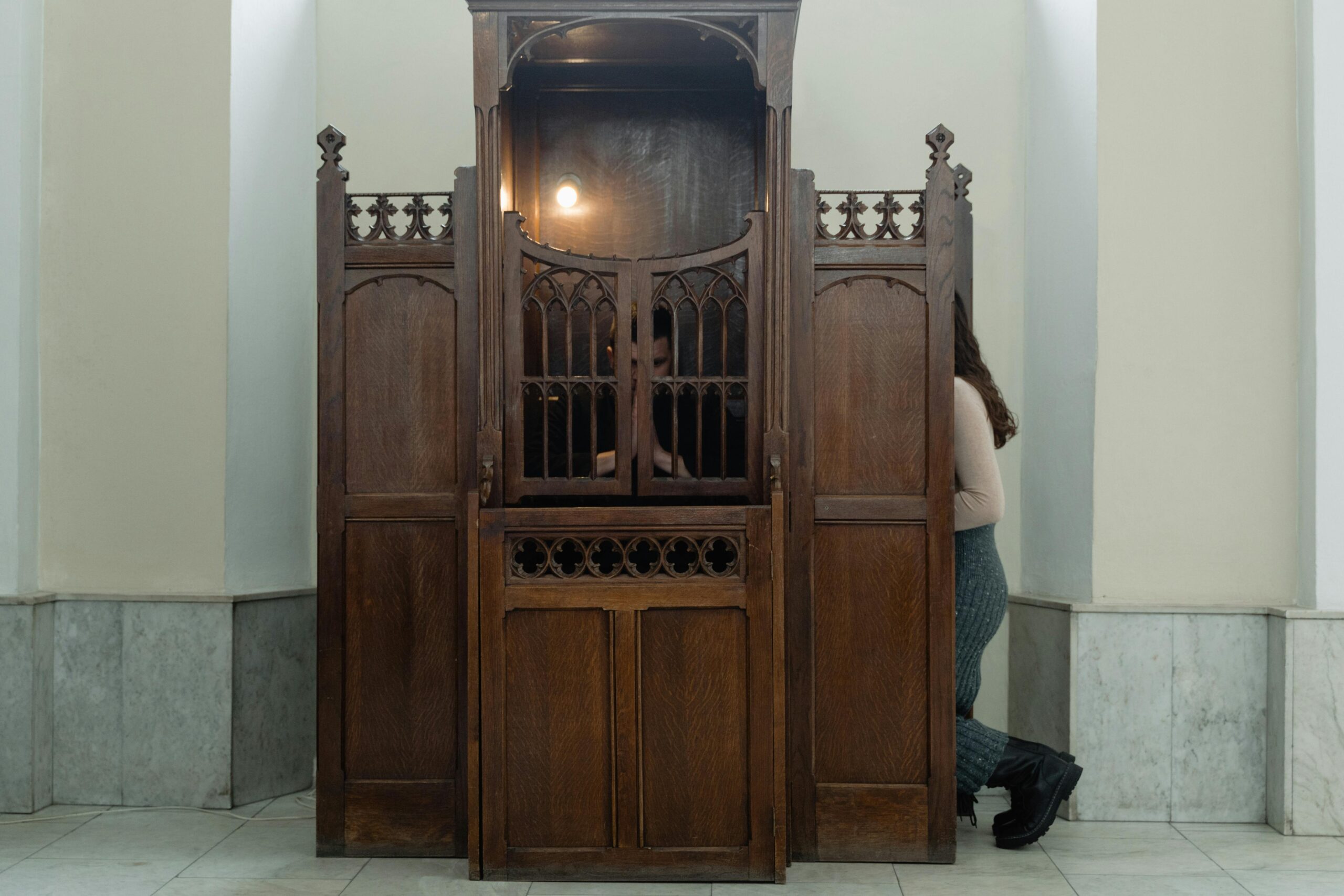
When someone steps into the confessional, whether face-to-face or behind the screen, what takes place is nothing less than a sacred encounter with the living God. It is not simply an exchange of words, but an act of faith. It’s a gesture that says, “I believe God’s mercy is greater than my sin.”
The sacrament of reconciliation is not therapy, though it can bring deep emotional healing. It is not mere advice, though it often involves guidance. It is an encounter with mercy, with the crucified and risen Lord who meets each person in their truth and brokenness. For LGBTQ Catholics who may have struggled with feelings of exclusion, fear or shame, confession can be both deeply healing and profoundly intimidating. The very act of walking into a confessional may carry layers of spiritual and emotional weight, memories of being judged, misunderstood or told that they do not belong.
When I think about the LGBTQ Catholics who have come to me for confession, I am often struck by their courage.
When I think about the LGBTQ Catholics who have come to me for confession, I am often struck by their courage. Many have persevered in their faith despite experiencing rejection. They almost always come to confession not seeking to challenge church teaching (even if they find it challenging) but peace with God. This approach to the sacrament reminds me that reconciliation is not about exclusion but about communion, the very act of being part of the body of Christ where all of God’s gifts that we have been given are celebrated. St. Paul reminds us when one part of the body suffers we all suffer and confession is a moment when the collective body of Christ is healed and comes together in the Lord.
This perseverance humbles me. The sacrament of reconciliation, therefore, becomes not just a personal encounter with mercy but a prophetic act, a declaration that God’s grace is bigger than any human prejudice. Each confession becomes a quiet revolution of love, affirming that the church’s doors remain open to all who sincerely seek Christ.
I know that many Catholics—myself included, as a regular penitent—have had negative experiences or felt like they were being judged or dismissed in a way that is not helpful as a means of grace.
But confession is meant to be a place of freedom, not fear. It is a place where…we rediscover who we are in God’s eyes.
But confession is meant to be a place of freedom, not fear. It is a place where yes, we acknowledge our sins, but even more importantly, where we rediscover who we are in God’s eyes. When a penitent leaves the confessional, they are not the sum of their mistakes or the tension they feel with their own identity and the church’s teaching. They leave as a beloved child restored to grace. In pastoral ministry, I’ve often seen how sin isolates people.
There’s a moment in every good confession when you can sense that a burden has been lifted, the voice softens, the shoulders relax and, sometimes, tears flow. When I hear confessions, I have a box of tissues on the seat so I can pass it through the screen to someone who finally feels a weight lifted off their shoulders. It’s as if the soul has exhaled after holding its breath for too long. That is grace in motion. That is the miracle of mercy.
The sacrament reminds me that God’s mercy flows through fragile vessels. When I hear someone’s confession, I am reminded of my own frailty and need for God’s grace. Humanity does not diminish the grace of the sacrament, but it does shape how that grace is received. A confessor who listens with empathy, who avoids assumptions and who refrains from moralizing or lecturing can make all the difference. As priests, we are not gatekeepers of mercy; we are its instruments. When I pronounce the words of absolution, “I absolve you from your sins in the name of the Father, and of the Son, and of the Holy Spirit,” I often feel a chill, a sacred awe. In that instant, the veil between heaven and earth grows thin.
To my LGBTQ brothers and sisters in Christ, I say this: the sacrament of reconciliation belongs to you as much as to anyone. You are part of the Body of Christ.
For confession to bear fruit, it must become a habit of life, not a rare emergency. I encourage all Catholics, LGBTQ or otherwise, to make going to confession a regular practice. Sin is not simply breaking a rule, it’s a rupture in relationship. The rupture could be between us and the Lord, or us and members of our community. Reconciliation is not only about forgiveness but about restoration. It’s about allowing God to heal what has been wounded and to strengthen what has been weakened. Regular confession helps us grow in self-knowledge and humility. It teaches us to name our sins honestly and to trust in grace. Over time, it forms the heart in mercy toward ourselves and others. As Pope Francis, of blessed memory, often reminded us, “The confessional is not a torture chamber, but the place of the Lord’s mercy.”
To my LGBTQ brothers and sisters in Christ, I say this: the sacrament of reconciliation belongs to you as much as to anyone. You are part of the Body of Christ. The same mercy that raised Peter after his denial, that healed the leper, that forgave the thief on the cross, is offered to you without condition. Come as you are. Bring your whole self. Christ is waiting on the other side of that door—not with condemnation, but with open arms. In the end, reconciliation is not about perfection. It’s about coming home.