If you are like me, well-intentioned priests may have told you to hide your sexuality, promising that silence would ensure safety. But as Bishop Felix Gmur, Bishop of Basel, Switzerland, reminds us in his endorsement of this book, those who strive for holiness must often take great personal risks. You are not alone in feeling this tension, this desire to be openly authentic as you seek to live a life of holiness in God’s presence. This is a new day, one where we stop hiding and start recognizing that theology is reality.
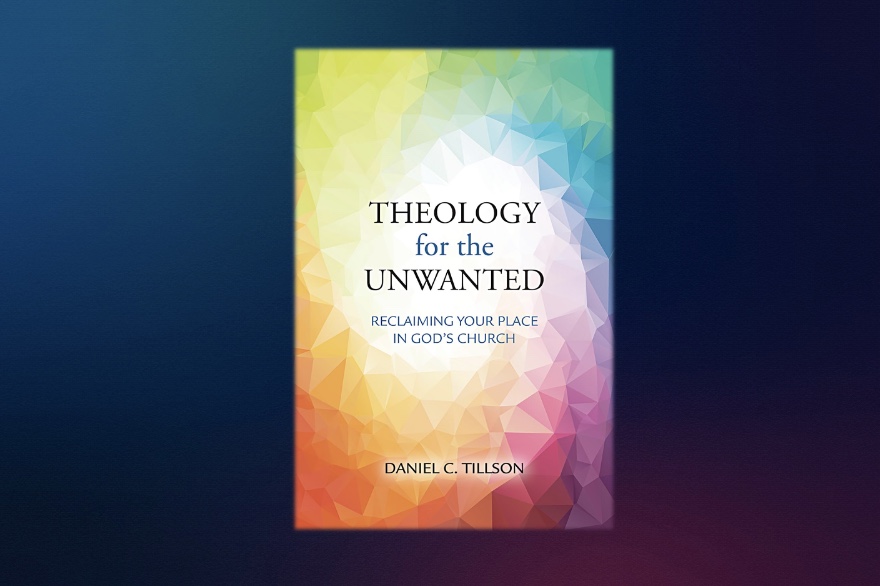
My new book, Theology for the Unwanted: Reclaiming Your Place in God’s Church, is written for the Catholic or former Catholic navigating the immense pain of trying to reconcile who they are and their desire to exist in God’s love.
Catholic theology is at its best when society is seemingly struggling the most.
Following the two World Wars, many of the survivors of Europe saw their livelihoods completely obliterated and their cities lying in ruins, with at least 85 million people perishing. For those who survived, hopes and dreams were reduced to a memory. Such a monumental event prompted a massive cultural change, leaving many people wondering if God is really among us; for others, it strengthened their faith.
You are not alone in feeling this tension, this desire to be openly authentic as you seek to live a life of holiness in God’s presence.
For many of those who continued to believe, that collective experience profoundly changed how they gazed at the crucifix. In some ways, they knew themselves to be imitating the suffering of Jesus nailed to the cross. The pain they experienced transformed their faith from an elite and intellectual exercise to one that was also a lived experience.
Theology and sacred tradition becomes clearer when we allow ourselves to set down our weapons and our defenses. When we consider the context, audience, and knowledge available to the original readers of the Bible and church documents, their ancient wisdom suddenly feels like a bright light of knowledge in a dark world. It was only after the Europeans experienced devastation—twice—that many were ready to set down preconceived notions about their enemies, to look at reality first, and then see how their thoughts fit.
That is the first step to understanding good theology.
You may think that Catholic theology is a well-prepared defense of the knowledge our grandparents had about the faith. No! Theology is a living and breathing field of study that seeks to understand. It is our ongoing work to take an infinite God and explain his designs using our limited vocabulary. Theology is the work of describing reality. It can only become more itself over time, like a plant that unfolds to reveal its true beauty.
The lived experience of post-World War II Europe, combined with the church’s many centuries of practice developing theological thought, led to authentic and faithful developments in doctrine that culminated with Vatican II.
Your calling now is to discern how God made you and to embrace yourself in that reality.
At least abroad, those with doctorates in moral theology have started to coalesce around the idea that we are ready for an authentic development in doctrine on the human person—one that is in line with the bounds of sacred scripture and more beautifully explains reality than we previously thought possible.
Going even further, Cardinal Jean-Claude Hollerich, SJ, a prominent European theologian, was quoted in Catholic media saying about same-sex relationships, “I believe it is time for us to make a revision of the basic foundation of the teaching.” From Brazil to Europe, for years this understanding has led many bishops and cardinals to either support or allow for blessings of same-sex couples or civil unions without exclusion from church life. As the Swiss bishop Joseph Maria Bonnemain noted, “Every person is unique and is loved by God in his uniqueness.” And about those who are gay, “This conviction is increasingly shaping the basic attitude of the Catholic Church.”
As many moral theologians across the world have examined the foundations of the current teaching, they have found that many assumptions, one by one, are no longer held as true. And I believe that a deeper look at why the church teaches what it has taught reveals that yes, there is plenty of room for you to live authentically. To deny a part of how God made you would be inconsistent with the truth.
Our church is learning and discovering, slowly moving from what Andrea Grillo, sacramental theologian at the Pontifical Athenaeum of St. Anselm in Rome, calls a society that fears differences to a “dignity society” where our differences are recognized as riches. You do not need to wait for history to resolve itself to find peace. Your calling now is to discern how God made you and to embrace yourself in that reality. Know that you are not a problem to be solved but a valuable gift for the Catholic community.
While the church may still be learning how to be more open to God’s diversity of creation, you can start today by accepting the invitation to live authentically as God created you.
Editor’s note: Portions of this article are excerpted from the author’s new book, Theology for the Unwanted: Reclaiming Your Place in God’s Church.