
This essay first appeared in our weekly Scripture reflection newsletter on November 22, 2025.
2 Sam 5:1-3; Col 1:12-20; Lk 23:35-43
You can find the readings for The Solemnity of Our Lord Jesus Christ, King of the Universe here.
NB: This is the final weekly Sunday Gospel reflection that I’ll be writing, having reached the end of the complete three-year liturgical cycle. Outreach will feature occasional reflections in the future and all my reflections will soon be collected in a single volume from Liturgical Press. If you’d like to revisit any of these in the next three-year cycle, they are online here. Thanks for reading these and praying with me. –Fr. Jim
In his book Insane for the Light: A Spirituality for Our Wisdom Years, the writer and priest Ronald Rolheiser, O.M.I., makes a fascinating point about Jesus’s life, which he divides into two parts.
“As Christians,” he writes, “we believe that we are saved by Jesus’s life, by his activity, by what he actively taught us and did for us. But, and this is the paradox, we believe that we are also saved, indeed preeminently so, by his death, by his passivity, by what he passively endured.”
Father Rolheiser then shares a few examples of how, as they die, people can offer examples of grace, of hope and of life to those around them. “In our passivity,” he writes, “we can give to others a gift that we are unable to give in our activity.”
Perhaps our readings for the “Feast of Christ the King” are disappointing to some Christians today.
In today’s Gospel, Jesus is passive as soldiers jeer at him on the Cross. This comes after his silence before Pontius Pilate, who sentences him to death. As Luke Timothy Johnson notes in his commentary on the Gospel of Luke, this response could only have been “disappointing” to those in Jesus’s time, whether “Jew or Greek,” to use the New Testament distinction. For many Jews, accustomed to reading about Moses boldly standing before Pharaoh; and for many Greeks, steeped in tales of Socrates responding “stirringly” to the Athenian judges, a mute leader might have seemed an aberration at best.
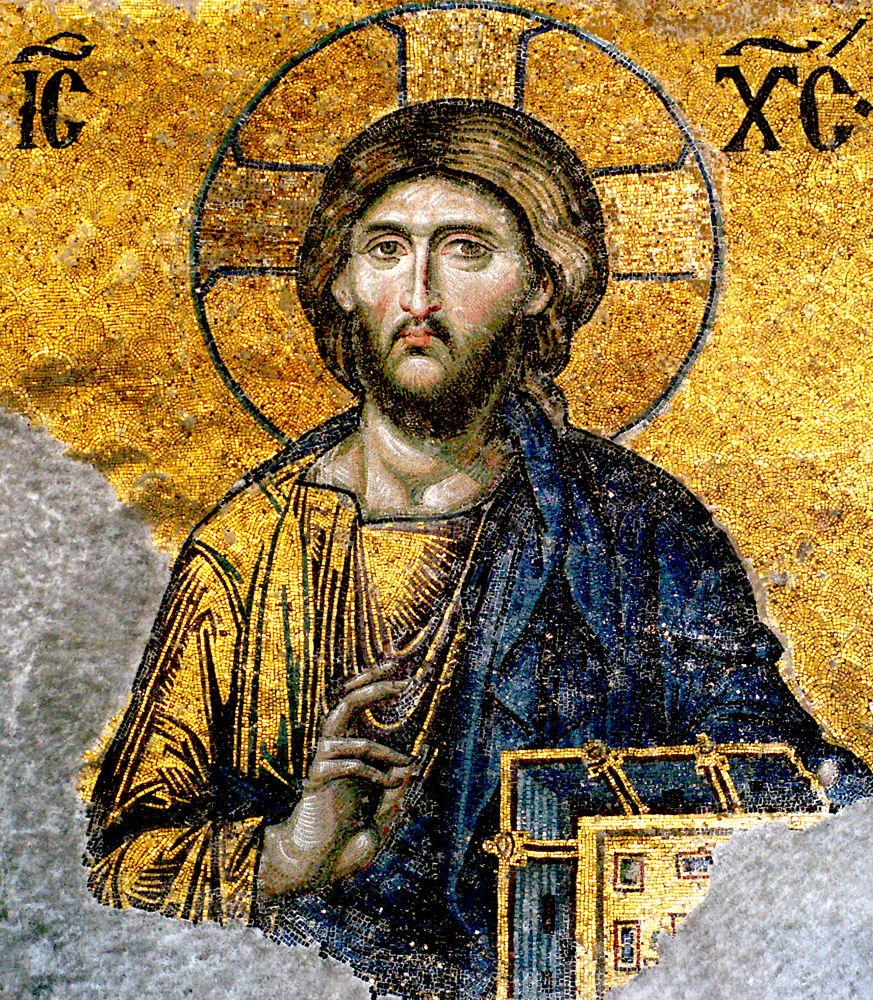
And perhaps our readings for the “Feast of Christ the King” are disappointing to some Christians today. In recent years, we’ve seen an uptick in the number of people, at least in the United States, who proclaim either on T-shirts, social media or bumper stickers: “Christ is my king!” Well, he’s my king too of course. But the question needs to be asked: What kind of king is he to you? More importantly, what kind of king do we find in the Gospels?
Certainly not one concerned with the outward signs of power, domination or arrogance that we usually associate with earthly rulers. During the temptation in the desert, when Satan offers Jesus authority over all the world, he declines it. Later, after Jesus performs many miracles and the crowds press to make him a king, he escapes from them. In time, Jesus accepts the designation of “Christ” (anointed one) when Peter identifies him as such, but he immediately reminds Peter that the Christ must suffer. And finally, in what onlookers probably considered to be his most “triumphal” moment, when he enters Jerusalem on Palm Sunday, with the crowds receiving him rapturously (either thanks to the Cleansing of the Temple in the Synoptic Gospels, or the Raising of Lazarus in John’s Gospel), he arrives on a lowly donkey.
Who is our king? It is Jesus Christ, who rules by way of service, poverty and humility.
Our desire for a mighty king (or queen) is not surprising. Wouldn’t it be wonderful to be led by a benevolent person who has our best interests in mind and who can, on his or her own, simply make life easier for all of us? But that desire, though compelling, is almost always misplaced. There are no perfect rulers and history has shown that Lord Acton was right: “Power tends to corrupt, and absolute power corrupts absolutely.” That fact has been a disappointment (and a tragedy) for people for centuries.
So who is our king? It is Jesus Christ, who rules by way of service, poverty and humility. He says (and demonstrates) this truth too many times in the Gospels to even name. He is even willing to suffer on behalf of others. Jesus is a “servant leader,” always putting the needs of others, especially those who are poor or marginalized in any way, before his own.
Go and do likewise.